Kayaking Near Nadi: River Trips and Local Options
Last updated and fact-checked: 29 September 2026
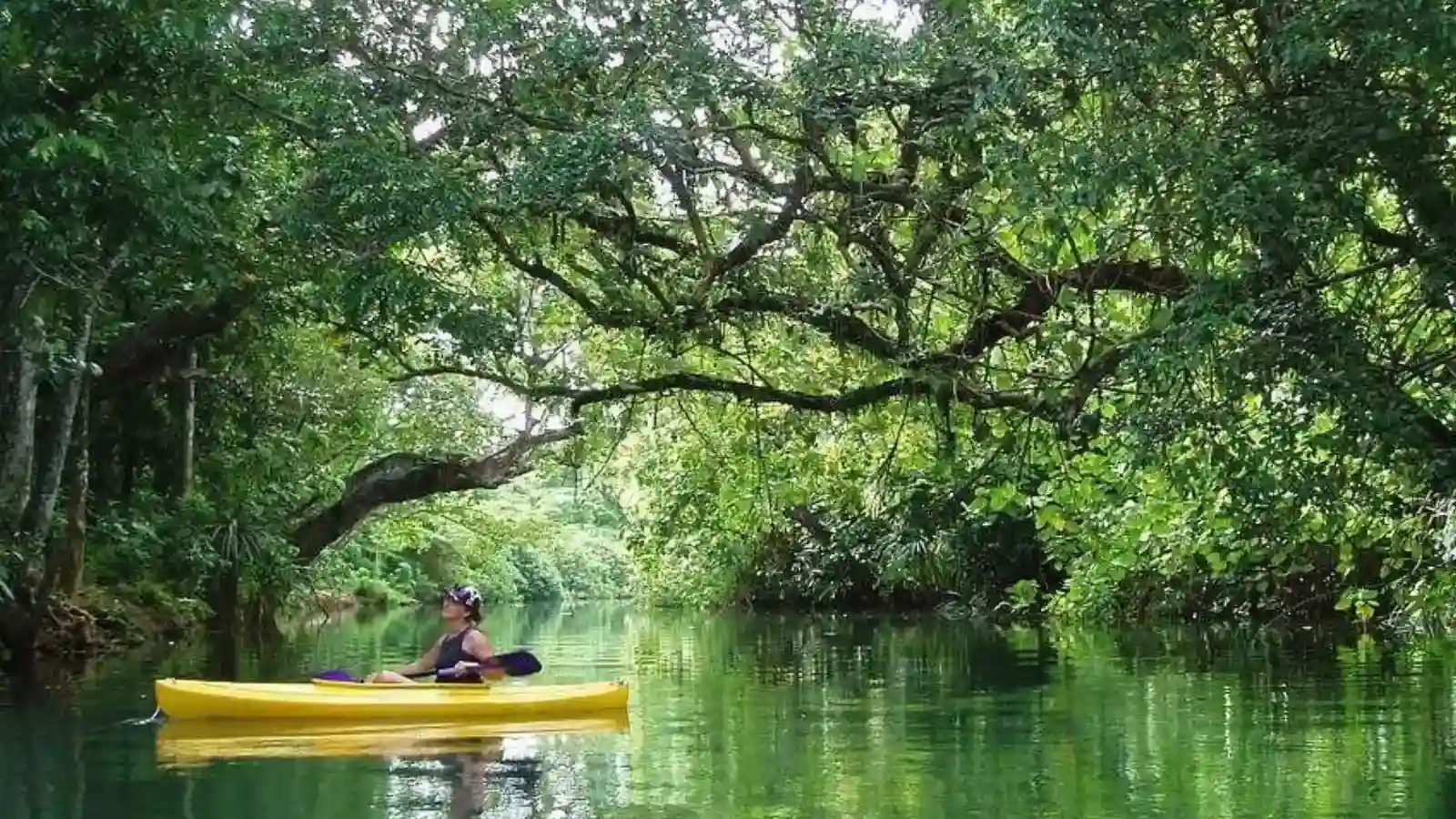
Looking for a river kayak safari while staying in Nadi? The clearest bookable river kayaking trip with a transfer available from Nadi is Rivers Fiji's Middle Navua day trip. It takes place near Pacific Harbour, with a Nadi transfer offered at extra cost. If you want to paddle close to your hotel, Denarau has short resort kayak sessions. If the mangroves of the Nadi River are the main attraction, there is also a self-drive electric boat cruise from Port Denarau.
Those are three different outings. We could not verify the old description of a standard, half-day Nadi River kayak safari with fixed routes and prices, so this guide gives you actual places to start and makes the travel involved clear.
| What you want | Where to go | What to expect |
|---|---|---|
| An actual guided river kayak trip | Middle Navua River, via Pacific Harbour | Full-day inflatable kayaking, a waterfall walk and a return section by motorized longboat. Nadi transfer costs extra. |
| A short kayak paddle near Nadi | Sofitel Fiji Resort & Spa, Denarau | A 30-minute beachfront kayak session, listed as complimentary for resort guests. It is not a river tour. |
| Nadi River mangroves without paddling | BBQ E-Boat Fiji, Port Denarau Marina | A self-drive electric boat cruise through the mangrove waterways. Your group steers the boat after a briefing. |
The river kayaking trip you can take from Nadi
Rivers Fiji runs a guided Middle Navua River trip using inflatable kayaks. This is inland river scenery, not Nadi's tidal mangrove channels. You travel to the Pacific Harbour area, then continue by vehicle to the launch near Wainadiro. After a briefing, the group paddles a stretch of river, leaves the kayaks for a walk to Wainikavou Waterfall, and completes the last river section by motorized longboat. The operator's detailed itinerary describes this as a full-day outing, with occasional Class II riffles. It is an active day rather than a flat-water float.
Meeting and transfers: OARS lists an 8:30 am meeting in Pacific Harbour and an approximate 4 pm return there, with earlier starts for hotel transfers. Its published price lists a USD 36 round-trip Nadi transfer per person as an extra. Ask for your exact pickup point and time when you book. If you are traveling independently, do not plan to arrive at a launch point on your own; use the confirmed operator meeting place. See FijiEco's Fiji transport guide if you are combining the outing with other travel.
Price and suitability: At this update, OARS lists USD 189 per person, or USD 171 for an online booking made at least five days ahead, before the optional Nadi transfer. The listing gives a minimum age of eight and includes a guide, lunch, an inflatable kayak, helmet and personal flotation device. Check the live booking page for the date, rate, trip conditions and any change to the transfer charge. First-time paddlers can ask the operator about the short hike, moving water and physical requirements before paying.
If you want to stay around Nadi
Kayak for 30 minutes at Sofitel Denarau
Sofitel Fiji Resort & Spa advertises a complimentary 30-minute kayak session for its guests, with a beach-team briefing and a designated operating area. This is the simplest concrete option for a short paddle if you are staying there. It is coastal kayaking from a resort, not a guided mangrove safari. Activities depend on weather and sea conditions.
The on-site operator KaiWai Watersports says travelers staying outside partner resorts may contact it about joining its experiences. If you are not a Sofitel guest, ask specifically whether this kayak session is open to you, what it costs and where you may paddle. The guest-only complimentary offer should not be assumed to apply to other visitors. If a board suits you better than a kayak, FijiEco has a separate Wailoaloa sunset paddleboarding guide.
Not kayaking: see the Nadi River mangroves by electric boat
For the river and mangroves rather than the exercise of paddling, Tourism Fiji highlights BBQ E-Boat Fiji's Nadi River cruise. The operator lists three-hour morning and afternoon slots departing from Port Denarau Marina, with up to six people per boat. One adult skipper needs ID and a safety briefing; no boating license is required. This is a private electric boat outing with a BBQ setup, not a kayak rental or a guided wildlife tour. Check the current group price, food choices and river route before booking.
How to choose and book the right trip
Book Middle Navua if the goal is to spend a day paddling a river with guides and you can accommodate the journey from Nadi. Choose Sofitel's short session if you are a guest who simply wants to try a kayak near the hotel. Choose the e-boat when seeing mangroves matters more than paddling yourself. These options cannot be compared as though they were three versions of the same tour.
If a seller offers a “Nadi River kayak safari,” ask for the operator's name, exact launch and return points, watercraft, duration, total cost and included transfer. That quickly distinguishes a real local kayak departure from a Navua excursion, a stand-up paddleboard trip, or a boat cruise. Ask about the minimum age and whether beginners can join your chosen departure. A hotel concierge may help arrange an activity, but the operator's current itinerary and terms should settle what you are buying.
What to bring and when to postpone
Bring quick-drying clothes, secure footwear for wet ground, drinking water, sun protection and a small waterproof bag for essentials. OARS says its Middle Navua package supplies the kayak, paddle, helmet, flotation device and a small dry bag; check its packing instructions for anything else. For a resort session, use the life jacket and boundaries set by the beach team.
Check the Fiji Meteorological Service forecast and warnings and the operator's instructions shortly before departure. Rain upstream can change river conditions even when your hotel has sunshine. Weather or sea conditions can also affect short coastal sessions. FijiEco's Fiji weather guide explains the broader seasonal pattern, but the day's decision belongs with the local operator.
Quick questions
Can I book a kayak safari on the Nadi River?
We could not verify a current, publicly described Nadi River kayak safari with a reliable route and price. The confirmed river kayaking trip here is on the Middle Navua. A seller may have a private Nadi outing, but get its operator and launch details before booking.
Is Middle Navua suitable for first-time kayakers?
Rivers Fiji presents it as a guided inflatable-kayak trip. OARS describes occasional Class II riffles and a minimum age of eight. Discuss swimming confidence, the hike and any mobility needs with the operator rather than assuming all river water is still.
Does the Nadi mangrove boat cruise include kayaking?
No. BBQ E-Boat Fiji uses a self-drive electric boat. It is a way to see the mangrove waterway without paddling.
Sources and FijiEco research note
FijiEco compared operator itineraries with Tourism Fiji's description of the Nadi River cruise. The earlier article's Nadi, Viseisei and Ba kayak routes, blanket wildlife promises and generic FJD prices were removed because they were not tied to a verifiable current operator. Sources verified for this update.
- Rivers Fiji: Middle Navua trip and OARS: itinerary, 2025–2027 prices, inclusions and Nadi transfer.
- Sofitel: guest kayak session and KaiWai: locations and outside-resort inquiries.
- Tourism Fiji: Nadi River e-boat and Farer Fiji: departure and booking details.
- Fiji Meteorological Service: public forecasts and warnings.
Have a current Nadi River kayak operator listing or a correction? Contact FijiEco.