Sigatoka & Coral Coast Transport: Complete 2025 Guide to Getting Around Fiji

Published: June 29, 2025 | Updated: December 02, 2025

Exploring Sigatoka and the stunning 80-kilometer Coral Coast—Fiji’s premier beach resort corridor stretching from Korotogo to Pacific Harbour—proves surprisingly easy thanks to a wide mix of transport options. Travelers can rely on frequent minibuses (FJ$1–5, authentic local experience), shared taxis (FJ$2–8, faster service), comfortable express buses (FJ$5–15, air-conditioned reliability), or rental cars (FJ$90–130/day, maximum flexibility). This comprehensive guide explains every transport mode clearly, with detailed routes, prices, schedules, booking tips, and insider strategies for navigating Queen’s Road—whether you're staying at budget eco-lodges, mid-range resorts, or exploring day trips to sand dunes, waterfalls, and cultural sites.

Minibus Routes • Taxi Fares • Bus Schedules • Car Rental • Local Tips
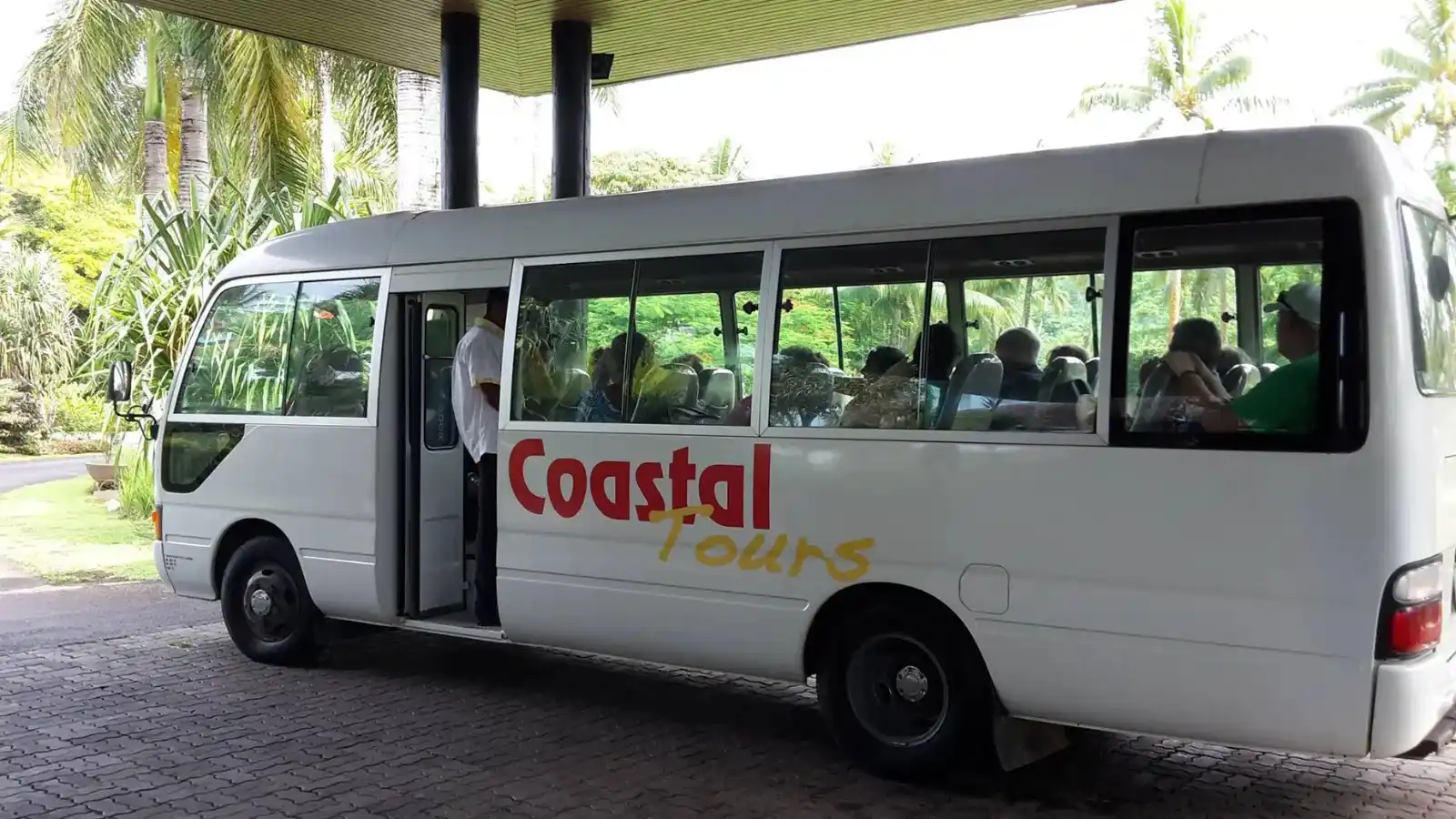
Local minibus stand in Sigatoka town on Fiji’s Coral Coast — colorful vehicles, passengers boarding, and authentic local transport atmosphere
Minibuses and shared taxis keep the Coral Coast moving — fast, affordable, and filled with local character.

Understanding Coral Coast Geography & Transport

Queens Road: The Coral Coast Corridor

Queens Road—Fiji's primary coastal highway circling Viti Levu—serves as Coral Coast's main artery connecting Sigatoka town center with dozens of resorts, villages, and attractions spanning 80 kilometers from Korotogo (west) to Pacific Harbour (east). Unlike Nadi-Lautoka's dense urban corridor, Coral Coast presents dispersed development—resorts separated by 1-5 kilometers, villages punctuating beach stretches, and attractions requiring specific stops rather than walkable clusters.

This geography necessitates transport strategy: Without vehicle, travelers depend on public transport stopping at major landmarks (resorts, villages, junctions) then walking/arranging pickups for final stretches. Key locations along route (west to east): Korotogo resort area (10km west of Sigatoka), Sigatoka town center (commercial hub, transport terminal), Cuvu area (5km east, budget accommodations), Korolevu/Sunset Strip (15-20km east, mid-range resorts), Natadola Beach turn-off (8km west, pristine beach), Pacific Harbour (45km east, adventure tourism hub). Understanding distances and transport frequency between these points essential for planning.

Complete Transport Options Comparison

Transport Type Cost Range (FJD) Speed Frequency Best For
Minibus (Carrier) FJ$1-5 Fast Every 15-30 min Budget, short trips, local experience
Shared Taxi FJ$2-8 Fast Departs when full Comfort + value balance
Local Bus FJ$1-6 Slow Every 30-60 min Ultra-budget, cultural immersion
Express Bus FJ$5-15 Fast 4-6 daily Long distance, comfort, AC
Private Taxi FJ$10-50 Fast On demand Convenience, groups, luggage
Rental Car FJ$90-130/day Fast Self-drive Flexibility, remote access, families

Minibuses (Carriers): The Local Favorite

How Minibus System Works

Minibuses—locally called "carriers"—represent Coral Coast's most popular transport, balancing speed, frequency, and affordability. These 12-15 passenger vans operate semi-formally along Queens Road stopping at established pickup points (resort entrances, villages, major junctions) plus flag-down locations anywhere along route. No fixed schedules—drivers maximize income through rapid passenger turnover, creating frequent but unpredictable service.

Operation Pattern: Minibuses loop between Sigatoka town center and surrounding areas (Korotogo, Cuvu, Korolevu) or run longer routes to Pacific Harbour. Drivers shout destinations attracting passengers, depart when reasonably full (8-12 passengers), drive assertively stopping for flag-downs en route. Pay driver or conductor after boarding—state destination clearly, receive quoted fare (negotiate if seems inflated), pay cash only (FJD, small bills preferred). No tickets issued—verbal agreement and payment.

Key Routes & Pricing

  • Sigatoka town to Korotogo resorts: FJ$2-3, 15-20 minutes, 10km. Frequent departures (every 15-30 minutes peak hours). Main route serving western resort concentration including budget and mid-range properties.
  • Sigatoka to Cuvu area: FJ$1.50-2, 10 minutes, 5km. Very frequent (every 10-20 minutes). Serves budget accommodations like Gecko's Resort.
  • Sigatoka to Korolevu (Sunset Strip): FJ$3-4, 25-30 minutes, 15-20km. Moderate frequency (every 30-45 minutes). Mid-range resort area access.
  • Sigatoka to Pacific Harbour: FJ$5-8, 45-60 minutes, 45km. Less frequent (every 60-90 minutes). Longer journey requiring patience.
  • Short hops between resorts: FJ$1-2 depending on distance. Practical for accessing nearby beaches, restaurants, or shifting accommodations.

Minibus Travel Tips

  • Finding Pickup Points: Sigatoka town minibus stand (near market on Queens Road), resort entrance gates, village centers. Ask accommodation staff: "Where catch minibus to [destination]?" They'll direct you precisely.
  • Flagging Down: Stand roadside (safe spot, driver has visibility), extend arm clearly when minibus approaches. Driver stops if space available and heading your direction. Shake head if wrong destination—driver continues.
  • Luggage: Small bags free, large suitcases may incur FJ$1-2 surcharge. Limited storage space—backpacks and day bags ideal, wheeled luggage problematic.
  • Comfort Realities: Crowded conditions common, bench seating, no air-conditioning (open windows), bumpy roads, aggressive driving. Authentic experience rather than luxury comfort.
  • Peak Hours: Morning (6-9am) and late afternoon (4-7pm) see maximum frequency serving commuters. Midday and evenings reduced service.

Shared Taxis: Comfort Upgrade

Shared vs Private Taxi Distinction

Shared taxis operate similarly to minibuses—fixed routes, multiple passengers, depart when full—but use standard sedans (4-5 passengers) providing more comfort than minibuses at moderate premium. Find shared taxis at Sigatoka town taxi stands, major resort entrances, and village centers. Drivers call destinations attracting passengers heading same direction.

Cost Structure: Per-person fares typically FJ$1-2 more than equivalent minibus journey but justify premium through: better seating (individual seats versus benches), air-conditioning (some vehicles), faster point-to-point service (fewer stops), luggage trunk space. Example: Sigatoka-Korotogo minibus FJ$2-3, shared taxi FJ$3-4—minimal difference but notable comfort improvement especially for tourists unaccustomed to crowded carriers.

Converting Shared to Private

Key flexibility: Pay full vehicle capacity (4-5 passengers worth of fares) converting shared taxi to private immediate departure. Calculations: Sigatoka-Korotogo shared taxi charges FJ$3-4 per person. Paying FJ$15-20 (5 passengers × FJ$3-4) secures entire vehicle for immediate departure versus waiting 20-40 minutes for vehicle to fill. Groups of 3-4 already make this economical—adding FJ$3-8 to existing multi-passenger fare eliminates waiting.

Public Buses: Budget Maximum

Local vs Express Bus Services

Two distinct bus categories serve Coral Coast:

  • Local Buses: Non-air-conditioned standard buses stopping every marked stop along route. Slowest option (stops every 1-2km) but cheapest—Sigatoka to Korotogo FJ$1.50, Sigatoka to Pacific Harbour FJ$4-6. Frequency: every 30-60 minutes weekdays, reduced weekends. Cultural immersion guaranteed—school children, market-going locals, reggae music, open windows. Journey times 50-100% longer than minibuses/taxis due to frequent stops.
  • Express Buses: Air-conditioned coaches running Suva-Nadi route (or reverse) stopping major Coral Coast points (Sigatoka, Korolevu, Pacific Harbour) but bypassing villages and minor resorts. Faster than local buses, more comfortable, reserved seating. Cost: Sigatoka-Suva FJ$12-15, Sigatoka-Nadi FJ$8-10. Schedule: 4-6 daily departures each direction. Book tickets at Sigatoka terminal 30-60 minutes advance ensuring seats.

Bus Terminal Procedures

Sigatoka Bus Terminal (central town location on Queens Road near Sigatoka Valley Market) serves as regional hub:

  1. Locate correct bay: Terminal has numbered bays with destination signs. Ask terminal staff if uncertain: "Which bus to [destination]?"
  2. Board bus: No advance ticketing for local buses—board directly, find seat (first-come basis).
  3. Pay conductor: Uniformed staff walks aisle collecting fares after departure. State destination, pay cash, receive small paper ticket.
  4. Request stop: No announcements. Monitor location via GPS or landmarks, shout "Stop please!" or pull overhead cord approaching destination.

Private Taxis: Door-to-Door Convenience

Taxi Rates & Negotiation

Licensed taxis (LT plates, official signage) provide on-demand transport throughout Coral Coast. Rates theoretically metered but flat-rate negotiation standard for tourist journeys:

  • Sigatoka town to Korotogo resorts: FJ$15-20 (10km, 15 minutes)
  • Sigatoka to Cuvu area: FJ$10-15 (5km, 10 minutes)
  • Sigatoka to Korolevu: FJ$25-35 (20km, 20-25 minutes)
  • Sigatoka to Natadola Beach: FJ$25-30 (18km via turn-off)
  • Sigatoka to Pacific Harbour: FJ$60-80 (45km, 45-60 minutes)
  • Sigatoka to Nadi Airport: FJ$80-100 (60km, 60-75 minutes)
  • Day hire (8 hours): FJ$150-200 for multiple stops/destinations

Negotiation Strategy: State destination clearly, driver quotes price. If seems inflated (20%+ above standard rates), counter with reasonable offer or walk to next taxi. Competition prevents extreme overcharging—FJ$5-10 above standard acceptable, FJ$20+ means find alternative. Hotel-arranged taxis typically FJ$5-10 premium but ensure reliability and prevent negotiation hassles.

When Taxis Make Sense

  • Groups of 3-4: Shared taxi cost (FJ$15-35) split among passengers rivals per-person public transport while providing comfort and flexibility.
  • Luggage: Large suitcases impractical on crowded minibuses—taxis accommodate trunk storage.
  • Time Constraints: Direct service eliminates waiting for public transport and stops en route.
  • Remote Destinations: Attractions like Tavuni Hill Fort or off-highway beaches require taxi access (public transport stops main road only).
  • Evening/Night: Reduced public transport after 6-8pm makes taxis essential for dinner reservations or nighttime activities.

Rental Cars: Maximum Independence

Rental Options & Pricing

Major international chains (Avis, Budget, Hertz) and local operators (Central Rent a Car, Khan's) maintain offices at Nadi Airport and Sigatoka town:

  • Compact Cars: FJ$90-110/day (Toyota Vitz, Nissan March). Fuel-efficient, adequate for 2-3 passengers with moderate luggage.
  • Sedans: FJ$100-120/day (Toyota Corolla, Mazda 3). More space and comfort for families or longer journeys.
  • SUVs: FJ$130-180/day (RAV4, Outlander). Necessary for rough dirt access roads to remote beaches or interior attractions.
  • Weekly Rates: 15-20% discount versus daily. FJ$600-800/week typical for sedan—economical if planning 5+ days exploration.
  • Insurance: FJ$20-35/day comprehensive coverage highly recommended given road conditions, livestock crossings, and tourist unfamiliarity. Verify excess amounts (FJ$1,000-3,000 typical).

Driving Considerations

  • Left-Hand Driving: British system—vehicles drive left side of road, steering wheel on right. Adjustment period needed for right-hand-drive country visitors.
  • Road Conditions: Queens Road sealed but narrow (two lanes, no shoulders), speed bumps in villages, potholes common especially after rain. Drive defensively 60-80km/h typical speeds.
  • Hazards: Free-roaming livestock (cows, horses, goats), pedestrians walking roadside, aggressive local drivers, limited street lighting at night. Extra caution required.
  • Parking: Free at most resorts and attractions. Sigatoka town offers street parking (metered FJ$1-2/hour) and free lots near market.
  • Fuel: Petrol stations in Sigatoka, Korolevu, Pacific Harbour. Fill tank when available—gaps between stations 20-30km. Diesel slightly cheaper than petrol.

Rental vs Public Transport Economics

Break-even analysis for week-long Coral Coast stay:

  • Public Transport Scenario: 2-3 daily trips (resort to attractions, town, beaches) via minibus/taxi = FJ$10-20/day = FJ$70-140/week total. Budget option but limited to main road accessible locations, schedule constraints.
  • Rental Car Scenario: FJ$650/week (sedan + insurance) + FJ$80 fuel = FJ$730 total for 2 passengers = FJ$365/person. Premium of FJ$225-295 per person versus public transport.
  • Value Calculation: Rental justifies cost for: groups splitting expenses (3-4 people = FJ$180-240/person approaching public transport costs), travelers prioritizing convenience and flexibility, visitors exploring multiple remote destinations (waterfalls, hill forts, secluded beaches) inaccessible via public transport.

Strategic Hybrid Approach

Optimal budget strategy: Use public transport (minibus/shared taxi) for routine trips along Queens Road (FJ$2-5 per journey), supplement with private taxis for specific needs (evening dining FJ$15-25 return, remote beaches FJ$40-60 day trip), and consider rental car only for 1-2 intensive exploration days (FJ$110-150) versus full-week rental. This hybrid model achieves 70% of rental car flexibility at 30-40% of cost.

Practical Route Planning

Common Destination Access

  • Sand Dunes National Park: 3km west of Sigatoka town. Minibus/taxi to park entrance (FJ$2-3) or walk 40 minutes along main road. Entrance visible, well-signed.
  • Natadola Beach: 18km from Sigatoka via inland turn-off. Public transport stops highway junction only—require taxi final 8km (FJ$15-20 from Sigatoka) or arranged resort transfer.
  • Sigatoka Valley Market: Central town location walkable from nearby accommodations or minibus stop (most routes pass through town center). Open daily 6am-5pm, peak Saturday mornings.
  • Kula Eco Park: Near Korolevu, 20km east of Sigatoka. Minibus/bus to Korolevu (FJ$3-4), short walk or taxi from highway (park arranges pickups for guests booking ahead).
  • Coral Coast Beaches: Most resorts front beaches accessible to guests and day-visitors. Minibus stops resort entrances—walk through grounds to beach (politely, respecting property). Some resorts charge day-use fees (FJ$10-30) for facilities.

Timing Considerations

  • Peak Hours (7-9am, 4-6pm): Maximum public transport frequency serving commuters. Best timing for quick connections and minimal waiting.
  • Midday (10am-3pm): Reduced frequency but still reasonable service. Allow extra 15-30 minutes for waiting.
  • Evening (6pm onward): Dramatically reduced service. Last minibuses typically 7-8pm. Budget for taxis if evening activities planned.
  • Sunday: Significantly reduced all public transport (50% frequency). Plan accordingly or arrange taxis for Sunday travel.

Frequently Asked Questions

What's the cheapest way to get around Coral Coast?

Local buses represent absolute cheapest option—FJ$1-6 for any Coral Coast journey—but sacrifice speed and convenience with 60-90 minute journeys that minibuses/taxis complete in 30-45 minutes. Minibuses (FJ$1-5) provide best value-speed balance—only FJ$1-2 more than buses but 30-40% faster through fewer stops and more frequent service. Strategy: Use minibuses for routine trips along main road (resort to town, beach hopping, attraction access), supplement with occasional taxis for remote destinations or time-sensitive connections. Weekly budget estimate: FJ$30-70 covers typical traveler's all transport needs using predominantly minibuses with selective taxi use. Rental car (FJ$650+/week) only economical for groups of 4+ or intensive multi-destination exploration.

How do I catch a minibus on Coral Coast?

Three methods: (1) Designated stands—Sigatoka town center (near market), major resort entrances, village centers host minibus pickup areas where drivers congregate shouting destinations. Join queue or ask drivers "Going to [destination]?"; (2) Roadside flag-down—stand safely visible location (straight road section, not blind corner), extend arm clearly when minibus approaches. Driver stops if heading your direction and has space. Shake head politely if wrong destination; (3) Resort arrangement—many accommodations including Bedarra Beach Inn have regular minibuses stopping entrance gates. Ask reception "What time minibus to town?" Pay driver/conductor after boarding (FJ$2-5 typical), state destination clearly. Driver won't announce stops—monitor location via GPS or landmarks, shout "Stop please!" when approaching destination. Carry small bills (FJ$2, $5, $10)—exact change appreciated though drivers usually have change for FJ$20.

Do I need a rental car to explore Coral Coast?

Not necessary but adds significant convenience depending on travel style and priorities. Don't need car if: (1) Staying single resort with onsite dining/activities; (2) Comfortable using minibuses/taxis for attractions along main road (majority of destinations); (3) Budget-conscious (car costs FJ$110-150/day including insurance/fuel vs FJ$10-20 daily public transport); (4) Not planning remote destinations requiring off-highway access. Benefit from car if: (1) Exploring multiple locations daily (Sand Dunes, waterfalls, beaches, hill forts, villages); (2) Traveling with family/group splitting costs; (3) Carrying sports equipment (surfboards, dive gear); (4) Prioritizing flexibility and spontaneity over budget; (5) Visiting eco-lodges like Coral Coast Eco Villas in remote locations. Middle ground: Rent car 1-2 specific days for intensive exploration, use public transport other days—achieves flexibility when needed without full-week expense.

Are taxis expensive on Coral Coast?

Relative to public transport yes, relative to rental cars or Western taxi rates no. Private taxis cost FJ$15-35 for typical Coral Coast journeys (Sigatoka to nearby resorts)—10-15x minibus fares but reasonable for convenience gained. Economics shift dramatically with passenger count: Solo traveler paying FJ$20 taxi versus FJ$2 minibus = expensive. Family of 4 splitting FJ$20 = FJ$5/person versus FJ$8 minibus (4 × FJ$2) = marginal premium for door-to-door service. Shared taxis (FJ$2-8 per person) bridge gap between minibus ultra-budget and private taxi convenience. Strategy: Use public transport routine trips, taxis for specific needs (evening dining, remote beaches, luggage transport, time-sensitive connections). Negotiate firmly but fairly—standard rates FJ$1.50-2/km. Hotel-arranged taxis add FJ$5-10 but ensure reliability. Avoid: Using private taxis exclusively unless budget unlimited—FJ$40-80 daily taxi costs versus FJ$10-20 public transport represents significant cumulative difference over week-long stay.

What's transport like between Coral Coast and Nadi/Suva?

Nadi connections (60km west): Express buses (FJ$8-10, 60-90 minutes) depart Sigatoka 4-6 times daily continuing to Nadi/Airport. Most reliable comfortable option. Minibuses occasionally run but inconsistent long-distance. Taxis expensive (FJ$80-100) suitable only for groups or time-critical needs. Suva connections (120km east): Express buses (FJ$12-15, 2-2.5 hours) provide regular service (6-8 daily) stopping Sigatoka, Pacific Harbour en route. Most economical long-distance option. Minibuses available Pacific Harbour to Suva but not direct Sigatoka-Suva. Taxis prohibitively expensive (FJ$180-250). Recommendation: Express buses optimal for intercity travel—air-conditioned comfort, reserved seating, predictable schedules, luggage storage. Book tickets 30-60 minutes advance at Sigatoka terminal. Departures concentrated morning (6-10am) and afternoon (2-5pm)—plan connections around these windows. For complete Nadi-Lautoka corridor details, see dedicated transport guide covering western Viti Levu comprehensively.

Can I use Uber or similar ride-sharing in Coral Coast?

No—ride-sharing apps (Uber, Lyft, Bolt) not available in Fiji. Transport ecosystem remains traditional: public buses, minibuses, licensed taxis, rental cars. This creates both challenges (no app-based convenience or transparent pricing) and advantages (authentic local transport culture, driver-passenger interactions, negotiation flexibility). Adaptation strategies: (1) Use accommodation staff for taxi arrangements—they know reliable drivers and fair rates preventing tourist overcharging; (2) Establish relationship with specific taxi driver (save number, arrange regular pickups) receiving personalized service and slight discounts; (3) Embrace minibus culture—authentic Fiji experience, remarkable value, interaction with locals; (4) Pre-negotiate day rates with taxis (FJ$150-200/8 hours) for intensive exploration avoiding per-trip negotiations. Digital options: Some resorts/operators offer WhatsApp booking for transfers/tours but not general ride-sharing. Payment remains primarily cash (FJD)—some upscale services accept credit cards but majority cash-only.

Is public transport safe for solo female travelers?

Generally yes—violent crime against tourists on Coral Coast public transport extremely rare. Standard safety practices sufficient: (1) Use daytime transport (6am-6pm) avoiding late evening travel on public buses/minibuses; (2) Sit near other passengers, conductor, or driver rather than isolated back seats; (3) Keep valuables (phone, wallet, passport) secure—front pockets or bags held firmly; (4) Trust instincts—if situation feels uncomfortable, exit at next public location (resort entrance, village center); (5) Evening activities: Use hotel-arranged taxis versus hailing unknown vehicles. Cultural context: Fijian culture generally protective of visitors—other passengers often assist tourists with directions, stops, or concerns. Sexual harassment uncommon but can occur—firm "no" and changing seats usually resolves minor situations. Hotel staff excellent resource—ask "Is bus safe to [destination]?" receiving honest local perspective. Overall risk assessment: Lower than major cities worldwide, comparable to other South Pacific destinations. Reasonable precautions enable safe independent travel; excessive paranoia unnecessary given generally hospitable environment and low crime rates affecting tourists.

Complete Coral Coast Transport Checklist

  • Withdraw FJ$100-150 cash at ATM (public transport cash-only, small bills preferred)
  • Learn key destinations: Sigatoka (hub), Korotogo (western resorts), Cuvu (budget), Korolevu (mid-range)
  • Locate minibus stops: Town center, resort gates, village centers (ask accommodation staff)
  • Practice flag-down technique: Safe roadside position, clear arm extension, confident demeanor
  • State destinations clearly when boarding: "Korotogo" or "[Resort Name]" rather than vague directions
  • Carry small denominations: FJ$2, $5, $10 bills ideal for FJ$1-5 typical fares
  • Monitor location during journeys: GPS app or landmarks preventing missed stops
  • Negotiate taxi rates before entering: Know standard rates, counter if quoted 20%+ above
  • Build flexibility into schedules: Public transport timing unpredictable, allow buffers
  • Hybrid strategy: Minibuses routine trips, taxis specific needs, optimal budget-convenience balance
  • Evening plans: Arrange taxis advance (reduced public transport after 6-8pm)
  • Sunday awareness: All transport frequencies reduced 50%—plan accordingly or budget taxis
  • Remote destinations: Budget FJ$40-80 day-trip taxis for off-highway beaches, hill forts, waterfalls
  • Rental car consideration: Economical groups 3+, intensive multi-destination days, remote lodges
  • Safety basics: Daytime travel, bags secure, trust instincts, hotel staff advice

Travel Like a Local: Embracing Coral Coast Transport Culture

Sometimes the best travel stories start with crowded minibus, shared taxi full of strangers, or unexpected conversation with local commuter explaining regional history. Traveling like locals means embracing spontaneity, saving substantial money (FJ$2-5 minibus vs FJ$15-35 taxi creates FJ$50-150 weekly savings), experiencing authentic Fiji beyond resort gates, and discovering that journey often proves as memorable as destination. Accept occasional waits, crowded conditions, and navigation challenges as part of adventure rather than frustrations—transformation in perspective creates richer travel experiences while supporting local transport economy and minimizing environmental footprint versus rental cars. Vinaka and enjoy exploring Coral Coast like true islander!

Navigate Coral Coast Like a Pro

Coral Coast's diverse transport ecosystem—from ultra-budget local buses and frequent minibuses to comfortable shared taxis and flexible rental cars—empowers travelers with options matching every budget, comfort preference, and travel style. Whether riding FJ$2 minibus alongside commuting Fijians experiencing genuine island life, negotiating FJ$20 taxi to pristine beach requiring off-highway access, or enjoying rental car freedom exploring multiple Sand Dunes, waterfalls, and cultural sites single day, understanding available options and their respective strengths enables confident navigation maximizing both experiences and value.

Strategic transport planning—combining predominant minibus use (routine trips), selective taxi deployment (remote destinations, evening activities), and potential short-term rental car (intensive 1-2 day exploration)—achieves optimal balance between budget consciousness and convenience without sacrificing authentic Coral Coast experiences. The region's manageable 80-kilometer length, frequent public transport along main corridor, and helpful local culture create accessible environment where independent travelers navigate confidently while resort-based visitors venture beyond property boundaries discovering surrounding beauty, villages, and attractions enriching overall Fiji experience exponentially.

As Queens Road carries you between golden beaches, through traditional villages, past lush hillsides, and alongside turquoise Pacific waters—whether through minibus windows mixing with locals, air-conditioned taxi comfort, or rental car freedom—you'll discover that Coral Coast transportation represents not mere logistics but integral element of tropical adventure connecting you authentically with place, people, and rhythm of island life that defines Fiji's enduring magic. Travel wisely, embrace flexibility, enjoy journey, and let Coral Coast's roads lead you to unforgettable discoveries. Bula and happy exploring!