Suva Municipal Market: A Practical Visitor Guide
Last fact-checked:
Suva Municipal Market is a working city market beside Suva's main bus station. Visit for Fiji-grown fruit and vegetables, root crops, seafood, spices, dry goods, yaqona and a direct look at everyday shopping in the capital. It is not a curated food tour, and you do not need a ticket or reservation.
Central Suva • Local Produce • Yaqona • Seafood • No Booking Needed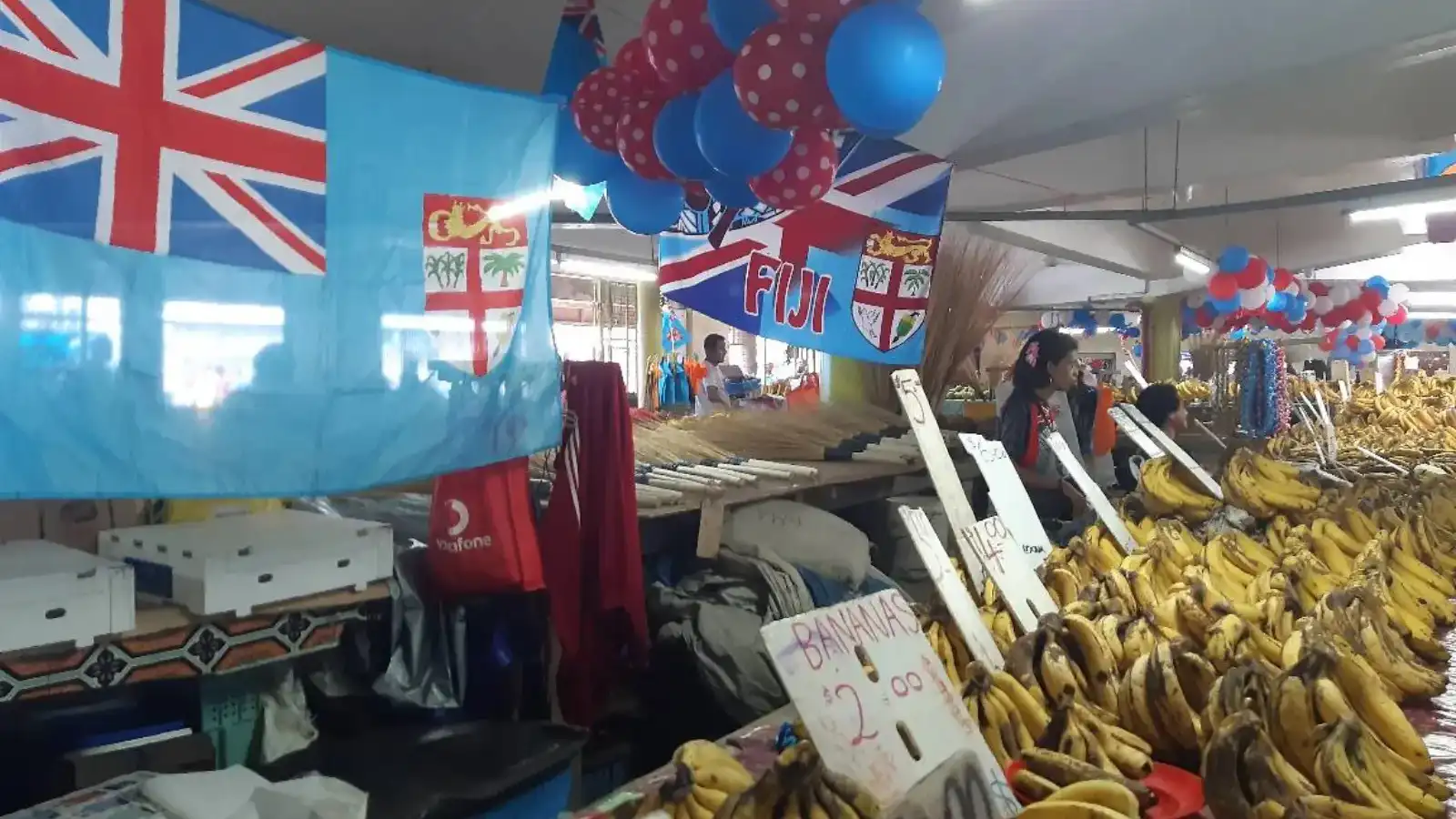
| Quick fact | What travelers should know |
|---|---|
| Location | Harris Road in central Suva, beside the main Suva Bus Station |
| Trading days | Plan for Monday to Saturday; the Council describes it as a six-day market |
| Safest visit window | 7:00 am to 11:00 am, when the market should be active without relying on a disputed closing time |
| Best selection | Friday or Saturday morning; choose Monday to Thursday for fewer peak-period crowds |
| Time needed | About 30 to 45 minutes for a useful browse, or 60 to 90 minutes if shopping and talking with vendors |
| Payment | Carry Fiji-dollar cash in small notes; do not depend on every stall accepting cards or large notes |
| Entry | No visitor ticket or advance booking is required |
| Main limitation | This is primarily a produce market, not a guaranteed tasting tour, restaurant or curated craft centre |
When should you visit Suva Municipal Market?
Choose Friday or Saturday morning when variety matters most. Suva City Council says the market reaches its fullest capacity on these busy days as vendors arrive from different provinces with farm produce and seafood. The trade-off is tighter aisles, more noise and a slower walk through the main sections.
Choose Monday to Thursday morning if you want a calmer first visit. You may see fewer temporary vendors, but it is easier to compare stalls, ask questions and move through the building. In either case, 7:00 am to 11:00 am is the most dependable planning window. It avoids the uncertainty around late-day trading and leaves time to use fresh purchases.
Opening-hour caution
Current public listings commonly show daytime trading from Monday to Saturday, while Council notices have advertised earlier starts for Friday and Saturday. Holiday, weather and maintenance arrangements can override normal hours. If a market visit is essential to a cruise call or one-day itinerary, check the latest Council notice or call Suva City Council on +679 331 3433. The separate Suva market hours and public holidays guide explains how closures affect a wider city itinerary.
How to get to the market
The market sits on Harris Road beside the main Suva Bus Station, at the northern edge of the central shopping area. This makes it one of the simplest Suva stops to reach without a private tour.
- By bus: services terminating at Suva Bus Station leave you beside the market. Check the Suva local transport guide for payment and route-planning details.
- By taxi: ask for Suva Municipal Market on Harris Road. Use the market name and map pin rather than a stall name, because loading and drop-off points can change around a busy precinct.
- On foot: it is walkable from much of central Suva. Use normal city awareness at road crossings and expect wet pavements after rain.
- From a cruise ship: it can fit into a central Suva walk, but start from the passenger exit your ship actually uses and keep enough time for port security and the all-aboard deadline.
- By car: central parking can be busy, especially on Friday and Saturday. A bus or taxi is often simpler than planning the visit around a specific parking space.
Open Suva Municipal Market in Google Maps. Travelers reaching the capital from elsewhere on Viti Levu can first use the How to get to Suva guide.
What is worth buying at Suva Municipal Market?
Buy for the trip you are actually taking. Fresh produce suits a same-day meal or self-catering stay. Dry spices and compact crafts travel more easily, although food and plant-based products may still need to be declared.
| Market section | What you may find | Best for | Check before buying |
|---|---|---|---|
| Fruit and vegetables | Papaya, pineapple, bananas, coconuts, leafy vegetables and seasonal fruit | Breakfast, same-day snacks and self-catering stays | Ripeness, quantity, sale unit and whether you can wash or refrigerate it |
| Root crops | Dalo or taro, cassava or tavioka, yams and breadfruit or uto when available | Travelers with a kitchen who want to cook local staples | Preparation method, cooking time and a realistic quantity for your stay |
| Spices and dry goods | Fresh turmeric, ginger, chilies, curry leaves, pulses and spice mixes | Apartment cooking or a compact food souvenir | Ingredients, packaging and the customs rules at your destination |
| Yaqona | Kava root and powdered yaqona in different quantities | Travelers who already know how it will be used and transported | Weight, form, destination restrictions and whether it must be declared |
| Fish and seafood | The selection changes with supply and can include fish, shellfish and other seafood | Local residents or self-catering visitors with immediate cold storage | Condition, cleaning, transport time, refrigeration and cooking plans |
| Handicrafts | Availability may include woven baskets, mats, masi and wooden items | Travelers wanting a practical or decorative souvenir | Who made it, material, luggage size and customs rules for plant or wooden products |
Stall locations and seasonal stock can change. Instead of searching for a supposed fixed floor plan, make one circuit of the produce area and ask a vendor or market attendant where to find seafood, yaqona or crafts that day. This is faster and avoids relying on outdated section descriptions.
How to shop, compare prices and pay
There is no reliable permanent price list for the whole market. The same product may be sold by piece, bundle, heap or weight, and seasonal supply changes both size and price. Ask the unit first: "How much is this heap?" or "Is that price for one or for the bundle?" Compare two or three stalls before buying a larger quantity.
- Carry FJ$5, FJ$10 and FJ$20 notes, plus smaller change when possible.
- Keep shopping cash separate from your passport, main wallet and phone.
- Agree on the item, quantity and total before the vendor packs it.
- Count change while still at the stall without blocking the aisle.
- Buy heavy roots and perishable food near the end of the visit.
Do not describe the market as universally cash-only, but do not rely on card acceptance either. The practical default is small Fiji-dollar cash. Use the Suva money and ATM guide before arriving rather than leaving a vendor to solve a large-note or card problem.
Should you bargain?
For a small heap of produce, accept the quoted price unless there is a clear misunderstanding. For several items or a craft without a displayed price, it is reasonable to ask politely whether there is a combined price. Do not begin at an arbitrary percentage of the asking price, and do not turn a small saving into an uncomfortable exchange.
A useful plan for 20, 45 or 90 minutes
| Time available | Realistic plan | Best purchase | What to skip |
|---|---|---|---|
| 20 minutes | Walk one produce section, identify one unfamiliar ingredient and buy one simple item | Fruit for the same day or a small dry product | Seafood, bulky crafts and lengthy price comparisons |
| 45 minutes | Complete a first circuit, compare stalls, ask one preparation question, then purchase | A mix of fruit, spices or one easy-to-pack craft | Buying perishables before the rest of a hot day outdoors |
| 60 to 90 minutes | Browse produce, dry goods and crafts, then return to the stalls that fit your needs | Self-catering groceries or carefully compared souvenirs | Treating the visit as a formal guided tasting experience |
For most first-time visitors, 45 minutes is enough for a useful circuit and one considered purchase. Choose lunch only after seeing what is operating that day.
Restaurant and bakery project
A women-vendor cooperative broke ground on a restaurant and bakery project near the market's fish-market area in April 2026. That announcement marked the start of a project, not a confirmed public opening. Do not build a meal stop around the new venue until an operating announcement or current on-site information confirms it.
How to talk with vendors respectfully
A simple "Bula" and a genuine product question are enough. Ask what an ingredient is called, how it is prepared, whether it is ripe today, or what quantity suits one meal. These questions are useful to you and easy for a busy vendor to answer.
- Ask before touching delicate produce or opening a package.
- Ask permission before photographing a person or an individual stall.
- Accept a refusal without asking for an explanation.
- Do not assume every seller grew or made every item personally.
- Keep longer conversations for quieter moments and step aside from paying customers.
This approach creates a better interaction than arriving with a scripted list of personal questions. For broader behavior outside the market, see FijiEco's guide to respecting local customs in Suva.
Food safety, storage and customs
- Fruit: choose an amount you can use, wash it before eating, and keep cut fruit cool.
- Leafy vegetables: buy them near the end of the visit and refrigerate them promptly.
- Seafood: skip it unless you have a clean cooler or immediate refrigeration and a place to cook it.
- Prepared food: availability changes. Choose food cooked and served hot rather than planning the entire visit around an unverified tasting stall.
- Allergies: ask about ingredients, but do not assume a busy open market can prevent cross-contact.
- International travel: do not pack fresh produce, yaqona, seeds, plant material or wooden crafts without checking the destination country's rules. Declare food and plant items whenever the arrival form requires it.
If you are flying or returning to a cruise ship that day, favor compact, non-perishable purchases and check any declaration requirements before packing them.
Make the visit useful without creating waste
- Bring a reusable bag that can handle moisture and soil.
- Buy only the quantity your room, kitchen and remaining itinerary can use.
- Ask for less packaging when an item can go directly into your bag.
- Pay a fair price and avoid aggressive bargaining over small amounts.
- Do not buy coral, protected wildlife products or an unidentified shell item.
- Use a refillable water bottle, but keep it closed around food stalls.
A market purchase is useful only when you can use, carry and, where necessary, declare it.
How to build the market into a Suva half-day
- Start at the market in the morning. Allow 45 minutes and buy only items that can travel through the rest of the route.
- Continue through central Suva. If you bought heavy or perishable food, return it to your accommodation before sightseeing.
- Visit Thurston Gardens. The Thurston Gardens guide helps plan a short outdoor stop.
- Add the Fiji Museum when its current opening schedule fits. Use FijiEco's Fiji Museum guide for the visit details instead of duplicating them here.
On a wet Suva day, shorten the outdoor walking sections and keep the market plus one indoor attraction. On a cruise day, reverse or shorten the route if the ship's departure time leaves little margin.
Advantages and limitations
What works well
- Central location beside the main bus station.
- No ticket, tour reservation or fixed visit duration.
- Useful for self-catering travelers and people curious about local ingredients.
What to plan around
- Exact late-day and holiday hours are not consistently published.
- Friday and Saturday can be uncomfortable for travelers who dislike crowds.
- Card acceptance, prepared food and craft selection should not be assumed at every stall.
Frequently asked questions
Can you eat at Suva Municipal Market?
Prepared food may be available in or around the market precinct, but vendors and menus can change. Treat the market primarily as a place to shop for ingredients and produce, then choose lunch based on what is visibly operating that day.
Is the market suitable for cruise passengers?
Yes, it can fit into a central Suva port visit. Keep the ship's all-aboard time as the fixed point, use the actual passenger exit, and avoid purchases that cannot be carried, refrigerated or declared when required.
Can I take market food or crafts home?
It depends on the product and destination. Fresh produce, yaqona, seeds, woven plant material and wooden items can be controlled by biosecurity or customs rules. Check the destination rules before buying and declare items whenever required.
Sources and verification
Official Council and Tourism Fiji pages support the market identity, trading pattern, products and souvenir guidance. Current public listings were used only to test the practical visit window because exact daily hours are not shown on the Council's market webpage.
- Suva City Council, Suva's Municipal Market: official market history, six-day trading pattern, principal products and Friday and Saturday activity.
- Suva City Council, Markets: produce, root crops, seafood, the role of Suva's markets and general market-price negotiation context.
- Suva City Council, market opening-hours notice: Council-published Friday and Saturday opening information. Special notices can replace regular hours.
- Suva Municipal Market current visitor listing: secondary cross-check for Monday to Saturday daytime trading and Sunday closure. FijiEco does not treat this user-maintained listing as a guaranteed holiday timetable.
- Tourism Fiji, Buying Souvenirs in Fiji: market handicrafts, polite price comparison and the need to check customs rules for plant-based goods.
- Fiji Sun, Suva market restaurant and bakery project: the 9 April 2026 groundbreaking near the fish-market area. This was not treated as evidence that the restaurant and bakery are already open.
Opening arrangements, vendor locations, products and prices can change. Found something outdated? Send FijiEco a correction.