Namena Marine Reserve: Diving, Snorkeling and Prices
Written and researched by Yevhen Derkach
Last updated and fact-checked: .
To visit Namena Marine Reserve, base yourself in Savusavu and join an operator’s dive or snorkeling boat, or choose a Fiji liveaboard that visits the reserve. The reefs surround Namenalala, also called Namena Island, offshore in the Koro Sea. The main planning decisions are your departure base, the boat trip, the reserve tag and a reef itinerary that suits your experience. Give yourself more than one possible day for the crossing.
Where is Namena Marine Reserve?
Namena is an offshore reef destination around Namenalala Island, south of Vanua Levu. Savusavu is the practical town base for land-based visitors. The island, the surrounding marine reserve and the resort development are different parts of the same destination: booking a reef trip does not automatically include a stay or landing on the island.
Find Namena Marine Reserve on Google Maps for orientation. Your operator will choose the departure dock and boat route; use the agreed pickup location when arranging your taxi.
How to get to Namena from Nadi, Suva or Savusavu
From Nadi: fly to Savusavu, then take the dive boat
Search NAN to SVU first. Savasi Island Resort’s arrival guide describes the Nadi–Savusavu flight as about one hour. Arrange the airport-to-accommodation transfer, then a separate pickup or taxi to your dive operator. Allow time to arrive, settle in and complete the dive paperwork before the excursion day.
Via Labasa, or from Suva
If the direct Savusavu flight does not suit your dates, compare Labasa Airport (LBS) and add the roughly 90-minute road journey to Savusavu. For travel from Suva, compare a domestic flight from Nausori with a ferry journey to Vanua Levu. FijiEco’s guide to getting to Savusavu explains the direct overnight ferry and the Natovi–Nabouwalu route. Those journeys get you to your mainland base; arrange the Namena boat separately.
From your Savusavu accommodation
The dive shops below use different resort docks. Send the operator your hotel name and agree on the meeting point, check-in time, road pickup and return drop-off. Budget the road transfer as well as the excursion if pickup is not included. For bulky dive gear, read the baggage allowance on your actual domestic flight ticket before deciding what to bring.
Which operators visit Namena?
Start with the operator that fits your accommodation and activity. Dive Savusavu at Koro Sun Resort and Koro Sun Dive at Savasi Island Resort are separate businesses with different bases.
| Operator | Departure base | What to arrange | Direct contact |
|---|---|---|---|
| L’Aventure Jean-Michel Cousteau Diving | Jean-Michel Cousteau Resort, Lesiaceva Point Road. | Namena dives; the resort’s diving FAQ welcomes both resort guests and non-resort guests. | +679 885 0694 |
| Dive Savusavu | Koro Sun Resort, Hibiscus Highway. | Namena diving and snorkeling; discuss the excursion dates and tag. | +679 868 2923 [email protected] |
| Koro Sun Dive | Savasi Island Resort, off Hibiscus Highway. | Weather-dependent Namena day trips, confirmed on Savasi’s current diving page. | +679 934 1033 |
Liveaboard alternative: NAI’A
NAI’A’s Fiji itineraries include Namena alongside other reef regions. The liveaboard boards at Lautoka Main Wharf, with scheduled transfers from Nadi airport or area hotels. Use the operator’s transfer rather than turning up at the restricted wharf independently. Choose this option for several days of diving across Fiji, and discuss how Namena fits your particular sailing.
How much does a Namena trip cost?
The amounts below are published reference prices checked on October 9, 2026. Ask for one tax-inclusive total covering the reserve tag, fuel, equipment, meals and road transfers, so you can compare the whole outing.
| Item | Published price | Source and scope | What to include in your quote |
|---|---|---|---|
| Koro Sun Dive two-tank trip | FJ$300 two-tank rate, plus a $100 Namena surcharge shown on the operator’s FJD price list. | Operator’s dive price list; no effective dates are stated. | Namena tag, tax, equipment, lunch and pickup. |
| Koro Sun Dive gear hire | $50 per day shown on the operator’s FJD price list. | Operator’s dive price list; published gear-hire rate. | Which items are included, and whether a dive computer is extra. |
| Namena conservation tag | Get the current tax-inclusive amount with your trip quote. | Dive Savusavu’s trip options list the Namena tag excluding tax. | Whether the tag is included in your total. |
| NAI’A liveaboard | 2026 seven-night Fiji charters start at US$4,926, plus a fuel surcharge. | Published liveaboard rates; multi-day Fiji itineraries can include Namena. | Your sailing, current fuel surcharge, rental equipment and Nitrox. |
For Dive Savusavu and L’Aventure JMC, request a Namena-specific dive or snorkeling quote. Local reef prices, introductory courses and accommodation packages describe different products. The Dive Savusavu rates page lists its Namena options without displaying numeric trip prices.
Namena dive sites and what you can see
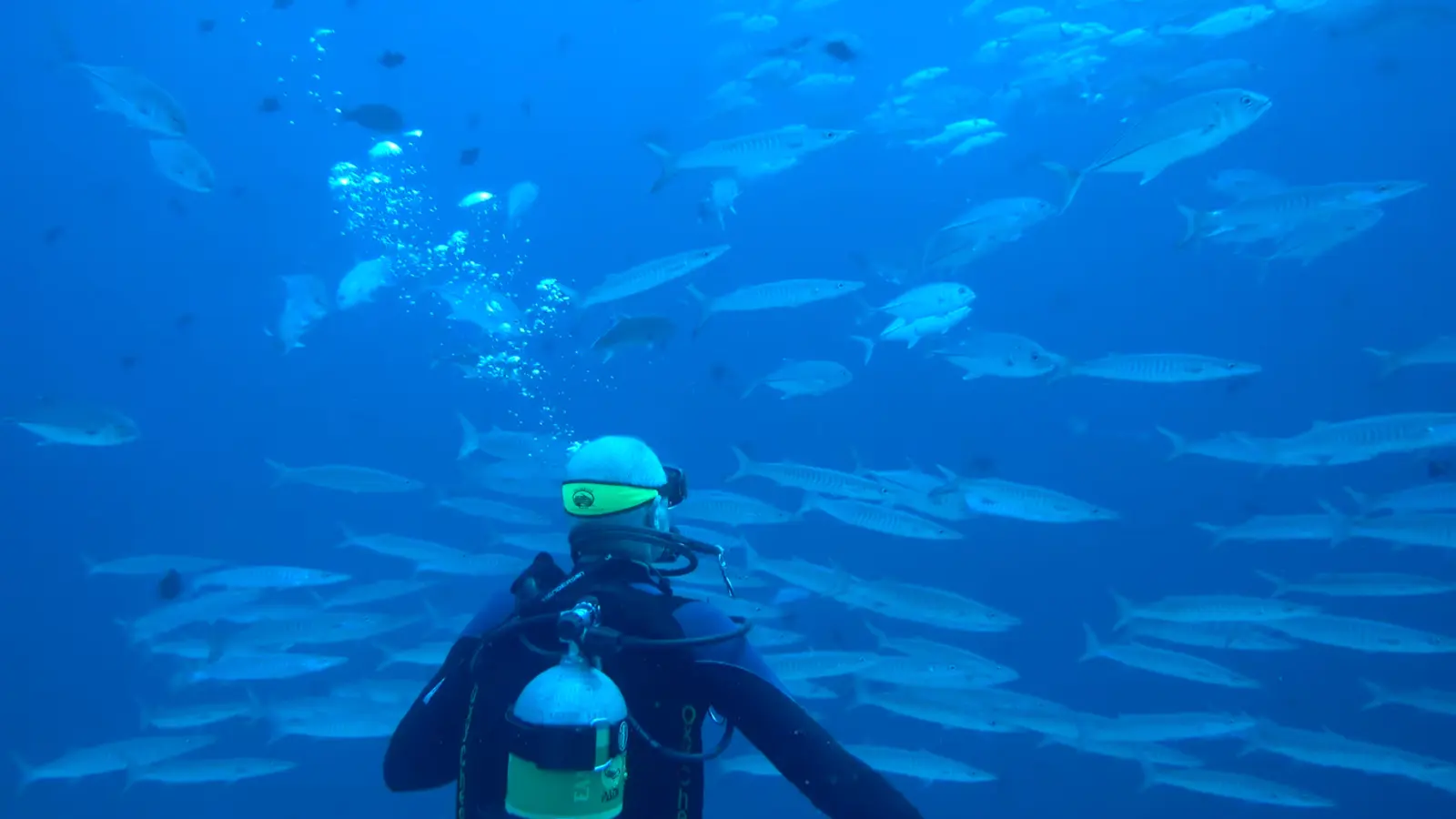
Namena combines soft-coral pinnacles with passages where larger fish gather. Dive Savusavu describes Grand Central Station as a drift among trevally, barracuda, reef sharks and colorful reef life. The useful question is which site and depth profile the crew plans for your group that day.
| Site or area | What makes it different | Published depth detail | Planning point |
|---|---|---|---|
| Grand Central Station | Schooling fish and reef-shark encounters in the North Save-a-Tack area. | A drift itinerary, with the profile chosen by the guide. | Current experience and a controlled ascent matter. |
| North Save-a-Tack Passage | A deeper plateau, reef drop-off, coral bommies and pelagic fish. | NAI’A describes a start around 95 ft, or 29 m. | That published start exceeds an 18 m Open Water limit. |
| Kansas | A coral outcrop covered in waving Sinularia soft coral. | A shallower section described on NAI’A’s passage itinerary. | A shallow finish does not make the whole preceding drift shallow. |
| The Chimneys | Two coral pinnacles with soft coral and small reef life. | The island’s site guide lists 8–30 m. | Choose a depth that matches your qualification. |
| Two Thumbs Up, Tetons and Mushrooms | Southern-reef pinnacles with fans, soft corals and macro life. | NAI’A describes tops near 4.5 m, rising from about 18–27 m. | Ask which pinnacle and profile suit the day’s conditions. |
The passage and southern-reef descriptions come from NAI’A’s dive-site guide; the Chimneys description comes from the Namena Island site guide. These are site descriptions, rather than a fixed dive schedule.
Look for reef sharks, schools of trevally and barracuda, reef fish, soft corals and the smaller animals your guide points out among the coral. Choose Namena for that mix of reef habitats. For a trip centered on organized shark diving, compare the separate Beqa Lagoon shark-diving guide.
Can you snorkel in Namena Marine Reserve?
Yes. Dive Savusavu advertises Namena snorkeling. Book that activity explicitly so the crew plans suitable reef time for you.
Ask about the snorkeling site, in-water supervision, flotation equipment, boat reboarding and how long you will spend in the water. A deeper drift-diving itinerary is not automatically a suitable day for a snorkeler. NAI’A welcomes snorkelers on its charters but says that some dive sites are unsuitable for snorkeling.
For a mixed group, give the operator each person’s activity, age and swimming confidence. If you prefer a shorter local outing, discuss Turtle Alley with Koro Sun Dive at Savasi; its own site describes snorkeling there. This gives the group another reef option when the offshore trip does not fit.
When is the best time to visit Namena?
NAI’A’s regional guidance favors May to October for visibility and November to April for warmer water. Its water-temperature records have monthly averages of roughly 25–29°C (77–84°F). Choose exposure protection for repeated dives, rather than assuming a thin suit will feel warm all day.
The boat crossing depends on wind and sea conditions. Tell the operator you want Namena before your stay and leave alternative excursion days available. Use the Fiji Meteorological Service marine forecast for the latest sea outlook; the crew will choose sites around local conditions and current.
What does a visit look like, and what should you bring?
A typical plan is a road pickup or arrival at the dock, equipment setup and briefing, the crossing, reef time and a return to the same operator base. L’Aventure JMC publishes Namena outings departing at 7:30 am and returning around 12:30 pm, or 8:30 am to roughly 1:30–2:00 pm with lunch. Use the times agreed for your booking; another operator’s schedule can differ.
- Dive documents: certification, recent dive log, any required medical clearance and your insurance details.
- Personal gear: a well-fitting mask, exposure protection and the equipment agreed with the operator; reserve rentals ahead.
- Surface comfort: towel, dry clothes, sun protection and a light windproof layer for the return boat.
- Water and food: ask what is supplied, then bring what you need for the outing.
- Dry storage: a dry bag for your phone, documents and anything that should stay out of seawater.
Discuss seasickness management with a pharmacist or clinician before the trip if you usually struggle on small boats. Bring the minimum luggage you need on board and leave valuables at your accommodation.
Where should you stay for Namena?
For a land-based trip, choose accommodation in Savusavu or along the nearby coast and match it to the operator’s dock. JMC has its own dive center; Koro Sun Resort is Dive Savusavu’s base; Savasi Island Resort hosts Koro Sun Dive. A town guesthouse can also work, with a separate road transfer to the excursion.
Namena Island Beach Resort is still in development as of October 9, 2026. Its website says construction completion is anticipated by December 2026 and opening a few months later; it is not yet accepting reservations. Treat those dates as the developer’s plans when deciding where to stay.
Our Savusavu guide helps you plan time ashore. For a longer trip, compare Namena’s land-based and liveaboard options with other regions in the Fiji diving guide.
What experience do you need to dive Namena?
Send the operator your certification level, number of dives, date of your last dive and experience in currents. A suitable shallow itinerary and a deeper passage dive require different skills. Agree on the sites, maximum depth and any refresher or further training before you pay.
PADI’s depth guidance gives 18 m for Open Water and 30 m for Advanced Open Water, or the shallower maximum reached during the relevant training. The roughly 29 m start on NAI’A’s North Save-a-Tack profile exceeds an Open Water qualification. Being accepted onto a boat does not extend your depth qualification.
Complete the operator’s medical screening early. A flagged answer on the 2026 Diver Medical questionnaire can require a physician’s evaluation. Ask about surface-marker procedures, emergency oxygen and evacuation arrangements, and make sure your insurance covers the diving you plan to do.
Returning to your flight, ferry or cruise ship
For flying after a two-tank trip or several days of diving, Divers Alert Network recommends a minimum 18-hour surface interval for asymptomatic divers after recreational air dives within no-decompression limits. Longer intervals further reduce risk. This applies to the flight from Savusavu or Labasa as well as your international flight. Build a full non-diving day into the itinerary before flying, and give the operator your first flight time.
A ferry departure or cruise call needs a different plan: work backward from the boarding deadline, including the offshore crossing, road return and any tender transfer. For a cruise stop, send the operator the ship’s arrival and all-aboard times before committing to Namena. If the available time is tight, choose a shorter Savusavu reef or town outing.
How to visit without damaging the reef
Namena forms part of the Kubulau community’s customary fishing grounds. CORAL’s history of the dive-tag program describes how it began in 2003 and funded reserve management, mooring maintenance, patrols and student scholarships. Arrange the tag through your operator and keep your receipt or tag for the trip.
Keep fins and loose equipment clear of coral, stay neutrally buoyant and leave marine life undisturbed. Do not stand on the reef or collect coral, shells or animals. For a private boat visit, arrange local access and a mooring plan before entering the reserve.
Frequently asked questions
Can I join a Namena dive without staying at a dive resort?
L’Aventure Jean-Michel Cousteau Diving explicitly welcomes non-resort guests. Arrange your place and road transfer with the dive shop. Ask the other operators about outside-guest bookings when requesting a quote.
Is Namena a good place for a first scuba dive?
Start with a supervised introductory program or course on a suitable local reef. The offshore crossing and deeper current sites make it important to choose the experience with an instructor. A first dive is a different booking from a certified-diver Namena trip.
Does the ferry to Savusavu take me to Namena?
Plan the Namena excursion as a separate boat journey. The ferry route brings you to Vanua Levu or Savusavu; meet your dive or snorkeling operator at its agreed departure base afterward.
Sources
Operational pages and published prices were checked on October 9, 2026. The CORAL article is used for the history of community conservation.
- Dive Savusavu: Namena trips and operator base
- Dive Savusavu: excursion options and tag tax note
- Dive Savusavu: phone, email and location
- Dive Savusavu: Grand Central Station and local sites
- Koro Sun Dive: Savasi base and snorkeling options
- Koro Sun Dive: published dive prices and Namena surcharge
- Savasi Island Resort: current Koro Sun Dive operation
- Savasi Island Resort: Savusavu and Labasa arrival routes
- Jean-Michel Cousteau Resort: Namena schedules, outside guests and dive-shop contact
- Jean-Michel Cousteau Resort: diving and Namena
- NAI’A: Namena passage and pinnacle dive sites
- NAI’A: 2026 charter prices, inclusions and fuel surcharge
- NAI’A: boarding, snorkeling and trip requirements
- NAI’A: regional water-temperature records
- Namena Island Beach Resort: development and reservation status
- Namena Island: Chimneys site description
- Coral Reef Alliance: dive-tag conservation history, published November 2018
- PADI: Open Water and Advanced Open Water depth limits
- Diver Medical questionnaire: English version dated January 1, 2026
- Divers Alert Network: flying after diving
- Fiji Meteorological Service: marine weather
Found an outdated detail or an access change? Send FijiEco a correction.