Traditional Fijian Plant Medicine in Savusavu
Written and researched by Yevhen Derkach
Last updated and fact-checked: .
To learn about traditional Fijian plant medicine in Savusavu, start with a guided herbal walk. Jean-Michel Cousteau Resort lists a Traditional Medicine Walk with a Fijian elder, while Koro Sun Resort lists a Herbal Walk among its complimentary guest activities. These visits offer a way to explore local plant knowledge through the people who share it, with time for questions about names, uses and cultural context.
What is Fijian plant medicine?
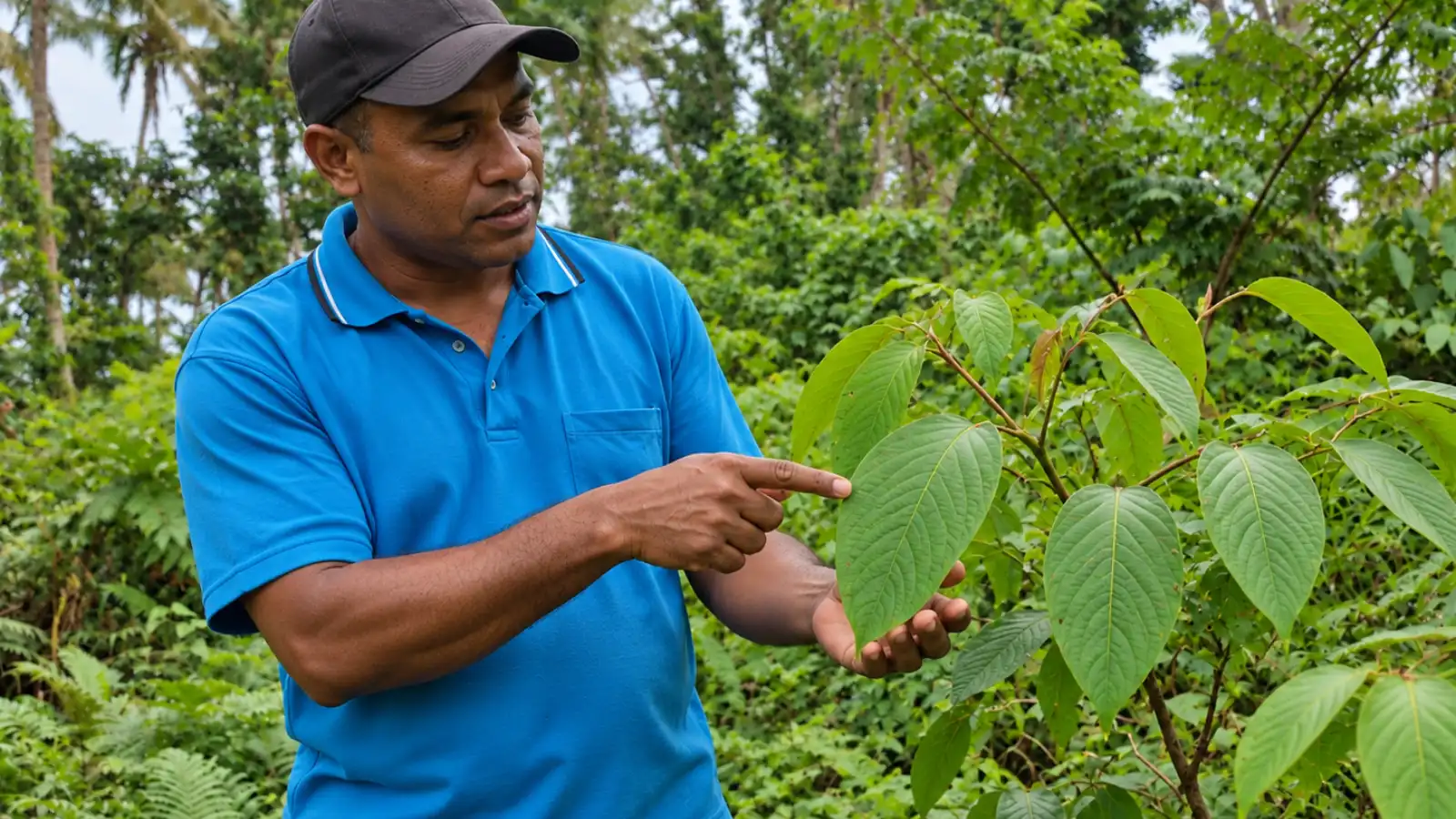
Fijian plant medicine refers to plant knowledge and traditional remedies shared within Fijian communities. A visitor can learn how a host recognizes a plant, which parts have been used and how that knowledge fits into local life. The same plant can also have food, craft or ceremonial uses, so botanical names and context matter more than a list of supposed cures.
The most useful questions go beyond “What does it treat?” Ask where the plant grows, whether it is cultivated, who taught your host about it and which information they are comfortable sharing. Record the explanation as that person’s or community’s knowledge, rather than assuming one story represents every village in Fiji.
Where to join a herbal walk in Savusavu
Jean-Michel Cousteau Resort: Traditional Medicine Walk
The resort’s current Heritage & Culture program includes a Traditional Medicine Walk led by a Fijian elder. It presents this alongside village visits, weaving and other complimentary cultural experiences for staying guests. The resort is on Lesiaceva Point Road, outside Savusavu town.
For arrangements, use the official contact page or call reservations on +679 229 8969 or +679 885 0174. Staying guests receive the next day’s activity program in their bure each evening, so plan around the actual session offered during your stay.
Koro Sun Resort: Herbal Walk
Koro Sun lists a Herbal Walk in its complimentary resort activities. It also lists Rainforest Trekking separately, so request the herbal activity if learning about traditional plant uses is your main aim. The resort is on Hibiscus Highway; it is a different destination from Jean-Michel Cousteau Resort.
Contact reservations at [email protected]. For accommodation and the wider guest program, see our Koro Sun Resort guide. Choose the host closest to your travel plans rather than treating both walks as stops you need to complete.
Waisali is closed. The National Trust of Fiji currently lists Waisali Rainforest Reserve as closed until further notice. Do not plan this visit around entry to the reserve. Our Waisali visitor guide covers its access status.
How to arrange your visit
If you are staying at either resort, ask the activity desk for the herbal walk during your dates. If you are staying in town, at another resort or arriving on a cruise, request an agreed visit directly with the host before setting out. The complimentary guest program does not give visitors staying elsewhere automatic access.
- Name the activity: Traditional Medicine Walk at Jean-Michel Cousteau Resort or Herbal Walk at Koro Sun.
- Set the session: date, start and finish time, group format and meeting point.
- Describe your group: number of adults and children, walking needs and preferred pace. Ask about steps, uneven ground or a shorter route when these affect your visit.
- Agree the total: walk fee, any visitor access charge, taxes and transport in both directions. Include any tasting or meal only if it is part of your arrangement.
A resort reception is the sensible arrival point unless the host gives you another named meeting place. Carry the booking details on your phone and leave time to meet your guide; arriving at a resort gate is not the start of the activity itself.
How to get there
| Starting point | Journey | Arrival plan |
|---|---|---|
| Savusavu town | Take a taxi or an arranged pickup to the chosen resort. Town taxis gather between the bus stand and market. | Give the driver the resort name and road: Lesiaceva Point Road for Jean-Michel Cousteau Resort; Hibiscus Highway for Koro Sun. |
| Savusavu Airport (SVU) | Continue by road to your accommodation or the booked host. Jean-Michel Cousteau Resort publishes approximately 15–20 minutes for its airport transfer. | Send your flight details to the pickup provider. Agree whether the transfer takes you to reception or another meeting point. |
| Nadi Airport (NAN) | Take a domestic Fiji Link flight to Savusavu, then a road transfer. Jean-Michel Cousteau Resort gives approximately one hour for the flight. | Allow for the domestic connection and arrival transfer as separate parts of the journey. Build the walk into your Savusavu stay. |
| Labasa Airport (LBS) | Use the road route across Vanua Levu. Jean-Michel Cousteau Resort offers an approximately 90-minute transfer from Labasa at an additional charge. | Book the full transfer to your actual destination. The resort’s quoted time applies to its own Labasa transfer. |
Our guide to reaching Savusavu covers the wider flight and ferry choices. For a day starting on a cruise ship or yacht, use the landing point supplied by your ship or marina as the pickup location and give the host your required return time.
Using the local bus
Local buses leave from Savusavu’s main bus stand. Tell the driver the exact resort and road, and establish the drop-off point and onward walk before boarding. A bus journey only works for a booked session when the route and return service fit its start and finish times.
Public buses accept a loaded eTransport card or QR payment through a funded eTransport app wallet. Prepare payment before boarding and keep your ticket or receipt. For QR payment, scan the code on the onboard payment terminal, check and pay the fare, then present your receipt QR to the same device. See getting around Savusavu for the local transport options.
Walk and transport costs
| Item | Published basis | What it covers |
|---|---|---|
| Jean-Michel Cousteau Resort walk | Listed among complimentary cultural experiences for staying guests. | Participation in the guest program; the stay itself is paid separately. |
| Koro Sun Herbal Walk | Listed as a complimentary resort activity. | The guest activity, rather than an open public admission ticket. |
| Visiting from another property | Agree a total directly with the host. | The session, permitted visitor access and any extras you select. |
| Ordinary Vanua Levu taxi | FJ$2.30 daytime or FJ$3.30 nighttime flagfall, plus FJ$0.14 per 100 m. | A metered vehicle hire. Waiting charges are additional; airport taxis have a separate fare schedule. |
| Resort or private transfer | Include both outward and return journeys in the quote. | Your actual pickup point and destination. Add the Labasa leg separately if using that airport. |
The temporary ordinary-taxi distance charge applies until 31 March 2027. Use the meter for an ordinary taxi journey, or agree the full price in advance when arranging a private tour vehicle or transfer. A hotel rate, spa treatment or rainforest excursion is not a price for a dedicated herbal walk.
Plant names worth recognizing
These names provide a starting point for the conversation. Ask your host which plants are actually on the route, and keep the local name alongside the botanical name in your notes. A list in a guidebook is not enough to identify a plant in the field.
| Plant | Botanical name | Useful learning focus |
|---|---|---|
| Noni | Morinda citrifolia | A Pacific tree with a history of traditional use. Different parts have been used; let your host explain the local context. |
| Kava | Piper methysticum | Its roots are used for the traditional Pacific drink. Plant knowledge connects here with preparation, ceremony and hospitality. |
| Ginger | Zingiber officinale | The part used in cooking is a rhizome, an underground stem. Discuss garden growing and kitchen use alongside local stories. |
| Turmeric | Curcuma longa | Another rhizome, recognized for its yellow pigment. Compare its culinary use with the uses described by your host. |
What to bring and how to learn
- Water, insect repellent, sun protection and a light rain jacket.
- Closed walking shoes with grip; choose clothing suited to the route.
- A phone or camera and a small notebook for names and observations.
- Your meeting details, driver’s contact and payment for any agreed extras.
Ask permission before photographing people, recording an explanation or handling a plant. A useful plant photo includes its leaves, growth habit and, when present, flowers or fruit. Leave plants in place and let the guide lead any demonstration. Credit your host when sharing an explanation they have agreed you can publish.
For a village visit arranged alongside the walk, follow the host’s guidance on dress, introductions and where to sit. Our Fijian culture and etiquette guide explains the wider visitor customs.
Herbal products and your health
Traditional use is cultural knowledge; it does not establish that a product treats a medical condition. NCCIH reports that noni has not shown beneficial effects for any health condition in human studies. It also reports rare, sometimes serious liver injury linked to kava products, including water-prepared drinks.
Do not taste unidentified plants or take unlabeled herbal preparations. Keep your prescribed treatment, and discuss herbal products with a qualified clinician if you take medication, are pregnant or are breastfeeding. Kava should not be combined with alcohol or sedatives. The NCCIH supplement guide explains the medication and safety issues. You can learn about a plant without consuming it.
Taking plants or products home
Leaves, seeds, cuttings, roots and packaged herbal products each raise different border questions. Drying or packaging an item does not automatically make it eligible for export or import. Use the Biosecurity Authority of Fiji’s export requirements and the destination country’s rules before buying plant material to take abroad.
For an item-specific export enquiry, BAF lists +679 331 2512 and [email protected]. Give the product name, ingredients, quantity and destination. Keep the original label and any required clearance documents with the item. Photographs and written notes are an easier souvenir than a bag of collected leaves.
Plan your day and return journey
Choose one hosted walk and build the rest of the day around its finish time. If you return to town, the Savusavu Municipal Market is a useful follow-up for fresh produce and everyday food plants. Ask vendors about what they sell and pay separately for anything you buy.
- Back to your accommodation: agree a pickup point, such as the resort reception, and who will collect you. For an included tour transfer, establish where it finishes.
- Back to a flight: plan the road pickup around your airline’s check-in deadline at Savusavu or Labasa Airport. The Labasa journey is a separate overland leg.
- Back to a ship or ferry: return to the boarding or tender point stated by your operator, with its final boarding time as the deadline.
Frequently asked questions
Is a herbal walk the same as a rainforest trek?
Koro Sun lists Herbal Walk and Rainforest Trekking as separate activities. Request the herbal walk for plant knowledge; ask about the actual route and walking demands when arranging your session.
Can I learn without trying herbal remedies?
Yes. Plant identification, names and cultural discussion do not require you to consume a remedy. Tell the host you want to observe and learn, and discuss any tasting before the visit.
Is this an apprenticeship or medical qualification?
A visitor walk introduces local knowledge through a host or guide. It is not a professional medical qualification. Book the cultural activity described by the operator, rather than expecting a long-term training program.
Sources
Programs, transport, access and health information were checked against the sources below on 6 October 2026.
- Jean-Michel Cousteau Resort: Heritage & Culture: Traditional Medicine Walk with a Fijian elder and guest cultural experiences.
- Jean-Michel Cousteau Resort: Contact Us: current reservations contacts.
- Jean-Michel Cousteau Resort: Location: Lesiaceva Point Road, Savusavu Airport transfer and the Labasa alternative.
- Jean-Michel Cousteau Resort: FAQs: flight and transfer estimates and the next-day guest activity program.
- Savusavu Tourism Association: Koro Sun Resort: resort profile and Hibiscus Highway location.
- Savusavu Tourism Association: Getting Around: town taxis, the bus stand and local transport.
- National Trust of Fiji: Waisali: the reserve’s current closure notice.
- Vodafone Fiji: eTransport App FAQs: physical cards, funded app payments and the QR sequence.
- The Fiji Times: FCCC taxi adjustment, 25 June 2026: Vanua Levu flagfall, ordinary distance charges and separate airport fares.
- FBC News: Taxi fare adjustment extended, 29 September 2026: extension of the temporary distance charge until 31 March 2027.
- NCCIH: Noni: botanical name, traditional use and clinical evidence.
- NCCIH: Kava: botanical name, Pacific use, liver injury and sedative interactions.
- NCCIH: Ginger: botanical name and the underground stem used in food.
- NCCIH: Turmeric: botanical name, the rhizome and yellow pigment.
- NCCIH: Using Dietary Supplements Wisely: medication interactions and risks during pregnancy and breastfeeding.
- Biosecurity Authority of Fiji: Exports: product-specific and destination-specific export requirements and BAF contacts.
Found an outdated detail or an access change? Send FijiEco a correction.