Getting Around Savusavu: Taxis, Buses and Car Rental
Last fact-checked:
Getting around Savusavu is easy when you choose transport by distance. Walk for the market, shops, waterfront and central sights. Use a metered taxi or resort shuttle when you have luggage or are staying outside town. Local buses are the lowest-cost option for longer routes, while a rental car makes sense for an independent day across Vanua Levu.

| At a glance | What travelers should know |
|---|---|
| Town centre | Walk for the market, shops, banks, marina area and hot springs. |
| Taxis | Standard LT taxis are metered. Carry Fijian-dollar cash and small notes. |
| Local buses | Cheapest for island routes. Public buses use the cashless eTransport system. |
| Rental car | Best for several out-of-town stops or an independent Vanua Levu day. |
| Your trip | Best first choice | Why |
|---|---|---|
| Market, shops and waterfront | Walk | The central area is compact and stops are close together. |
| Airport or resort with luggage | Pre-arranged transfer or taxi | Simplest door-to-door option with bags. |
| A village or settlement on a bus route | Local bus | Lowest cost if the timetable fits your day. |
| Several remote stops in one day | Rental car or driver | More control over timing and return transport. |
| Dive, snorkel or pearl-farm trip | Transport arranged with the operator | Activity boats are not a public harbour shuttle. |
Walking around Savusavu town
Walking is the most practical choice for a day in the centre. The bus stand, municipal market, shops, banks and waterfront are concentrated around the main commercial area. You can combine the Savusavu Town Market, marina area and Savusavu Hot Springs without hiring a vehicle for each stop.
Heat and sudden rain can make even a short walk tiring. Carry water, use sun protection and keep a light rain layer in your day bag. If your accommodation is outside the centre, treat the town as the walkable part of the day and arrange transport for the first and last leg.
Using taxis in Savusavu
Taxis usually gather in the centre between the main bus stand and the market. You can also flag one on the street or ask your accommodation to call a driver. For a standard LT taxi, check that the meter is running. An LH-licensed hire vehicle is not metered and uses fixed-distance rates, so confirm the fare before starting the trip.
Plan to pay in Fijian dollars and carry smaller notes. Do not rely on card payment unless the driver has specifically told you it is available. For a journey beyond town, show the exact property name or map pin and ask for an estimated total before leaving. The meter remains the reference for an ordinary taxi trip.
When a taxi is worth using
- You are arriving with luggage.
- Your resort is outside the walkable centre.
- You are travelling after dark or in heavy rain.
- You have a fixed appointment or activity departure.
- You need a return pickup from a place without regular passing traffic.
Save your accommodation number and map pin before leaving Wi-Fi. If you still need mobile service, use the Savusavu SIM and Wi-Fi guide to prepare your phone before relying on it for transport.
Local buses and the eTransport card
Local buses leave from Savusavu's main bus stand and serve routes around Vanua Levu. They cost less than taxis and give you a closer look at everyday island travel, but the journey can be slower and rougher. A bus works best when your destination is on a known route and you are not working around a tight return time.
Fiji's public buses use the cashless eTransport system. For a short visit, Tourism Fiji says travellers can buy a disposable e-ticketing card from bus checkers. These cards are valid for 30 days. If you want a permanent eTransport card, current Vodafone guidance says new cards are available at all Vodafone and Valuefone outlets across Fiji, with a passport accepted as identification. Make sure the card has enough value before starting a longer trip.
A simple bus plan
- Go to the bus stand and state the destination clearly.
- Check the last practical return service before leaving town.
- Make sure your eTransport card has enough balance for both directions.
- Ask where to wait for the return bus, especially outside a formal stop.
- Keep your accommodation phone number available in case your return plan changes.
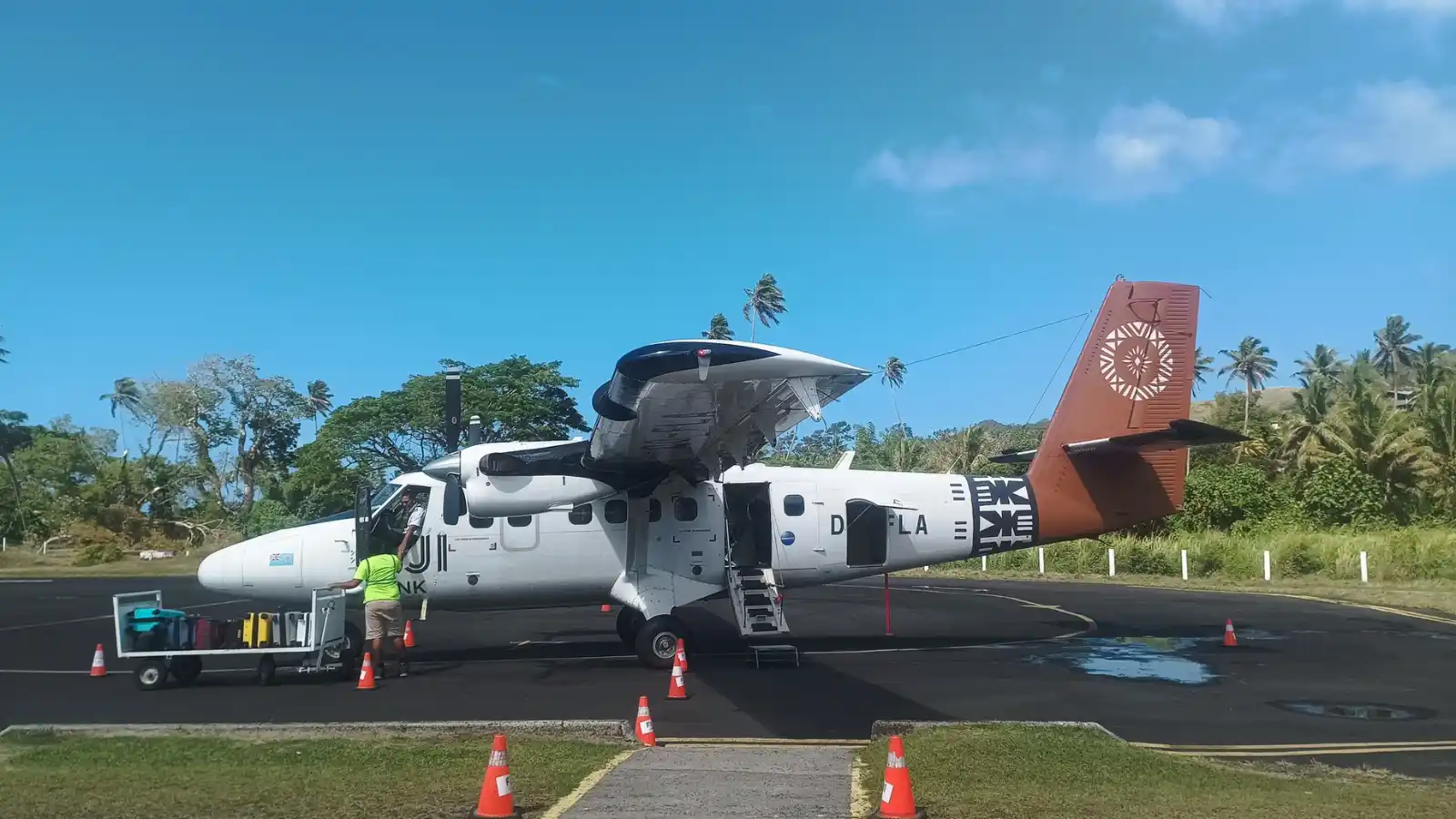
Resort and accommodation shuttles
Some resorts operate shuttles between their property and town. This can be more convenient than arranging separate taxis, particularly when the resort is well outside central Savusavu. Ask whether the shuttle is complimentary or charged, whether it follows set times and where the town pickup point is.
If you expect to visit town repeatedly, compare the shuttle schedule with the flexibility of taxis before deciding whether a rental car is worthwhile. A traveller staying centrally usually does not need a vehicle for the whole trip.
Renting a car for Vanua Levu
A car becomes useful when you want several stops outside Savusavu, are staying in a remote property or need to return after bus services finish. It is rarely necessary for a town-only visit.
Tourism Fiji advises that renters generally need a full valid driving licence in English, a security bond and to meet the rental company's minimum age. If your licence is not in English, carry an International Driving Permit or an accepted translation together with the original licence. Provider rules can be stricter, so read the rental terms before payment.
Before driving away
- Check the vehicle with the rental agent and photograph existing damage.
- Understand the insurance excess and roads excluded by the agreement.
- Ask where to refuel and whether the vehicle must return with a full tank.
- Download the route for offline use.
- Allow extra daylight for unfamiliar rural roads.
Fiji drives on the left. Expect pedestrians, buses, animals and slower vehicles on the road, and reduce speed when visibility or the road surface changes. Do not assume that every inland or coastal road is suitable for a standard rental car.
Your final transfer after arrival
For Savusavu Airport, first check whether your accommodation includes pickup. If it does not, pre-arrange a taxi or transfer and send the property name, flight number and arrival time. This avoids searching for a driver while carrying luggage and is particularly useful for a resort outside town.
For flight options, ferry operators, the Labasa route and through-bus connections, use the separate guide to reaching Savusavu. This page covers only the final local transfer from the airport or Savusavu arrival point to your accommodation.
Boat transport for marine activities
There is no general public boat shuttle that replaces local road transport. Dive trips, offshore snorkelling and the Savusavu pearl-farm tour use transport arranged as part of a specific booking. Your practical task is to know the meeting point, departure time and whether the operator collects guests from the accommodation.
Access depends on the activity. A trip to Namena Marine Reserve requires an operator and boat, while Lesiaceva Point is reached by road and entered from shore. Do not book a boat simply because an attraction is described as being near Savusavu Bay.
Which option fits your stay?
Staying in central Savusavu
Walk for daily needs and use an occasional taxi for luggage, rain or an evening return. A full-trip car rental will usually add cost without solving a real problem.
Staying at a resort outside town
Start with the resort shuttle and taxi options. Rent a car only when you have several independent trips that do not fit the shuttle schedule.
Exploring wider Vanua Levu
Choose a rental car for independence, a driver for a planned multi-stop day, or a local bus when the route and return time suit you. Do not build a fixed itinerary around an unverified online bus timetable.
Travelling with mobility needs or a child seat
Arrange the vehicle directly before travel. Step-free access, luggage space and child seats are not guaranteed in a vehicle found on the street.
Frequently asked questions
Do I need a car in Savusavu?
Not for a town-centre stay. Walk for the market, shops and waterfront, then use taxis or a shuttle for places outside town. A car is most useful for several remote stops in one day.
Do Savusavu taxis use meters?
Standard LT taxis are metered, so check that the meter is running. An LH-licensed hire vehicle is not metered and uses fixed-distance rates, so confirm the fare before starting the trip.
Can I pay a taxi by card?
Plan to pay in Fijian-dollar cash unless the driver confirms another method. Smaller notes are more practical than large denominations.
Can I pay cash on a local bus?
No. Public buses use eTransport rather than cash fares. Visitors can buy a disposable e-ticketing card from bus checkers, while permanent eTransport cards are available through Vodafone and Valuefone outlets.
How should I travel from Savusavu Airport?
Use an accommodation pickup if included. Otherwise, pre-arrange a taxi or transfer using your flight time and exact property name.
Do I need a boat for Lesiaceva Point?
No. Lesiaceva Point is reached by road and the snorkelling entry is from shore. Offshore sites such as Namena require a booked operator and boat.
Is Waisali Rainforest Reserve open?
No. The National Trust of Fiji currently lists the reserve as closed until further notice. Check its status before planning transport.
Sources and fact-checking
This guide was checked against current transport, visitor and operator information on 2 September 2026. Taxi meter charges, bus arrangements and individual transfer services can change, so the guide explains how each option works rather than presenting old route quotes as fixed prices.
- Savusavu Tourism Association: Getting around Savusavu
- Tourism Fiji: Land transport, taxi plates and payment
- Tourism Fiji: Road safety and rental requirements
- Vodafone Fiji: eTransport
- Vodafone Fiji: eTransport card FAQ
- National Trust of Fiji: Waisali Rainforest status
Transport details can change. If you find an outdated route, access condition or payment rule, please send FijiEco a correction.