What to Pack for Savusavu: A Practical Local Checklist
Last fact-checked:
Packing for Savusavu is mostly about four local decisions: the smallest baggage allowance on your route, whether you will stay in town or at a remote property, how much rain and water exposure your plans involve, and whether you are hiking, snorkeling or visiting a village. Bring items that must fit, work or be medically reliable. Buy ordinary groceries and basic toiletries in town instead of carrying them across Fiji.
This page is the Savusavu add-on to the complete Fiji packing list. Use that master guide for universal clothing, plug, documents, health and biosecurity guidance. Use this guide to decide what changes for a small domestic flight, Savusavu's wetter northern setting, rainforest trails, reef days and accommodation outside town.
Small Aircraft • Rainforest • Reef Days • Town Supplies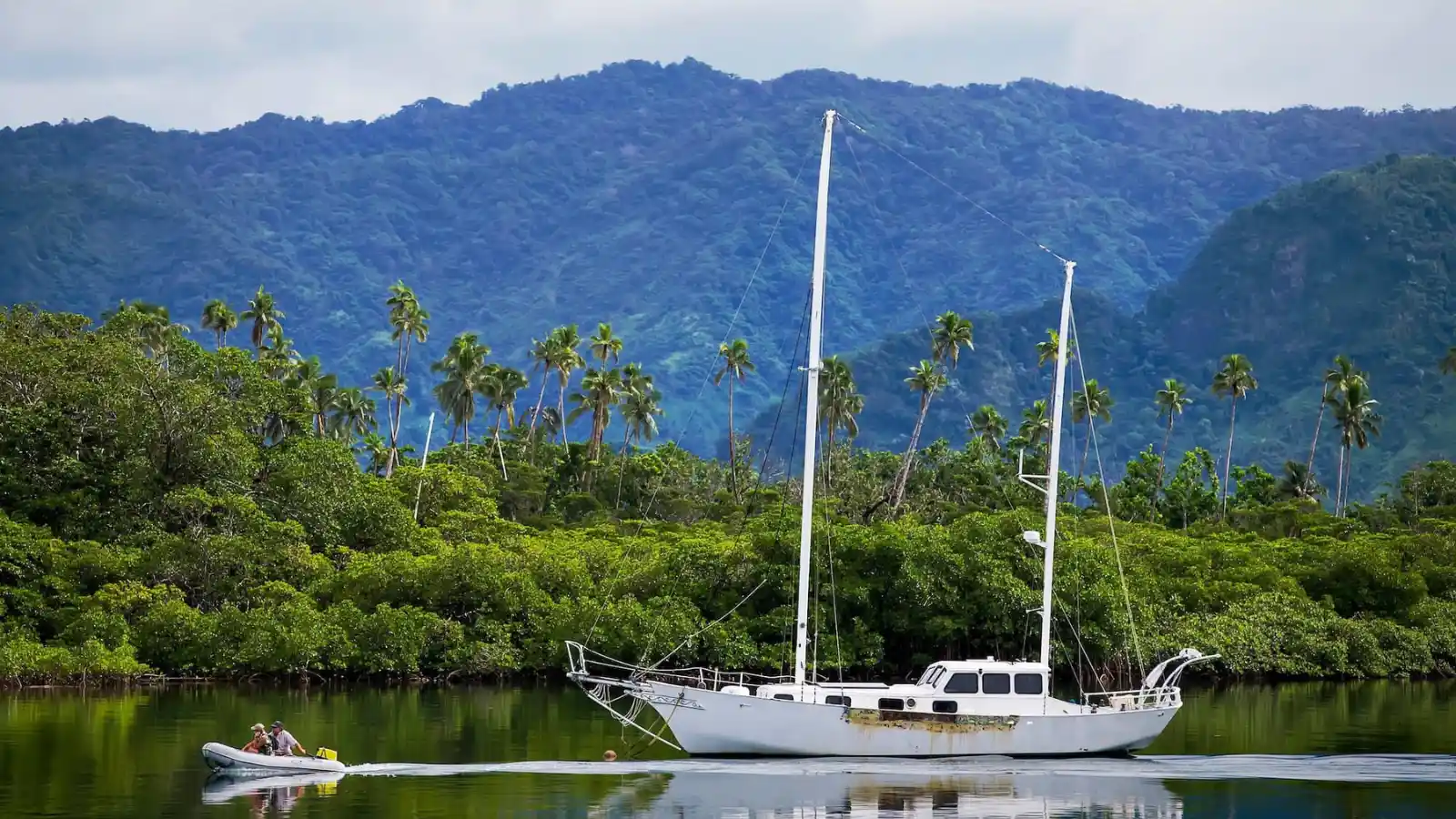
| At a glance | Best practical choice |
|---|---|
| Main packing rule | Pack to the smallest aircraft, boat or transfer allowance on the complete route |
| Bring from home | Prescription medicine, specialist products, spare eyewear and activity gear that must fit correctly |
| Buy in Savusavu | Ordinary groceries, drinks, basic toiletries, household supplies and a local sulu |
| Weather | Carry a light rain shell in every season and add waterproof storage in wetter months |
| Footwear | Sandals plus one comfortable closed pair; add trail or water footwear only when the itinerary needs it |
| Carry-on | Medicine, documents, valuables, charger, one light change and swimwear |
| Remote stay | Check transfers, meals, laundry, electricity, drinking water and supplied equipment before adding gear |
Make four Savusavu decisions before you pack
Most overpacking happens before the traveler has settled the route and activities. Answer these questions first, then build the bag around the answers.
| Decision | How it changes the bag | Where to check details |
|---|---|---|
| Direct flight, Labasa connection or ferry? | The smallest booked segment controls weight, dimensions and specialist gear | How to get to Savusavu |
| Town hotel, road-access resort or boat-only stay? | Remote properties make a torch, dry storage and first-night essentials more useful | Check the property's current transfer and room inclusions |
| Rainforest, reef or relaxed town days? | Footwear and water gear should follow the booked activity, not a generic Fiji list | Use the activity sections below |
| Will you shop in town before checking in? | A town stop lets you leave ordinary groceries and basic toiletries out of the main bag | Savusavu supermarket guide |
Bring from home, buy in Savusavu or add only if needed
This is the most useful way to divide the list. Availability in town is good for everyday needs, but no small destination can guarantee a specific medical, dietary or technical product on the day you arrive.
| Bring from home | Buy in Savusavu | Add only when your itinerary needs it |
|---|---|---|
| Prescription medicine, prescription copies and a reasonable delay supply | Water, drinks, snacks and ordinary groceries | Grippy trail shoes for an open wet-forest walk |
| Spare glasses, contact lenses and specialist personal-care products | Basic toiletries and household items | Water shoes for a rocky shore entry or slippery boat ramp |
| Sunscreen and insect repellent you know you can use comfortably | A sulu, simple beachwear and common replacement items | Personal snorkel mask when fit or prescription lenses matter |
| Critical dietary products and baby supplies that cannot be substituted | Fresh produce and locally available food for self-catering | Dry bag, headlamp or extra power only for boat days and remote stays |
| Broken-in footwear and any activity equipment that must fit precisely | Yaqona only when a host or guide tells you it is needed | Dive, camera or fishing equipment after checking what the operator supplies |
What you can buy in Savusavu town
New World-IGA and MaxVal-u are the two main supermarkets serving central Savusavu. They are appropriate first stops for a normal grocery run, packaged food, drinks, toiletries and household basics. The separate Savusavu supermarkets and shopping guide keeps the current store details, Sunday planning and practical route information. This packing page does not repeat business hours because those can change.
Use town shopping to reduce weight, not to gamble with essentials. Bring a reliable supply of prescribed medicine, allergy-safe products, specialty infant items, a particular contact-lens solution or a dietary product you cannot replace. Brands and stock vary, even when the category is normally sold.
For fresh produce and the visitor experience, use the Savusavu Municipal Market guide. If your flight arrives late or your accommodation is far from town, keep enough drinking water, a suitable snack and essential medicine for the first evening and morning. Buy chilled or frozen food only after confirming that you can return directly to working refrigeration.
Pack for the route and protect the first 24 hours
Many international visitors reach Savusavu on a domestic aircraft to Savusavu Airport or Labasa. The allowance on that segment may differ from the international ticket, and fare conditions can differ on the same route. Read the baggage line on the ticket you actually bought. Check dimensions and acceptance separately for dive gear, camera cases, strollers and other bulky items.
Ferry and road routes may give you more weight flexibility, but bags can still be lifted between vehicles, cabins and accommodation. A light soft-sided bag is easier on mixed transfers. A wheeled suitcase is perfectly reasonable when every stage is by airport trolley, taxi and road-access hotel.
Keep these items with you
| Carry-on item | Why it matters on the Savusavu route |
|---|---|
| Medicine and medical documents | They remain available during delays and do not depend on local stock |
| Passport, insurance and accommodation contacts | You can complete the transfer even if the checked bag is delayed |
| One light change, swimwear and sandals | Enough for the first day without turning the cabin bag into a second suitcase |
| Phone, cable and approved power bank | Booking details, driver contacts and offline directions remain accessible |
| Hard-to-replace personal item | Examples include prescription eyewear, a fitted mask or a child's essential comfort item |
Follow the airline's current rules for liquids, batteries and power banks. Download the booking, insurance number, accommodation address and pickup contact before departure. The Savusavu SIM and Wi-Fi guide can help you plan connectivity after arrival, but a working offline copy is still the safer first step.
Pack for rain, strong sun and mosquitoes
Savusavu is warm throughout the year. June through September is generally the drier window, while November through April is warmer and wetter. Drier does not mean rain-free, especially around rainforest and coastal hills. A light, breathable rain shell earns its place in every season. In wetter months, add a dry pouch for documents and electronics, a waterproof liner for the daypack and enough quick-drying clothes to avoid depending on one soaked outfit.
Check the Savusavu weather and best-time guide for the local monthly pattern, then use the current forecast near departure. Boat conditions need a marine forecast, not only the town weather icon.
For sun, combine shade, a hat, UV-protective sunglasses, a rash guard and broad-spectrum water-resistant sunscreen. A "reef safe" label alone does not tell you which UV filters a product uses, so check the active ingredients. If reducing potential impact on aquatic life matters to you, consider mineral active ingredients and reduce the amount washed into the sea by using UPF clothing. Skin protection still comes first.
Dengue occurs in Fiji, and day-biting mosquitoes matter as well as evening mosquitoes. Bring a repellent with a proven active ingredient that you can use as directed, plus a light long-sleeved top and loose trousers. A mosquito net is not a default resort item; pack one only when the accommodation says beds are unscreened or a field program requests it.
Add footwear and gear for the activities you booked
Savusavu does not require hiking boots, reef shoes and a full snorkel set from every visitor. One suitable closed shoe and one pair of sandals cover many town and resort stays. Add specialist items only for a real route or activity.
Current Waisali status: The National Trust of Fiji lists Waisali Rainforest Reserve as closed until further notice. Do not plan a visit while the closure remains. If it reopens, closed footwear with dependable grip would be appropriate for the wet forest trail.
| Your plan | Wear or bring | Usually unnecessary |
|---|---|---|
| Town, marina and resort days | Comfortable sandals and one light closed walking shoe | Heavy hiking boots and several dress shoes |
| Waisali Reserve, if it reopens, or another open rainforest trail | Broken-in closed footwear with grip, rain shell, water and insect repellent | New, untested boots bought only for this trip |
| Lesiaceva Point or another shore snorkel | Rash guard, secure sun protection and a personal mask if fit matters | Bulky fins unless rental is unsuitable for you |
| Dive or boat excursion | Certification details, any prescription mask and a small dry pouch | Rental-replaceable gear before checking what the operator includes |
| Rocky entry or slippery boat ramp | Water shoes with a secure sole when the site or operator recommends them | Water shoes for walking or standing on living coral |
Ask what is included before carrying a towel, fins, wetsuit, life jacket or dry bag. For a fitted mask, prescription lens or familiar dive computer, personal comfort may justify the space. For one casual excursion, operator gear is usually the simpler choice.
Check the accommodation before packing for a remote stay
The words "remote", "eco" and "self-catering" do not tell you exactly what is in the room. A full-service property such as Namale Resort near Savusavu may supply far more than a small villa, homestay or boat-only property. Check the exact room and transfer, not the accommodation category alone.
- Arrival: Is airport or town pickup included, and can the driver carry large or specialist bags?
- Food: Which meals are included, where is the nearest shop, and what kitchen equipment actually works?
- Water: What drinking-water arrangement does the property use, and should you bring a refillable bottle?
- Laundry: Is there guest laundry, a paid service or only hand-washing?
- Power: Is electricity continuous, generator-based or solar, and can essential medical equipment be supported?
- Connectivity: Which mobile network works at the property, and is Wi-Fi limited to a common area?
- Activities: Are towels, snorkel equipment, life jackets, umbrellas or torches supplied?
Arrange the return trip before a large town shop. The Savusavu local transport guide explains walking, taxis, buses, resort shuttles and rental cars. A light town bag is manageable on foot; a full food shop for an out-of-town stay normally needs a taxi or a confirmed property transfer.
Pack one respectful outfit for an arranged village visit
For an organized village visit, bring a light outfit that covers shoulders and reaches around the knee, plus footwear that is easy to remove. A sulu is compact and can be bought in town. Follow the guide or host on hats, sunglasses, photography and where to sit or walk.
Do not pack a fixed amount of kava because a generic checklist says every visitor needs it. Ask whether a sevusevu presentation is part of the arranged visit and whether the guide supplies the yaqona for the group. Do not arrive at a village unannounced. The Fiji cultural etiquette guide gives broader context, while the instructions of your actual host take priority.
A lean one-week Savusavu checklist
Use this as a starting point, then remove every conditional item that does not match the trip. Laundry access, restaurant dress rules and activity inclusions can reduce the list further.
| Category | Practical starting list |
|---|---|
| Documents and health | Passport and entry documents, insurance details, bookings, prescriptions, medicine and spare eyewear |
| Clothing | Four or five light tops, two or three bottoms, underwear, sleepwear, two swimsuits, one modest outfit and one light long layer |
| Weather and sun | Rain shell, hat, sunglasses, sunscreen, insect repellent and refillable bottle |
| Footwear | Sandals plus one comfortable closed pair; add trail or water shoes only for a confirmed need |
| Electronics | Phone, cables, Type I plug adapter and airline-compliant power bank if useful |
| Day kit | Small daypack, dry pouch, reusable bag and compact first-aid supplies suitable for you |
| Conditional extras | Personal mask, hiking footwear, headlamp, seasickness treatment or specialist gear only when the route needs it |
Items most Savusavu travelers can leave out
- Several formal outfits: take one only when the booked property or event has a stated dress code.
- Five pairs of shoes: sandals and one activity-appropriate closed pair are enough for many trips.
- A full snorkel set for one outing: first check what the operator includes; fins consume substantial space.
- Bulky beach towels: confirm what the accommodation and boat operator provide.
- A fixed sevusevu gift: let the host or guide explain whether anything is needed and how it should be arranged.
- Food you do not need: ordinary supplies are available in town, and food entering Fiji must be declared.
- Dirty outdoor equipment: clean soil and plant material from used shoes and gear, then declare risk goods on arrival.
- Single-voltage appliances: Fiji uses 240V, 50Hz; check the device label before packing it.
The final 10-minute check before departure
- Read the baggage allowance for every booked segment and weigh the finished bag.
- Confirm the Savusavu or Labasa pickup, including the flight number and accommodation contact.
- Move medicine, documents, valuables, one change and hard-to-replace items into the carry-on.
- Download tickets, insurance, offline maps and driver details so they work without mobile data.
- Check the accommodation's meals, laundry, water, power and supplied activity equipment one last time.
- Clean used outdoor gear and declare food, plant, wood, soil and used-equipment risk items when entering Fiji.
- Check the current land forecast and, for a boat day, the current marine forecast.
Frequently asked questions
Can I buy basic toiletries in Savusavu?
Basic toiletries and everyday supplies are available in town. Bring your preferred sunscreen, specialist skincare, contact-lens products and anything you cannot safely substitute, because a particular brand or formula cannot be guaranteed.
Do I need hiking boots for Savusavu?
Not for an ordinary town or resort stay. Waisali Rainforest Reserve is currently closed until further notice. If it reopens, or if you book another open wet forest trail, use broken-in closed footwear with dependable grip. Heavy boots are useful only when the route, conditions and your support needs justify them.
Should I bring my own snorkel gear to Savusavu?
Bring your own mask if fit, hygiene or prescription lenses matter to you. Occasional snorkelers can often use operator gear, and bulky fins are usually the first item to leave at home. Check the exact excursion before packing.
Do I need a rain jacket in Savusavu's drier months?
Yes, a light packable shell is useful even from June through September. Those months are generally drier, but showers still occur and rainforest or boat plans can be wetter than the town forecast suggests.
What should stay in my carry-on for Savusavu?
Keep essential medicine, prescriptions, passport, insurance, valuables, phone charger, one light change, swimwear and any hard-to-replace personal item with you. Follow the airline's current liquid and battery rules.
Should I pack kava for a village visit?
Do not buy or pack a fixed quantity automatically. Ask the host or tour guide whether a sevusevu presentation is part of the arranged visit and whether the guide supplies the yaqona. Follow the local host's instructions.
Is a suitcase or backpack better for Savusavu?
A suitcase works for flights followed by taxis and a road-access hotel. A light duffel or backpack is easier for small boats, steps and mixed transfers. Choose for the most restrictive segment and check the booked baggage allowance before deciding.
Sources and verification
This guide separates stable packing decisions from details that change. Check the booked airline, accommodation and activity operator for the final operational answer.
- National Trust of Fiji: current Waisali Rainforest Reserve status
- Fiji Airways: Fiji Link domestic flights and baggage
- Fiji Revenue and Customs Service: arriving in Fiji, medicines and biosecurity declarations
- CDC Travelers' Health: Fiji traveler view
- Fiji Meteorological Service: current public and marine forecasts
- NOAA: sunscreen ingredients, UPF clothing and marine life
- Savusavu Tourism Association: local shopping information
- Tourism Fiji: visitor etiquette guidance
Last reviewed: 2 September 2026. Airline rules, health guidance, weather, shop stock and accommodation inclusions can change.
Found an outdated detail? Email [email protected].