Waterfalls Near Suva: Wainadoi, Swimming and Safety Guide
Waterfalls near Suva are not one uniform set of public attractions. Colo-i-Suva is a managed forest park with its own access notices. Wainadoi is discussed in local visitor media and has been offered as an escorted day trip, but FijiEco could not verify a current official visitor page, fixed opening hours, public trail, entrance fee or guaranteed swimming access. Other inland waterfalls normally require a named local guide or an organised operator.
Choose the place only after confirming who controls access, where you will meet, whether the route is open and what recent rain has done to the river. Do not set out from Suva using an old social-media pin alone. This guide explains what can be verified, what remains uncertain and which questions to ask before paying for transport.
Wainadoi • Colo-i-Suva • Guided Waterfall Trips • Freshwater Safety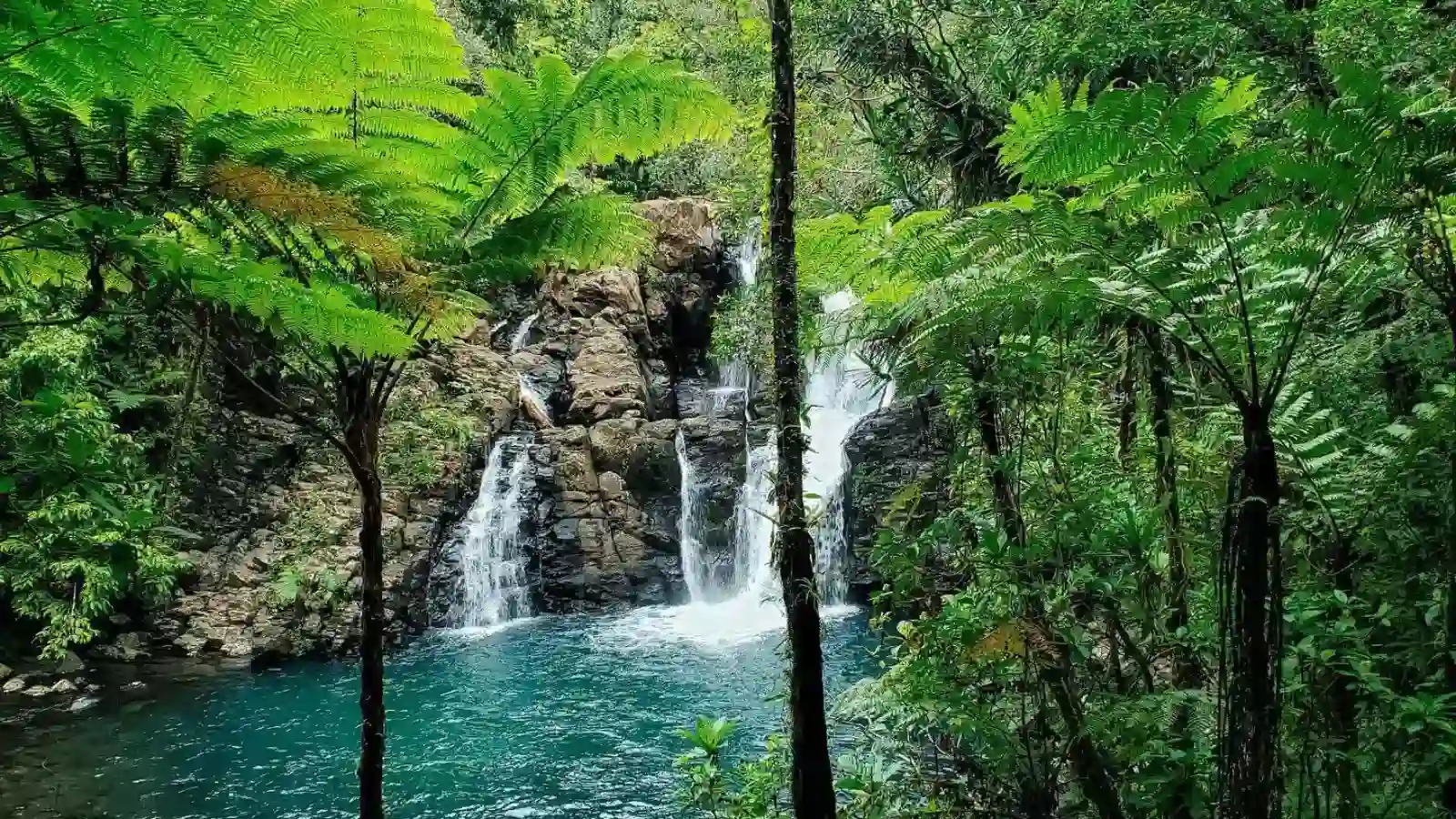
| Option | Best for | What is dependable | What to confirm |
|---|---|---|---|
| Wainadoi Waterfall | Travelers who can arrange an escorted local visit | Wainadoi day trips have been advertised by local tour providers | Current permission, meeting point, route, river crossings, fee and swimming conditions |
| Colo-i-Suva Forest Park | A managed forest setting with paths and natural pools when open | The Ministry of Forestry publishes park information and operational notices | Current opening status, open paths, pool access and health notices |
| Arranged Navua or interior trip | Visitors who want transport, a guide and a planned river or waterfall stop | Active operators advertise guided river outings that include a waterfall swim | Exact waterfall, pickup area, walking level, inclusions and weather cancellation policy |
| Unverified map or social-media pin | Research only, not a safe standalone itinerary | A photo or pin may show that a place exists | Legal and practical access, landholder permission, road condition and safe return transport |
Which waterfall trip should you choose?
Choose Colo-i-Suva if you want a named forest park and its current status has been confirmed. Choose Wainadoi only when a local host, driver or guide has confirmed the exact meeting point and access for your date. Choose an organised Navua or interior trip if you prefer the operator to manage transport, community access and changing river conditions.
The least dependable plan is asking a taxi to follow a waterfall pin and leave you there. A pin does not establish a public path, permission to cross land, safe river levels, mobile reception or a return ride. Near Suva, a confirmed contact and return arrangement matter more than finding the shortest-looking route on a map.
Simplest verified structure
Colo-i-Suva, when the Ministry confirms that the park and relevant paths are open.
Most local planning required
Wainadoi, because current public access, route details and facilities are not formally published.
Most logistics included
A prebooked guided river or waterfall trip with pickup and a weather policy in writing.
Wainadoi Waterfall: what travelers can verify
Wainadoi lies along the Queen's Road corridor southwest of Suva. Local visitor videos and a Suva tour provider have referred to a Wainadoi waterfall or waterfall day tour. That confirms genuine visitor interest, but it does not turn the place into a formal walk-in attraction with a permanent entrance, marked public trail or fixed visitor services.
FijiEco did not find a current government or official tourism page publishing the exact waterfall entrance, opening hours, admission price, route length, pool depth, toilets or changing facilities. For that reason, this guide does not provide turn-by-turn directions or a precise GPS coordinate. A location pin without a current host can lead to the wrong side of a river, private or community land, or a route that is unsuitable after rain.
Arrange these details before leaving Suva
- The name and phone number of the host, guide or driver responsible for the visit.
- A named meeting point, not only the words “Wainadoi Waterfall.”
- Confirmation that access is permitted on your date.
- Whether the route includes river crossings, steep ground or slippery rock.
- The complete price, what it includes and who receives any local access payment.
- Whether swimming is currently advised and whether children can safely complete the route.
- A return pickup time and a fallback plan if weather changes.
Treat the visit as a locally arranged nature outing, not as an unsupervised roadside stop. Dress modestly when meeting a community host, follow local instructions and ask before photographing people. The FijiEco guide to Fijian culture and etiquette explains the difference between resort behavior and visiting local communities.
Colo-i-Suva is a separate park experience
Colo-i-Suva Forest Park is the better documented option because the Ministry of Forestry publishes park information and operational notices. It combines forest walking with upper and lower natural pools when access and conditions permit. It should not be presented as three guaranteed waterfalls with fixed depths, route lengths or year-round swimming.
Fiji Government reported that the park reopened on 1 April 2026. The Ministry of Forestry later announced another temporary weather-related closure on 19 May 2026, until further notice, because of unsafe conditions including slippery tracks, falling branches and flash-flooding risk. FijiEco did not find a later official reopening notice during this review.
For park-specific hours, trail expectations, transport planning and health information, use the dedicated Colo-i-Suva Forest Park visitor guide.
Guided waterfall and river trips south of Suva
A guided outing is the practical choice when the waterfall sits beyond a simple public entrance. An active Navua-based operator, River Tubing Fiji, advertises a river experience that includes a waterfall swim. Its terms also state that a trip may be cancelled or changed because of river or weather conditions. That is the right operational principle for any inland water activity.
FijiEco is not presenting one commercial operator as the only option or guaranteeing its service. Use the listing as an example of an arranged format, then compare a current written quote, recent reviews, pickup location, insurance, guide support and cancellation terms. Ask the operator to name the actual waterfall and explain the route before you book.
| Question | Why it matters |
|---|---|
| What is the exact waterfall or river section? | Generic tour names can hide a different route from the one shown in photos. |
| Is pickup from my Suva hotel included? | A tour may start in Navua or another meeting point rather than in Suva. |
| What happens after heavy rain? | A responsible operator should explain cancellation, rerouting and refund terms. |
| Are lifejackets and helmets supplied? | Equipment should match the river activity, not only the swimming stop. |
| What are the age, swimming and mobility requirements? | A photo cannot show current, depth, rock access or the walking approach. |
Transport planning from Suva
For Wainadoi or another informal inland location, use a driver who has confirmed the destination with the host. Agree on whether the driver waits, the return time, the complete fare and what happens if the road or route becomes unusable. A one-way drop-off is a poor plan where reception and passing transport are uncertain.
Public buses may serve settlements along major roads, but that does not mean a bus reaches the waterfall entrance or provides a safe return after the walk. Do not rely on an old bus fare or stop without checking the current route locally. The FijiEco guide to using reliable taxis in Suva provides a useful starting checklist.
- Send the driver the host's phone number and agreed meeting point.
- Keep enough time to return before dark.
- Download the relevant map area, but do not treat it as proof of access.
- Carry the driver's number offline and share the plan with your accommodation.
- Do not leave valuables visible in a waiting vehicle.
Rain changes the route and the water
A sunny morning in Suva does not prove that an inland catchment is safe. Rain upstream can raise water, strengthen current, reduce visibility and make tracks or river crossings slippery. Recent rain also makes fixed online descriptions of pool depth and safe jumping points unreliable.
Check the Fiji Meteorological Service forecast and warnings on the morning of the trip. Ask the host or operator whether it rained at the site or upstream, not only whether it is raining in central Suva. The FijiEco Fiji weather guide explains the wider seasonal pattern, but a same-day local check still decides whether to go.
Do not enter the water when
- The host, guide, park staff or signs say the pool or route is closed.
- Water is rising, fast, unusually cloudy or carrying branches and debris.
- Thunder, heavy rain or a warning affects the area or upstream catchment.
- You cannot see a safe exit point or assess the current.
- You are alone, unwell or unsure of your swimming ability.
Never jump or dive from rock based on an old video. Water level, submerged branches and rocks can change. Enter slowly only where current local guidance permits swimming.
Freshwater health and leptospirosis
In February 2026, Fiji's Ministry of Health and Medical Services reported three teenagers with suspected severe leptospirosis who all had a recent history of swimming at Colo-i-Suva. One patient died, and the Ministry said its outbreak response team was investigating. The advisory did not establish the park's water as the confirmed source of infection, so the swimming history should not be presented as proof of causation.
The US Centers for Disease Control and Prevention states that leptospirosis risk often increases after heavy rain or flooding when people contact contaminated water or soil. It advises avoiding water that may be contaminated, covering cuts with waterproof bandages and wearing protective footwear near potentially contaminated water or soil.
Check current Fiji health notices before swimming. Avoid freshwater when you have uncovered cuts or when heavy rain, flooding or a local advisory creates added concern. Seek medical care promptly if you become unwell after possible exposure. See the FijiEco Fiji health and safety guide for wider trip planning.
What to bring
For the route
- Closed shoes with dependable grip
- Light rain layer
- Drinking water and a snack
- Charged phone and offline contact details
- Small first-aid kit and waterproof dressings
For a permitted swim
- Swimwear worn discreetly until you reach the swimming area
- Towel and dry change of clothes
- Water shoes if the host recommends them
- Dry bag for electronics
- Any flotation equipment required by the operator
Carry out all rubbish. Do not use soap or shampoo in a natural pool, damage plants, move rocks or play loud music near homes and community areas.
Realistic trip plans
Half-day plan
- Choose one location only and confirm access on the same morning.
- Leave early with a prearranged driver or confirmed park transport.
- Ask about the route and water before starting the walk.
- Swim only if the site host or staff permits it and conditions are calm.
- Return with enough daylight and transport margin.
Full-day guided plan
- Book a named operator and obtain the complete itinerary in writing.
- Confirm pickup, equipment, meals, community access and cancellation terms.
- Reconfirm weather and river conditions before departure.
- Follow the guide's decision even if swimming or part of the route is cancelled.
- Keep the evening free in case the return takes longer than expected.
Do not combine Wainadoi and Colo-i-Suva merely because both appear close to Suva on a broad map. Access checks, walking, swimming and transport waiting time make one verified site a better day than several rushed, uncertain stops.
Frequently asked questions
Where is Wainadoi Waterfall?
Wainadoi is on the Queen's Road corridor southwest of Suva, but FijiEco could not verify one official public waterfall entrance or authoritative GPS point. Arrange a named meeting point with a current local host, driver or guide rather than using an old pin alone.
Can I visit Wainadoi Waterfall without a guide?
Do not assume that you can. Current public access rights, route markings and facilities are not officially published. Confirm permission and local support before travelling.
Is Wainadoi the same as Colo-i-Suva?
No. Wainadoi and Colo-i-Suva are different locations and different visit types. Colo-i-Suva is a managed forest park. Wainadoi should be treated as a locally arranged outing unless a current operator provides a different verified setup.
Are there waterfalls inside central Suva?
The waterfall and natural-pool experiences discussed here are outside the central city. Plan road transport and a return arrangement rather than treating them as walkable city attractions.
Can I swim after heavy rain?
It is safer to avoid freshwater swimming after heavy rain or flooding unless current local authorities and the site operator clearly advise that conditions are suitable. Rain can affect current, visibility, access and health risk.
How much does a waterfall visit cost?
There is no dependable single price. Ask for the complete current amount covering transport, guiding, equipment and any community or site payment. Do not copy an old fee from a blog or social-media post.
Are these trips suitable for children?
Suitability depends on the exact route, current, depth, supervision and the child's ability. Ask the host or operator about age limits, river crossings, flotation equipment and exit points. Do not assume that a calm-looking photo represents current conditions.
What is the best waterfall near Suva?
There is no universal best choice. Colo-i-Suva offers the clearest formal structure when open. Wainadoi suits travelers with verified local arrangements. A guided Navua or interior trip suits visitors who want transport and access organised for them.
Sources and verification
Sources were checked on 21 September 2026. Commercial and social pages below confirm only what those providers have advertised. They do not prove permanent public access or endorse a business.
- Fiji Ministry of Forestry: Colo-i-Suva Forest Park information
- Fiji Government: Colo-i-Suva reopening notice dated 1 April 2026
- Fiji Government and Ministry of Forestry: temporary closure notice dated 19 May 2026
- Fiji Ministry of Health and Medical Services: leptospirosis public advisory
- US CDC: leptospirosis exposure and freshwater precautions
- Fiji Meteorological Service: forecasts and warnings
- River Tubing Fiji: operator description including a waterfall swim
- River Tubing Fiji: weather and river-condition cancellation terms
- Fiji Traveller: local Wainadoi access context, 16 September 2025
- Local tour listing: Wainadoi Waterfall day trip advertised in 2023
Editorial note: FijiEco separates formal operational information from local trip context. Exact Wainadoi directions, fees and facilities will be added only after a current landholder, community host, operator or relevant authority can verify them. Corrections can be sent to [email protected].