Traditional Fijian Food: 12 Dishes to Try in Fiji
Last fact-checked:
Fiji does not have one uniform cuisine. Indigenous iTaukei cooking uses seafood, coconut, leafy vegetables and root crops such as dalo and cassava. Indo-Fijian cooking adds another major part of everyday food culture through curries, dhal, roti, chutneys and snacks. Travelers will often encounter both traditions in the same town, market or restaurant.
This guide helps you recognize common Fijian food names, understand what each dish usually contains and choose meals that fit your diet and comfort with raw seafood. It also explains where a lovo differs from an ordinary restaurant meal, what to ask before a village or resort feast, and how to approach street food without relying on vague claims about what is "authentic" or automatically safe.
12 Food Names • iTaukei and Indo-Fijian • Dietary Checks • Food Safety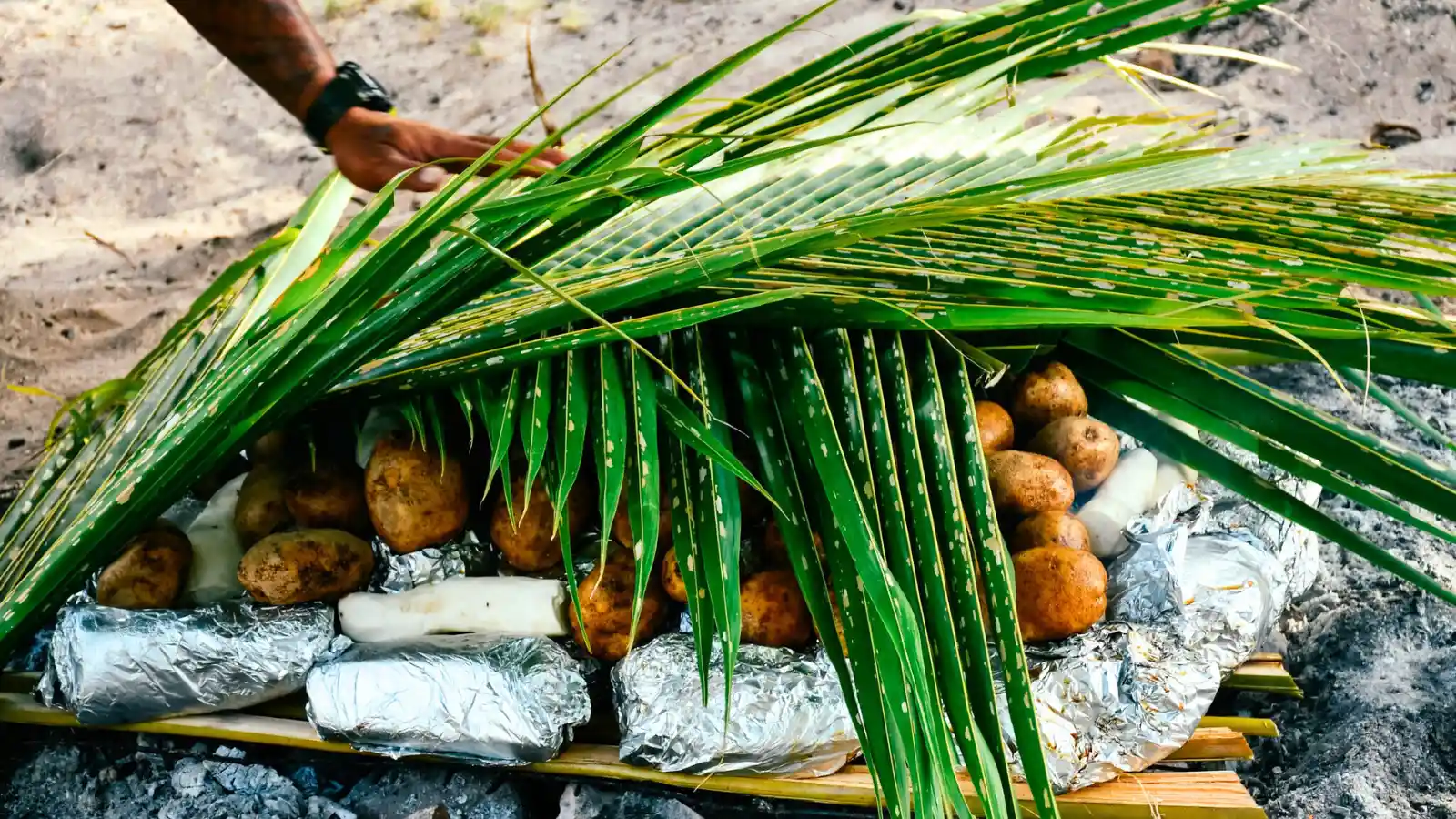
Fijian food at a glance
| Quick question | What travelers should know |
|---|---|
| Best-known seafood dish | Kokoda, made with raw fish, citrus, coconut milk and vegetables |
| Traditional feast | Lovo, an earth-oven method with a menu that changes by host and occasion |
| Useful vegetarian starting point | Dhal, vegetable curry, rice, roti and rourou, after confirming stock, ghee and cross-contact |
| Everyday Indo-Fijian choice | Curry with rice or roti; the protein, sauce and chilli level vary widely |
| Raw-food warning | Citrus-marinated kokoda is still raw seafood and should be treated that way |
| Price planning | Menus change by island and setting; compare current FJ$ prices instead of relying on old online ranges |
What traditional Fijian food actually includes
The word "Fijian" can describe nationality, while iTaukei refers specifically to Indigenous Fijian people and traditions. That distinction matters on a food menu. Kokoda, lovo, rourou and dalo belong to an iTaukei food context. Curry, dhal and roti reflect Indo-Fijian histories and are also central to food in modern Fiji. Neither tradition is a restaurant theme invented for visitors.
Everyday meals do not always fit into neat categories. A household may serve curry beside cassava, or fish in coconut milk beside rice. Ingredients also change with season, island supply, religion, family preference and budget. A dish name tells you the basic idea, not every ingredient on the plate.
Four words make menus easier to read: dalo is taro root, rourou refers to taro leaves, ika means fish, and yaqona is the Fijian name commonly used for kava. Pronunciation and spelling can vary in casual use, so asking a server to describe the day's preparation is often more useful than expecting one universal recipe.
12 Fijian foods and dishes explained
This table is designed for choosing from a menu. "Usually contains" is not an allergen guarantee. Confirm the actual preparation whenever an ingredient, shared fryer or cooking surface matters to you.
On a small screen, swipe horizontally to see every column.
| Food name | What it is | Usually contains | Check before ordering |
|---|---|---|---|
| Kokoda | Chilled raw fish marinated in citrus, then mixed with coconut milk and vegetables | Fish, lime or lemon, coconut milk; onion, tomato, cucumber and chilli vary | Raw seafood, seafood allergy, coconut and chilli |
| Lovo | An earth-oven cooking method and the feast served from it, not one fixed dish | Root crops, palusami, fish, chicken or other meat, depending on the host | Serving day and time, exact menu and dietary separation |
| Rourou | Taro leaves cooked until tender, commonly as a soft coconut-based dish | Taro leaves, coconut milk and aromatics; additions vary | Added meat, fish or stock; coconut allergy |
| Palusami | Taro-leaf parcels filled with a coconut mixture and baked or cooked in a lovo | Taro leaves and coconut; onion or meat may be added | Whether meat is included and how it was cooked |
| Ika vakalolo | Fish prepared in a coconut-milk sauce | Fish, coconut milk and aromatics; vegetables and chilli vary | Fish bones, seafood allergy, coconut and spice level |
| Dalo | Taro root served as a filling starch, often boiled, roasted or cooked in a lovo | Taro root; sauce or coconut may be served with it | Sauce, butter and shared preparation if relevant |
| Cassava | A starchy root served boiled, roasted or fried, and also used in sweets | Cassava; oil, coconut or sweeteners depend on the preparation | Frying oil, toppings and whether the dish is sweet or savoury |
| Breadfruit | A seasonal starchy fruit eaten roasted, boiled or fried | Breadfruit, sometimes served with coconut sauce | Current availability and added sauce or oil |
| Fish curry | An Indo-Fijian curry whose sauce and spice profile vary by cook | Fish, spices, oil and aromatics; coconut is possible but not universal | Fish bones, chilli, coconut and shared utensils |
| Chicken or goat curry | Bone-in or boneless meat curry usually served with rice or roti | Meat, spices, oil and aromatics | Bone-in pieces, chilli and halal status if required |
| Dhal | Cooked pulses served as a main dish or side with rice and roti | Lentils or split pulses, spices and aromatics | Ghee, meat stock and shared cooking surfaces |
| Roti | A wheat flatbread served beside curry or wrapped around a filling | Wheat flour, water and oil or fat; parcel fillings vary | Gluten, added fat and the filling in a roti parcel |
Kokoda, lovo and other iTaukei foods
Kokoda: a signature raw-fish dish
Kokoda is usually made by marinating cubes of raw fish in citrus, draining or adjusting the marinade, and adding coconut milk with vegetables such as onion, tomato, cucumber or chilli. The exact fish and proportions change by cook. It may appear as an appetizer, a light main course or part of a shared meal.
The most important planning fact is simple: lime or lemon changes the texture and appearance of fish, but it does not heat-cook it. Asking whether the fish is "fresh" is not a substitute for deciding whether raw seafood fits your health needs. If you avoid raw seafood, choose cooked fish in coconut milk or grilled fish instead.
Is kokoda Fiji's national dish?
Kokoda is frequently called Fiji's national dish in travel writing. It is more precise to call it one of Fiji's signature dishes because the country's food culture includes many regional, Indigenous iTaukei and Indo-Fijian traditions.
Lovo: a method, a meal and an occasion
Lovo refers to an earth oven. The word also describes the meal that comes from it. The process starts with heated stones and layers root crops below wrapped foods such as meat, fish or palusami. Leaves and soil or other coverings hold the heat while the food cooks. What reaches the table depends on the host, group size and occasion.
- Heat the stones. A fire is built in the pit and stones are heated before food is added.
- Prepare the food. Root crops, wrapped leaf parcels and proteins are prepared separately.
- Layer the pit. Dense root crops normally sit lower, with wrapped foods arranged above.
- Cover and cook. The oven is sealed to retain heat and steam until the host judges the food ready.
- Uncover and serve. The food is lifted out and usually shared as a group meal.
This is a process overview, not a fire-safety or home-cooking recipe. Stone choice, pit construction, food size and cooking time require experienced local judgment. For travelers, the practical questions are when the lovo is opened, what the menu includes, whether transport is arranged and how dietary requests will be separated.
Resorts commonly schedule lovo on selected nights rather than every day. A village meal should be joined through an invitation or organized visit, not treated as a walk-in restaurant. Read the Fiji cultural etiquette guide before a village-based meal and follow the host or guide's instructions.
Rourou, palusami and fish in coconut milk
Rourou and palusami are related but not identical. Rourou refers to taro leaves and often appears as a soft cooked leaf dish with coconut milk. Palusami is usually formed as a parcel of taro leaves around a coconut filling, then baked or cooked in a lovo. Either can contain additions that are not visible from the name, including meat.
Ika vakalolo is a useful cooked alternative for travelers who want fish and coconut flavours without raw seafood. It is fish in a coconut-milk preparation, but bones, vegetables and chilli vary. Dalo, cassava and breadfruit are common starches beside these dishes. They may look plain, but the sauce and preparation determine whether the final plate fits a vegan, allergy-aware or low-spice request.
Indo-Fijian food: curry, dhal and roti
Indo-Fijian cooking is not a minor add-on to a resort menu. It is part of daily life across Fiji, especially in towns and cities. Travelers are likely to encounter fish, chicken, goat or vegetable curries; dhal with rice; roti served on the side; and filled roti parcels sold as practical meals.
There is no dependable rule that a Fiji curry is mild, coconut-based or the same as a restaurant curry elsewhere. Some are dry, some have more sauce, and heat can come from the curry itself or a separate chilli condiment. Ask about chilli and coconut instead of assuming either one.
Dhal and vegetable curry make useful vegetarian starting points, but "vegetable" does not automatically mean vegan. Ghee, egg, meat stock and shared utensils are possible. Roti contains wheat, and fried snacks may share oil with meat or seafood. These checks are more reliable than choosing only by a menu label.
Where travelers can find local food in Fiji
Local restaurants and town eateries
Town restaurants are usually the simplest place to compare iTaukei and Indo-Fijian dishes without committing to a package experience. Ask what was cooked that day. A short menu or display cabinet can be more informative than a long online menu that has not been updated. Kokoda and lovo are less dependable as everyday walk-in choices than curry, dhal, roti and cooked fish.
Fijian street food, markets and food courts
"Street food" in Fiji can mean roti parcels, curry plates, fried snacks, barbecue or takeaway food sold near a market, bus stand or evening gathering. The exact choice depends on town and time of day. Markets are also useful for seeing dalo, cassava, breadfruit, taro leaves, chillies and seasonal produce before they reach a plate.
In Suva, start with the Suva Municipal Market guide for produce and practical visiting information. For a narrower evening-food example, see the guide to Suva street barbecue stalls. Availability, handling and opening patterns can change, so check the food in front of you rather than relying on a list written months earlier.
Resort lovo nights and organized food experiences
A resort lovo can be convenient because the date, transport and dietary contact are easier to confirm. It may also be a buffet designed for a large guest group, not a substitute for a family meal. Ask whether the lovo is included in your meal plan, which dishes are actually cooked in the earth oven and what happens if rain changes the event.
A cooking class can provide more context than ordering a finished plate. The Sigatoka Fijian cooking class guide is a starting point for comparing organized options. Confirm the operator, menu, transport, accessibility and whether participants cook or only watch before paying.
Use regional guides for specific places
This nationwide guide explains dishes rather than claiming one permanent list of restaurants. Use the Suncoast food guide for Lautoka, Ba and Rakiraki, or the Savusavu food guide for Vanua Levu. Check current menus and hours directly because staff, supply and opening days change.
How to order Fijian food without confusion
- Ask what is available today. Lovo, breadfruit, some seafood and market dishes may not be daily items.
- Ask what comes with the dish. A curry price may or may not include rice, roti, dhal or vegetables.
- State allergies before ordering. Ask about the recipe and shared equipment instead of relying only on a label.
- Confirm raw versus cooked seafood. Kokoda is raw and citrus-marinated; ika vakalolo is a cooked fish dish.
- Ask about chilli separately. A mild curry may be served with a very hot condiment.
- Confirm the currency and final total. Use current FJ$ menu prices and ask whether any meal-plan or service charge applies.
- For a lovo, confirm timing. Ask when the oven will be opened, what happens in bad weather and how you will return afterward.
Food prices vary too much by island, resort and date for one evergreen table to remain trustworthy. For wider trip cost planning, use the Fiji budget travel guide, then replace any example with the current menu price for your actual route.
Vegetarian, vegan, halal and allergy checks
Vegetarian and vegan travelers
Dhal, rice, roti, vegetable curry, dalo, cassava and some rourou preparations can make a substantial meal. Confirm ghee, butter, egg, meat stock, fish stock and added meat. At a lovo, ask whether plant-based food is wrapped and handled separately from meat and seafood. A coconut-based dish is dairy-free only if no dairy was added elsewhere.
Halal food
Halal availability is location- and supplier-specific. Ask whether the meat is currently halal-certified and how it is stored and cooked. "No pork" and "Muslim-friendly" do not by themselves confirm certification or separate preparation. Seafood and vegetarian dishes may be simpler choices, but sauces and shared surfaces still need to be checked according to your own requirements.
Allergies and gluten
Kokoda, ika vakalolo and fish curry are clear seafood concerns, while coconut appears in many iTaukei dishes. Roti and pastry snacks contain wheat. Sauces, marinades and shared fryers can add less obvious allergens. Travelers with a serious allergy should contact accommodation and activity providers before arrival, repeat the request at each meal and carry prescribed emergency medication. A translated allergy card can help when a recipe has several local names.
Food safety, kokoda and kava
Use temperature, not popularity, as a check
A crowded stall can indicate quick turnover, but it cannot guarantee safe handling. Conservative travel-health guidance recommends food that is cooked and served steaming hot, and cold food that remains properly chilled. Lukewarm buffet food, raw garnishes and food left uncovered require more caution than a freshly cooked dish served at once.
Conservative travel-health advice is to avoid raw meat and seafood, including foods marinated in citrus. That applies to kokoda. Travelers who are pregnant, immunocompromised or otherwise advised to avoid raw seafood should choose a cooked dish. Anyone with symptoms after a meal should seek appropriate medical advice rather than relying on a travel article for diagnosis.
Kava or yaqona
Yaqona, usually called kava by visitors, is a South Pacific beverage with ceremonial and social roles in Fiji. A hosted ceremony is not simply a tasting session, so follow the person leading it and politely state any reason you do not wish to drink. Do not invent rigid universal rules from one resort demonstration; protocol can depend on the setting.
Kava products have been linked to rare but sometimes serious liver injury, as well as possible dizziness, digestive upset and medicine interactions. Do not combine kava with alcohol or other sedating substances. Discuss it with a health professional if you take medicine. Pregnancy and breastfeeding require particular caution.
A simple first-timer food plan
- Begin with an Indo-Fijian lunch. Curry, dhal, rice and roti make it easy to compare spice level, portions and vegetarian options without arranging an event.
- Choose one cooked iTaukei plate. Try fish in coconut milk with dalo, cassava or rourou to learn the main ingredients before deciding about raw seafood.
- Reserve one lovo. Confirm the serving day, menu, transport, dietary handling and cancellation terms instead of assuming every cultural night includes the same meal.
- Try kokoda only if raw fish suits you. Order it from a venue that keeps it chilled and can explain the preparation. Choose cooked fish if you prefer the lower-risk option.
- Visit a produce market. Seeing taro leaves, dalo, cassava, breadfruit and spices makes later menus easier to understand, even if you do not buy prepared food.
Frequently asked questions
What is traditional Fijian food?
Traditional food in Fiji includes Indigenous iTaukei dishes based on seafood, coconut, taro leaves, dalo, cassava and breadfruit, alongside Indo-Fijian curries, dhal and roti. Recipes and names vary by household, island and dining setting.
Is kokoda raw fish?
Yes. Kokoda is made with raw fish marinated in citrus and usually served with coconut milk and vegetables. Citrus changes the fish's texture, but it does not heat-cook the fish or remove every food-safety risk.
What is a Fijian lovo?
Lovo is both an earth-oven cooking method and the meal served from it. Heated stones are placed in a pit, prepared foods are layered above them, and the pit is covered while the food cooks. The menu can include root crops, palusami, fish, chicken or other meat.
Is kokoda the national dish of Fiji?
Kokoda is often called Fiji's national dish in travel writing and is one of the country's best-known foods. It is more precise to call it a signature dish because Fiji's food culture includes many regional, Indigenous iTaukei and Indo-Fijian traditions.
Is Fijian food spicy?
There is no single spice level. Many iTaukei dishes emphasize seafood, coconut and root crops, while Indo-Fijian curries and chutneys can range from mild to hot. Ask about chilli when ordering because recipes vary by cook.
Can vegetarians and vegans eat well in Fiji?
Usually, especially in towns where dhal, vegetable curries, rice, roti and cooked vegetables are common. Confirm whether a dish contains ghee, egg, meat or fish stock, and ask about shared cooking surfaces if cross-contact matters.
How should travelers choose street food in Fiji?
A busy stall is not a safety guarantee. Choose food that is cooked thoroughly and served steaming hot, or cold food that is kept properly chilled. Travelers following conservative CDC advice should avoid raw seafood, including fish marinated only in citrus.
Sources and verification
Official tourism sources support the dish descriptions and cultural context. Government health sources support the raw-seafood, food-temperature and kava cautions. Regional availability, recipes and menus still need to be confirmed for the traveler's actual date and location.
- Tourism Fiji, Best Traditional Fiji Restaurants: the role of seafood, coconut, leafy vegetables, cassava and dalo in traditional iTaukei food.
- Tourism Fiji, How to Make Fijian Kokoda: kokoda ingredients and preparation context.
- Tourism Fiji, All About Lovo: earth-oven preparation, food layering and places where travelers may encounter a lovo.
- Tourism Fiji, Culture and language: Fiji's multicultural context, including Indigenous iTaukei and Indo-Fijian communities.
- CDC, Fiji Traveler View: current destination health guidance and safer food-and-water planning.
- CDC, Food and Drink Considerations When Traveling: hot and cold holding, raw seafood and citrus-marinated seafood guidance; reviewed 6 January 2026.
- US National Center for Complementary and Integrative Health, Kava: safety, possible side effects, medicine interactions and pregnancy cautions; updated April 2025.
Menus, ingredients, opening patterns and event schedules can change. Confirm time-sensitive details directly. Found something outdated? Send FijiEco a correction.