TappooCity Lautoka: Opening Hours, Shops and Visitor Guide
Last fact-checked:
TappooCity Lautoka is an indoor shopping and food stop beside Churchill Park in central Lautoka. It is useful when you need department-store shopping, clothing, footwear, gifts, home goods or a meal in one building. It is not a traditional handicraft market, so do not arrive expecting rows of independent artisans.
Most travelers need 30 to 60 minutes for shopping, or up to 90 minutes with a food-court stop. The published main-floor schedule covers all seven days, but individual businesses and public-holiday hours can differ.
Indoor Shopping • Sunday Opening • Food Court • Free Entry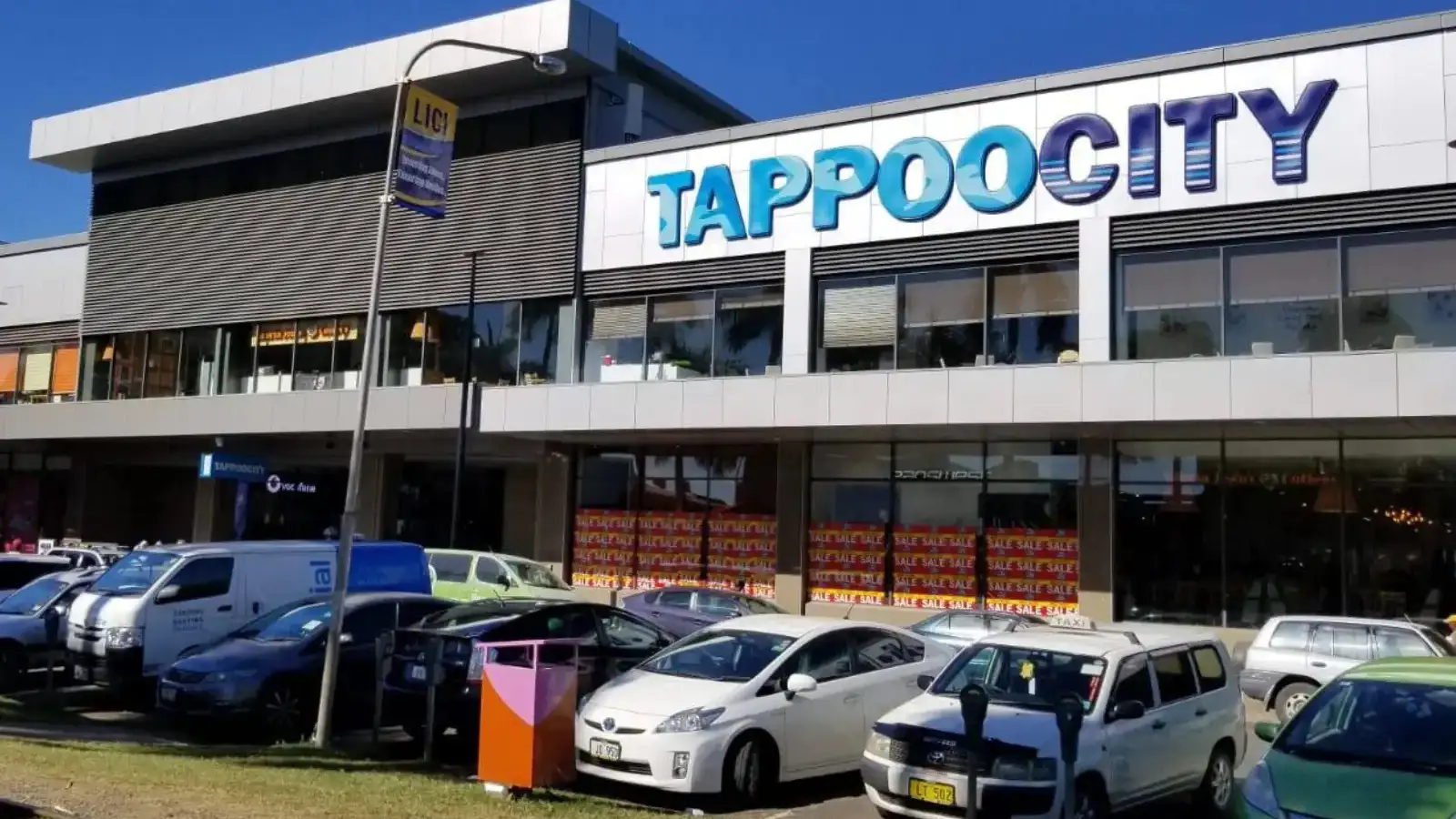
| Quick fact | What travelers should know |
|---|---|
| Official name | TappooCity Lautoka |
| Type of place | Indoor shopping centre with department, specialty, home and food outlets |
| Address | ND4729, part of Churchill Park, Narara Parade, Lautoka |
| Opening hours | Monday to Saturday 9:00 am to 6:00 pm; Sunday 9:00 am to 4:00 pm for the ground floor and Level 1 |
| Telephone | +679 6666 070 |
| Admission | Free; it is a shopping centre, not a ticketed attraction |
| Realistic visit | 30 to 60 minutes for shopping; 60 to 90 minutes if you also eat |
| Best reason to visit | A practical indoor stop for retail, gifts, essentials or food |
Is TappooCity Lautoka worth visiting?
TappooCity is worth a short stop when it solves a practical need. It brings department-store shopping, specialty retail and food into one indoor complex. This makes it useful during hot or wet weather, on a shopping errand, or when a mixed group wants different things in one place.
It is not one of Lautoka's essential cultural sights. Travelers looking for fresh produce, local market activity or direct interaction with stallholders should use the separate Lautoka Market guide. TappooCity Lautoka began opening to the public in March 2017, with the wider complex subsequently completed and officially inaugurated.
Best fit: travelers already in Lautoka who want indoor retail, food or a specific purchase. Choose another stop for market culture, direct artisan shopping or an attraction worth a dedicated journey.
TappooCity Lautoka opening hours
| Day | Ground floor and Level 1 | Planning note |
|---|---|---|
| Monday to Friday | 9:00 am to 6:00 pm | Standard weekday hours |
| Saturday | 9:00 am to 6:00 pm | Same published hours as weekdays |
| Sunday | 9:00 am to 4:00 pm | Close two hours earlier than Monday to Saturday |
| Public holidays | May vary | Call +679 6666 070 for the specific date |
These published hours apply specifically to the ground floor and Level 1. Food outlets and individual tenants may use different hours. There is no dependable public crowd timetable, so plan around closing time rather than an unverified claim about the quietest hour.
What can you find inside?
Tappoo describes the Lautoka complex through its shop, eat and celebrate concept. The dependable categories are a Tappoo department store, Tappoo Home & Leisure, specialty retail and a food court. Tappoo's broader retail range includes clothing, footwear, fragrance, jewellery, watches, accessories, sporting goods, homewares and electrical products. Exact stock, brands and tenants change, so an opening-day tenant list from 2017 should not be treated as a current mall directory.
| Traveler need | Where to start | What to know |
|---|---|---|
| Clothing, shoes or accessories | Department and specialty stores | Brands, sizes and sale stock vary by date |
| Home or electrical products | Tappoo Home & Leisure and relevant retail counters | Ask about warranty coverage before buying an item for use overseas |
| A quick meal | Food court | Outlet choice and food-court hours can differ from the main floors |
| Fiji gifts or souvenirs | Department and specialty retail | Selection varies; inspect the origin label if locally made is important |
| Fresh produce or market culture | Lautoka Municipal Market | That is a separate place with a different purpose |
TappooCity or Lautoka Municipal Market?
These are different stops: TappooCity is modern retail and food, while the municipal market is for produce, vendors and everyday market activity.
| Decision | TappooCity Lautoka | Lautoka Municipal Market |
|---|---|---|
| Main purpose | Department and specialty shopping, home products and food | Fresh produce, local vendors and market activity |
| Setting | Modern indoor shopping centre | Municipal public market |
| Best fit | A practical retail stop, meal or Sunday shopping | A market-focused visit and food shopping |
| Detailed guide | Continue on this page | Read the Lautoka Market guide |
Where is TappooCity Lautoka and how do you get there?
The official address is ND4729, part of Churchill Park, Narara Parade, Lautoka. Churchill Park is the simplest nearby landmark. Use the official name TappooCity Lautoka with a driver or in a map search, rather than the unofficial phrase Tappoo Mall Market.
Open TappooCity Lautoka in Google Maps.
From Nadi or Nadi Airport
First choose how you will reach Lautoka, then use the city address for the final leg. FijiEco's Nadi to Lautoka transport guide covers the current bus, taxi and transfer choices. This page does not repeat those fares or schedules, which keeps its purpose limited to the shopping-centre visit.
From elsewhere in Lautoka
Ask for TappooCity beside Churchill Park. For help choosing between walking, bus and taxi for the wider city, use the separate Lautoka local transport guide.
From a cruise ship
Follow the transport and gate instructions issued for your ship because the usable route can depend on the berth and port arrangements. Save the mall name, address and telephone before leaving the ship. Plan the return from the published all-aboard time, not the later sailing time. If you intend to use the tourist VAT refund at Lautoka's cruise terminal, prior arrangement is required under the current customs rules.
A realistic TappooCity visit plan
| Time available | Realistic plan | Keep the visit focused |
|---|---|---|
| 30 minutes | Go directly to one department or counter for a specific purchase | Skip the food court and broad browsing |
| 60 minutes | Browse the department store and selected specialty shops | Choose shopping or a meal as the main purpose |
| 90 minutes | Shop first, then use the food court | Leave time for payment, receipts and any TVRS paperwork |
| A short Lautoka outing | Pair TappooCity with Lautoka Market or the Botanical Gardens | Use each place for its own purpose rather than repeating the same shopping |
For a non-shopping stop, the Lautoka Botanical Gardens guide gives the details for a quieter outdoor addition.
Buying souvenirs and higher-value items
Souvenir stock at TappooCity is retail inventory, not a permanent artisan market. You may find Fiji-branded clothing, gifts or locally themed products, but availability changes. If local production matters, read the country-of-origin label and ask one direct question: Was this item made in Fiji, and where? Do not assume that a traditional-looking design proves local manufacture.
For electronics, watches or other higher-value purchases, keep the itemised receipt and ask whether the warranty is valid outside Fiji. For wood, plant-based fibres, food or other biosecurity-sensitive materials, review the arrival rules of your destination country before paying. A product that can leave Fiji may still need to be declared when you return home.
Promotions change, so compare the exact item, model, size and warranty on the day rather than relying on an old price list.
Tourist VAT refund: what to do at the checkout
Do not use the terms duty-free purchase and tourist VAT refund as if they are the same process. Fiji's Tourist VAT Refund Scheme, known as TVRS, refunds VAT on eligible goods bought from approved retailers. The current approved retailer list includes Tappoo Limited in Lautoka, but the exact counter and transaction still need to be processed under TVRS at the time of purchase.
- Check eligibility: you must be a non-resident visitor, hold a foreign passport and be at least 13 years old.
- Reach the minimum spend: eligible purchases must total at least FJ$500 at approved retailers. The amount can be cumulative across qualifying purchases.
- Buy within the permitted window: goods must be purchased no earlier than two months before you take them out of Fiji.
- Tell the cashier before the transaction is finished: present your passport and request the electronic Form 7. Check that your name and passport number are correct.
- Keep the goods unused: eligible items must remain unused and in their original packaging until departure.
- Present the goods: for checked baggage, visit the TVRS Customs counter before airline check-in. For carry-on goods, use the counter after passport control.
- For a Lautoka cruise departure: take the goods, Form 7 and passport to the designated officer at the wharf. FRCS requires prior arrangement for Lautoka cruise-terminal refunds.
Frequently asked questions
What are TappooCity Lautoka's opening hours?
The ground floor and Level 1 open from 9:00 am to 6:00 pm Monday to Saturday and from 9:00 am to 4:00 pm on Sunday. Individual outlets and holiday schedules may differ.
Is Tappoo Mall Market the correct name?
No. The official name is TappooCity Lautoka; it is a shopping centre, not a dedicated handicraft market.
Can I buy Fijian souvenirs there?
Stock can include Fiji-themed products, but selection changes. Check the origin label if you specifically want a Fiji-made item.
Can tourists claim a VAT refund on purchases?
Eligible non-resident visitors can use TVRS when qualifying purchases total at least FJ$500. Ask for Form 7 at purchase and follow the inspection steps above; alcohol and tobacco are excluded.
Is the cinema at TappooCity Lautoka operating?
Current official pages conflict: Lautoka is missing from the theater directory and showtimes, but contact numbers remain published. Call Life Cinemas before planning a movie visit.
How long should I allow?
Allow 30 to 60 minutes for shopping or 60 to 90 minutes if you also plan to eat. TappooCity is usually a practical part of a Lautoka day, not a half-day attraction by itself.
Is TappooCity practical for cruise passengers?
Yes, for a focused shopping or food stop. Follow the ship's current port instructions and plan backward from all-aboard time. A TVRS refund at Lautoka cruise terminal requires prior arrangement.
Sources and verification
Current official business and government pages support the practical facts in this guide. Older opening coverage is used only for the history of the present complex.
- Tappoo, Contact and Store Directory: official TappooCity Lautoka name, address, telephone and opening hours for the ground floor and Level 1.
- Tappoo, Retail and Duty Free: shopping-centre concept, department stores, food court and retail categories.
- Fiji Revenue and Customs Service, Tourist VAT Refund Scheme: eligibility, FJ$500 threshold, two-month purchase window, Form 7, inspection process, cruise arrangements and excluded goods.
- FRCS, List of Approved TVRS Licensed Retailers: Tappoo Limited locations, including Lautoka.
- Life Cinemas, Current Locations: current theater directory, which does not list Lautoka.
- Life Cinemas, About Us and Contact Details: official page that still publishes three Lautoka contact numbers.
- Fiji Hotel and Tourism Association, TappooCity Lautoka Opens: March 2017 public opening of the first stores and phased completion of the complex.
- The Fiji Times, $30m Complex Opens: official inauguration of the completed complex in January 2018.
Store mix, stock, promotions, food outlets and public-holiday hours can change. Found something outdated? Send FijiEco a correction.