Flying Foxes Near Nadi: When to Look & What to Know
Last updated and fact-checked: 29 September 2026
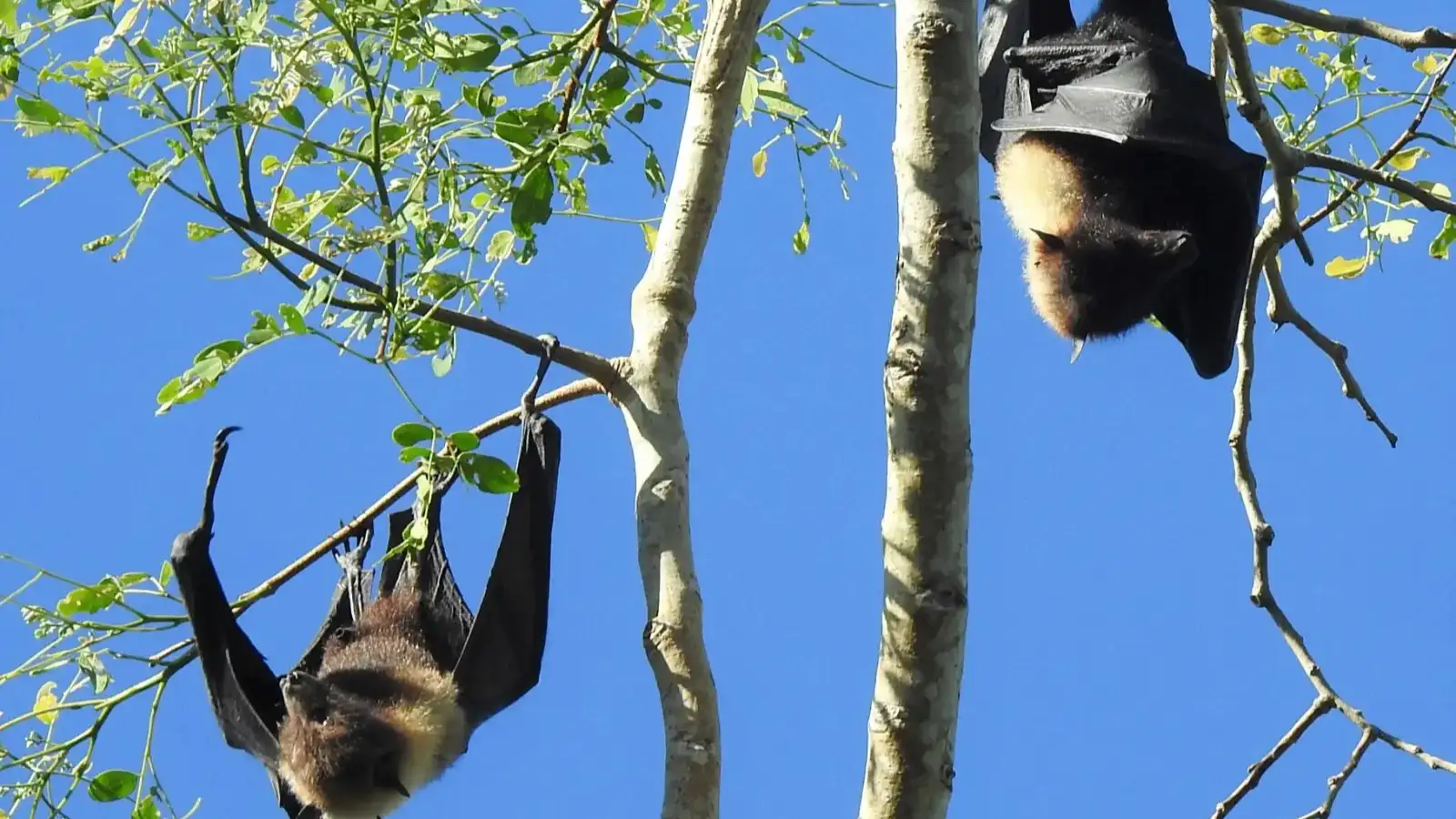
Want to look for Fiji's flying foxes while staying in Nadi? Start with an evening you would enjoy anyway: a walk at Wailoaloa Beach or sunset at Vuda Marina. Keep an eye on the sky and nearby treetops, but treat a bat sighting as a bonus. Neither place is a verified public flying fox colony. We could not verify a scheduled nightly bat-watching tour in Nadi.
One correction matters before you set off: the Garden of the Sleeping Giant closes at 5 pm. It is a lovely daytime garden, but the published visitor hours do not make it a place to wait inside for bats at sunset.
There is solid evidence of flying foxes in the Nadi area. In a Fiji Airports wildlife briefing hosted by ICAO, the airport operator reported increased flying fox activity at Nadi Airport around dusk and dawn. The airport is an operating airfield, not a wildlife-viewing stop; this report confirms local activity but does not establish a public bat-watching site.
| Option | What it offers | Important limit |
|---|---|---|
| Wailoaloa Beach | An easy public sunset walk near Nadi, with an open view of the sky. | A possible place to watch for bats in flight, not a documented roost or guaranteed sighting. |
| Vuda Marina | A sunset meal or drink at a coastal venue, with time to scan the sky. | Dining costs extra. We could not verify a public bat colony at the marina. |
| Kula WILD Adventure Park | Its official guided group tour description includes fruit bats among the wildlife. | Daytime park on the Coral Coast, not a wild sunset emergence near Nadi. Ask what is currently on view. |
Sunset stops near Nadi
Wailoaloa Beach: the easy sunset walk
If you are staying around Wailoaloa, walk to the beach before sunset and choose a well-used section near the restaurants or accommodation. The FijiEco Wailoaloa Beach guide covers the beach itself. Look across the open sky and toward the inland trees as the light fades. A bat may pass above without there being a colony on the beach. There is no admission to watch from the public beach; any food or drink is your choice.
Vuda Marina: watch while you enjoy sunset
If Vuda is already in your plans, The Boatshed Fiji at Vuda Marina is an established sunset stop. Ask staff whether flying foxes have recently crossed the area and watch from a part of the venue where guests are allowed. Come for the waterfront setting and meal, not for a promised bat colony. Vuda is an extra trip from central Nadi, so it is rarely worth a dedicated taxi ride on a bat sighting alone.
If your accommodation can point to a recently active flight path, ask for the exact public viewing point and arrange your return transport. A road shoulder, private orchard or mangrove edge is not a substitute for a safe, permitted place to stop.
What about the Garden of the Sleeping Giant?
The garden's official visitor page lists daily hours of 9 am to 5 pm on Wailoko Road. Visit for orchids, forest paths and the garden setting. Its published information does not establish a visitor-accessible sunset bat watch or the large roost once claimed on this page. If you are planning a daytime stop, use our separate Garden of the Sleeping Giant guide for admission, walking options and transport.
If you would rather book a guided wildlife visit
Kula WILD Adventure Park in Korotogo on the Coral Coast lists fruit bats among the animals encountered on its guided group tour. It says the group option requires at least four adults, with 24 hours' notice for a group of four and 48 hours for five or more. The park's current contact page lists daily opening from 10 am to 4 pm, with last entry at 3:30 pm. Call +679 650 0505 to confirm the guided tour and whether the bats are currently on view before making the longer trip from Nadi. This is a managed daytime wildlife park, not a wild sunset flight. See our full Kula WILD guide for the rest of the visit.
When to go and how to photograph them
Check today's sunset time in Nadi rather than planning around a fixed 6 pm. Arriving about 20 to 30 minutes beforehand gives your eyes time to adjust and lets you pick a comfortable viewing position. Stay only while the area is open and you have a safe route back. Flight activity varies, and a quiet evening does not mean you arrived at the wrong minute.
Binoculars are helpful if bats cross far overhead. For photographs, try a flying silhouette against the brighter sky and take several frames; an ordinary phone will struggle once the light has gone. Avoid flash or spotlights aimed at a resting animal. If you plan to stay beyond dusk, arrange a taxi or other return transport before you set off.
Which flying fox might you see in Fiji?
NatureFiji-MareqetiViti's bat guide lists three tree-dwelling flying foxes in Fiji: the Pacific flying fox (Pteropus tonganus), the Samoan flying fox (Pteropus samoensis) and the Fijian flying fox (Mirimiri acrodonta). The names are easy to mix up. Pacific flying fox is not another name for the rare Fijian flying fox. NatureFiji documents the latter in the upland cloud forest of Taveuni, not as an ordinary Nadi sunset sighting.
A dark shape crossing the Nadi sky is not enough to identify a species. Enjoy the sighting and leave the ID open unless you have a clear view or help from a knowledgeable local naturalist. Fruit-eating bats help forests by moving seeds between trees; Bat Conservation International specifically highlights Pacific flying foxes in Fiji as seed dispersers.
Watch without disturbing the bats
Observe from a public area or a venue where you are a guest. Do not enter a roost, shake branches, feed bats or use a light to make them move. Keep children away from any bat resting low or on the ground. If you are bitten or scratched, wash the area with soap and water and seek prompt medical advice. Watching bats at a distance requires no contact with them.
Sources and FijiEco research note
FijiEco checked species information against NatureFiji, local bat activity against Fiji Airports' wildlife briefing, visitor details against the garden and Kula WILD, and sunset settings against Tourism Fiji. We found no current, authoritative listing of a public flying fox roost or scheduled bat-watch departure near Nadi. Wailoaloa and Vuda are places to spend sunset, not confirmed bat sites. Sources verified for this update.
- Fiji Airports presentation hosted by ICAO: section on Nadi Airport wildlife monitoring.
- NatureFiji: Bats of Fiji and Fijian flying fox species profile.
- Garden of the Sleeping Giant: hours and location.
- Kula WILD: guided group tour description and current park contact and hours.
- Tourism Fiji: Wailoaloa and Vuda as sunset stops; Nadi sunset times.
- Bat Conservation International: fruit bats and seed dispersal; CDC: avoid handling bats and seek advice after contact.
Have a documented, publicly accessible Nadi viewing site or a correction? Contact FijiEco.