Suva Colonial Architecture: Complete 2025 Guide to Historic Buildings and Heritage Walking Tour

By FijiEco Team | Published: June 02, 2025 | Updated: December 06, 2025

Suva’s colonial architecture tells the story of Fiji’s transformation—from a coastal indigenous settlement to the administrative capital of the British Empire in the Pacific. Across the city you’ll find Indo-Saracenic government buildings, elegant Victorian weatherboard homes, Georgian and Edwardian civic structures, and tropical-adapted designs that merge British aesthetics with Pacific climate needs.

This guide highlights Suva’s most significant colonial landmarks, breaks down key architectural styles, provides a detailed self-guided walking tour, and explains how these buildings reflect power, adaptation, cultural exchange, and Fiji’s complex relationship with its colonial past.

Victorian Architecture • Indo-Saracenic Style • Heritage Buildings • Colonial History • Walking Tours
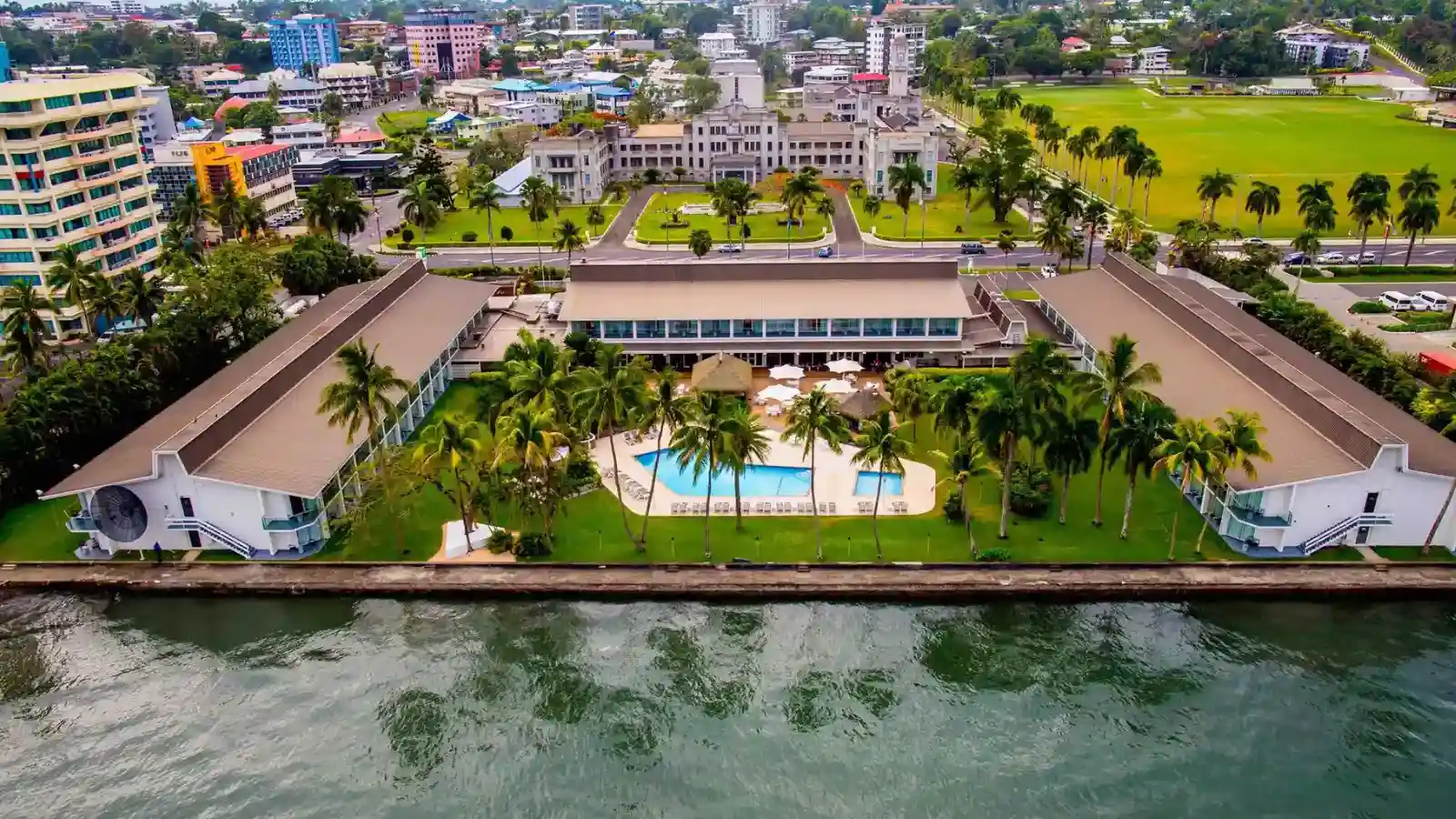
Colonial-era Indo-Saracenic Government Buildings along Victoria Parade in Suva, framed by tropical palms and showcasing British colonial architectural design
Suva’s Government Buildings on Victoria Parade exemplify Indo-Saracenic colonial architecture adapted to Fiji’s tropical Pacific environment

Historical Context: Suva's Colonial Development

From Fishing Village to Colonial Capital

Pre-colonial Suva consisted of small iTaukei fishing villages scattered around harbor—minimal urban development, traditional bure (thatched houses), subsistence agriculture and maritime economy. British colonial annexation (1874) initially established capital at Levuka (Ovalau Island) but harbor limitations, cramped geography, and lack of expansion space necessitated relocation.

1882: Colonial government officially transferred capital to Suva recognizing superior deep-water harbor, expansive flat land enabling planned urban development, and strategic position on Viti Levu (main island). Urban planning followed British colonial patterns—grid street layout, separation of administrative/commercial/residential zones, prominent positioning of government buildings symbolizing imperial authority, racial segregation of neighborhoods (European hill areas, Asian commercial districts, indigenous villages on periphery).

Key Development Phases

1882-1900: Foundation Era — Initial infrastructure development: government offices, customs house, basic services. Architecture simple utilitarian wooden structures—many demolished or destroyed by fires/cyclones. European residential areas established Domain/Suva Point hills (elevation providing cooler temperatures, views, separation from indigenous/Asian populations).
1900-1920: Colonial Consolidation — Grand Pacific Hotel (1914) marks architectural ambition. Government Buildings complex constructed showcasing imperial authority. Residential expansion accelerates as colonial administration, trading companies, and plantation owners establish permanent presence. Weatherboard houses become standard European domestic architecture.
1920-1945: Mature Colonial Period — Civic architecture flourishes—churches, schools, hospitals, commercial buildings. Architectural styles increasingly sophisticated adapting British/Australian precedents to tropical climate. World War II brings military construction, American influence, accelerated infrastructure development serving Pacific theater logistics.
1945-1970: Late Colonial/Pre-Independence — Modernization pressures—concrete replacing timber, international style architecture introduced, urban density increasing. Growing indigenous middle class accessing previously European-dominated neighborhoods. Architecture begins reflecting emerging national identity rather than pure colonial imposition.

Architectural Styles and Tropical Adaptations

Colonial Design Meeting Pacific Climate

Suva's colonial architecture represents creative adaptation—British architectural conventions modified addressing tropical challenges (intense heat, high humidity, heavy rainfall, cyclones, termites). Resulting hybrid styles combine metropolitan aesthetics with practical environmental responses:

Architectural Style Key Features Tropical Adaptations Example Buildings
Indo-Saracenic Domes, arches, minarets, ornate facades, colonial grandeur High ceilings (heat rise), verandas (shade), cross-ventilation Government Buildings complex
Victorian Weatherboard Timber construction, steep roofs, ornate trim, bay windows Elevated foundations (termite protection), wraparound verandas, louvered windows Residential Domain area, old European quarters
Georgian Colonial Symmetrical facades, classical proportions, formal entrances Extended eaves (sun/rain protection), high windows, thick walls (thermal mass) Old Town Hall, colonial churches
Edwardian Commercial Brick/concrete, large windows, decorative cornices Covered walkways (continuous shade), upper-story breeze capture Victoria Parade commercial buildings
Tropical Gothic Pointed arches, vertical emphasis, ecclesiastical detailing Timber instead of stone (weight/seismic), natural ventilation priority Sacred Heart Cathedral, Methodist churches

Common Tropical Design Elements

  • Elevated foundations: Raising buildings 1-2 meters above ground prevents termite access, improves air circulation beneath structure, protects from flooding during heavy rains
  • Wraparound verandas: Wide covered porches surround buildings providing continuous shade, outdoor living spaces, protection from tropical sun while enabling breezes
  • Steep roofs: Sharp pitch sheds heavy rainfall quickly, extends eaves far beyond walls creating shade, often corrugated iron (imported material replacing thatch—fire resistant, durable)
  • Louvered shutters/windows: Adjustable slats control sunlight, maximize cross-ventilation, protect from cyclone winds while permitting air flow
  • High ceilings: 3-4 meter interior heights allow hot air rising while maintaining cooler breathing level temperatures—no air conditioning colonial era requiring passive cooling
  • Light colors: White/cream exterior paint reflects solar radiation reducing interior heat gain—practical thermal management beyond aesthetic preference

Landmark Colonial Buildings: Detailed Profiles

Government Buildings Complex

Location: Victoria Parade (waterfront) | Constructed: 1939 (current buildings—earlier structures 1882, destroyed by fire) | Architect: Public Works Department (colonial administration) | Style: Indo-Saracenic with Pacific adaptations | Current Use: Government offices, Parliament chambers

Suva's most iconic colonial landmark—massive white complex featuring ornate facades, multiple domes (reminiscent of Indian Mughal architecture), colonnaded walkways, formal gardens. Architectural style deliberately chosen projecting British Empire's global reach—referencing Indian colonial architecture (British Raj connections) while asserting authority through monumental scale. Strategic waterfront positioning ensures visibility to ships entering harbor—architectural statement of colonial power impossible to miss.

Architectural details: Central dome rises 30+ meters flanked by smaller cupolas. Symmetrical wings extend east/west creating imposing facade 200+ meters long. Arched windows throughout providing ventilation while maintaining formal aesthetic. White limestone/concrete construction contrasts tropical greenery. Interior features marble floors, ornate plasterwork, grand staircases—demonstrating colonial wealth and sophistication.

Visitor information: Exterior photographable from Victoria Parade. Interior generally restricted (active government offices) though Parliament viewing gallery accessible public when in session (rare). Impressive evening illumination makes sunset photography ideal. Best views from waterfront promenade opposite building.

Grand Pacific Hotel

Location: Victoria Parade (near Government Buildings) | Constructed: 1914 | Architect: Union Steamship Company of New Zealand | Style: Colonial Georgian with tropical verandas | Current Status: Restored luxury hotel (reopened 2014 after extensive renovation)

Historic hotel epitomizing colonial-era luxury—originally serving steamship passengers traversing Pacific (before aviation age, ships primary international transport). Hosted royalty, celebrities, colonial officials—guestbook reads like 20th century who's who. Queen Elizabeth II stayed 1953, various Hollywood stars, political figures. Architecture reflects Edwardian elegance adapted tropical context.

Architectural features: Three-story white colonial structure with continuous wraparound verandas every level—signature visual element providing shade, outdoor social spaces, architectural rhythm. Classical columns support verandas creating colonnade effect. High ceilings, large windows maximize cross-ventilation. Formal gardens surround building featuring tropical landscaping, historic trees, waterfront access. Detailed guide available at our Grand Pacific Hotel page.

Visitor access: Hotel guests enjoy full access (rooms, restaurants, historic spaces). Non-guests welcome visiting ground-floor public areas—lobby (period furnishings, historical photographs), bar, restaurant. High tea service popular tourist activity experiencing colonial ambiance. Hotel museum displays historical artifacts, photographs documenting building's role Fiji history.

Sacred Heart Cathedral

Location: Pratt Street (central Suva) | Constructed: 1902 (consecrated) | Architect: Marist missionaries | Style: Tropical Gothic Revival | Current Use: Active Catholic cathedral

Fiji's principal Catholic church—elegant timber Gothic Revival structure adapted tropical environment. European missionaries introducing Christianity brought architectural traditions attempting recreate familiar ecclesiastical forms using available local materials and climate-appropriate techniques. Result: uniquely Pacific interpretation Gothic architecture maintaining spiritual atmosphere while responding practical constraints.

Design characteristics: Pointed arch windows (Gothic trademark) executed timber rather than traditional stone—lightweight seismically safer, locally available, easier construct. Steep roof sheds rain effectively. Interior wooden pews, exposed timber beams, simple altar—understated compared European Gothic grandeur but retaining vertical emphasis, spiritual light quality. Stained glass windows imported Europe adding color, religious imagery.

Visitor guidelines: Open daily for prayer, mass schedules posted entrance. Respectful tourists welcome outside service times—modest dress essential (covered shoulders/knees), silence maintained, photography permitted without flash. Sunday morning mass (9:30am) features hymns multiple languages reflecting multicultural congregation. Architecture best appreciated from interior experiencing spatial quality, light filtering through windows.

Notable Residential Architecture

Domain/Suva Point Historic Homes

Affluent residential district established early colonial period—elevated hillside location providing views, breezes, separation from commercial/indigenous areas. Victorian weatherboard houses predominate—elevated on stilts, wraparound verandas, decorative fretwork, corrugated iron roofs painted red/green, tropical gardens.

Characteristics: Asymmetrical facades, bay windows, ornate trim (gingerbread carpentry), multiple roof gables creating visual interest. Interiors featured pressed tin ceilings, wooden floors, fireplaces (rarely used tropical climate—more status symbol than necessity). Many houses originally government residences for senior colonial officials—some remain government property, others private residences.

Bungalow Style (Working Class/Commercial)

Simpler residential architecture for middle-class colonial residents, Indo-Fijian merchants, skilled tradespeople. Single-story structures, rectangular plans, central hallways, front verandas. Less ornate than Victorian mansions but sharing tropical adaptation principles—elevation, ventilation, shade.

Materials and construction: Timber frames, weatherboard or corrugated iron cladding, simple pitched roofs. Functional rather than decorative—economic constraints necessitating utilitarian approach. Many deteriorated or demolished urban renewal though pockets survive Toorak, Samabula neighborhoods. Represent broader colonial experience beyond wealthy elite—ordinary people's housing reflecting period's living conditions.

Self-Guided Heritage Walking Tour

Downtown Colonial Circuit (2-3 Hours)

Compact walking route covering Suva's principal colonial landmarks. Best undertaken morning (cooler temperatures, better lighting for photography) or late afternoon (golden hour light, less heat). Wear comfortable walking shoes, bring water, sun protection. Route approximately 3 kilometers, mostly flat terrain.

Walking Route Details

1.
Start: Grand Pacific Hotel — Explore gardens, photograph waterfront facade, visit lobby/museum if open. Historical information plaques explain building significance. Allow 30 minutes.
2.
Walk east Victoria Parade: Government Buildings (10 minutes walk)—photograph complex from waterfront promenade. Note architectural details: domes, arches, symmetry. Albert Park adjacent (colonial cricket ground, military parade area) pleasant detour.
3.
Continue east to Thurston Gardens: Fiji Museum located colonial-era building, botanical gardens established 1913. Explores Fiji history, culture, colonial period artifacts. Entry FJ$15 adults. Allow 45-60 minutes museum visit. Gardens peaceful rest stop.
4.
Turn inland Carnarvon Street: Suva City Library (colonial building), Old Town Hall (Georgian style), government offices. Admire architectural variety reflecting different colonial periods.
5.
Sacred Heart Cathedral: Pratt Street (15 minutes walk inland)—visit interior if open. Tropical Gothic architecture worth extended observation. Return route via Stinson Parade.
6.
Optional extension: Domain residential area (30 minutes uphill walk)—view historic Victorian homes from street (private residences, exterior viewing only). Provides context of colonial residential life. Return downtown via taxi or continue walking (steep descent).

Conservation Challenges and Restoration Efforts

Threats to Architectural Heritage

Suva's colonial buildings face multiple preservation challenges threatening architectural heritage survival:

Environmental Degradation

  • Tropical climate: High humidity, intense rainfall, heat accelerate timber decay, metal corrosion, paint deterioration
  • Termites: Constant threat to wooden structures—historic buildings lacking modern termite barriers particularly vulnerable
  • Cyclones: Category 4-5 storms periodically damage roofs, windows, structural elements requiring expensive repairs
  • Salt air: Coastal location means salt-laden winds corroding metal roofs, fixtures, causing paint failure

Economic & Development Pressures

  • Land value: Prime downtown colonial buildings occupy valuable real estate—demolition for modern development economically tempting
  • Maintenance costs: Historic building upkeep expensive—specialized skills, materials, techniques financially burdensome property owners
  • Functional obsolescence: Colonial structures often poorly suited modern needs—inadequate electrical, plumbing, accessibility, space efficiency
  • Neglect: Abandoned/underutilized buildings deteriorate rapidly tropical conditions—deferred maintenance compounds problems exponentially

Successful Restoration Examples

Grand Pacific Hotel (2014 reopening): Exemplary restoration demonstrating heritage conservation viability. Developers invested millions preserving architectural character while modernizing infrastructure—new electrical/plumbing concealed within historic fabric, structural reinforcement, climate control respecting original design, period-appropriate furnishings. Result: Economically successful luxury hotel honoring colonial heritage attracting tourists specifically seeking historic experience.

Government Buildings maintenance: Continuous government investment preserving national landmark—regular painting, roof repairs, structural monitoring, termite treatment. Public ownership ensures preservation priority over profit maximization. However, funding constraints sometimes delay necessary work creating preservation backlogs.

Understanding Colonial Architecture in Postcolonial Context

Complex Heritage: Preservation versus Colonial Legacy

Colonial architecture creates postcolonial ambivalence—buildings represent both architectural heritage worthy preservation and symbols of oppressive colonial rule. Navigating this complexity requires nuanced understanding acknowledging historical reality while appreciating architectural merit:

Arguments for Preservation

  • Architectural quality: Buildings represent skilled craftsmanship, thoughtful design, tropical adaptation innovations—valuable regardless political origins
  • Historical documentation: Structures physically embody history—demolition erases tangible connections past events, social structures, cultural exchanges
  • Tourism value: Heritage architecture attracts visitors generating economic benefits—cultural tourism increasingly important Fiji economy
  • Urban character: Colonial buildings create distinctive cityscape differentiating Suva from generic modern development—place identity important resident wellbeing
  • Adaptive reuse potential: Existing structures sustainability—preserving embodied energy, avoiding new construction environmental impacts, demonstrating circular economy principles

Postcolonial Critiques

  • Colonial imposition: Architecture represented power projection—buildings designed impressing/intimidating indigenous populations, asserting British superiority
  • Spatial segregation: Urban planning explicitly racist—European hilltop residences, Asian commercial areas, indigenous peripheries reflected/reinforced hierarchies
  • Cultural erasure: Colonial construction destroyed existing indigenous settlements, sacred sites, traditional land uses—architectural heritage built literally on indigenous dispossession
  • Ongoing symbolism: Continuing use colonial buildings (government offices, luxury hotels) may perpetuate colonial-era inequities, elite privilege
  • Resource allocation: Funds preserving colonial architecture could support indigenous cultural infrastructure—bure construction, traditional arts centers, community facilities

Balanced approach: Most heritage advocates support preservation acknowledging complexity—interpreting colonial architecture honestly (including oppressive histories), repurposing buildings serving contemporary needs (not just tourist nostalgia), investing equally indigenous cultural preservation, ensuring benefits reach broad population not just elite/tourists. Architecture itself neither good nor evil—meanings derive from how communities engage with built heritage recognizing past while creating inclusive futures.

Frequently Asked Questions

Can tourists enter the Government Buildings or are they just for exterior viewing?

Government Buildings primarily exterior viewing only—structures house active government offices, ministries, Parliament chambers requiring security protocols restricting public access. Exterior access: Victoria Parade waterfront promenade provides excellent viewing position for photography, architectural appreciation. No restrictions photographing exteriors from public areas. Limited interior access: Parliament viewing gallery occasionally open public when sessions occurring—check Parliament website schedules (infrequent opportunities, advance arrangements recommended). Tour requests sometimes accommodated for academic researchers, architecture students through formal government channels (written applications, weeks notice required). Practical alternatives: Exterior architecture sufficiently impressive rewarding visit without interior access. Information plaques near buildings explain historical significance. Guided heritage tours sometimes provide additional historical context enhancing exterior viewing. Photography best early morning or late afternoon (directional lighting enhances architectural details, less harsh midday sun). Consider visiting during national celebrations (Fiji Day) when government buildings featured in official events potentially enabling closer access special circumstances.

Are there organized heritage walking tours available in Suva?

Yes, several options for guided colonial architecture exploration: Fiji Museum guided tours: Museum staff occasionally conduct heritage walks covering downtown colonial buildings. Check museum website or call ahead (contact details on museum entry tickets). Tours typically 2 hours, FJ$20-30 per person, require minimum group size (4-6 people). Private tour operators: Companies like Suva Tours, Fiji Heritage Walks offer customized colonial architecture tours. Book advance through hotel concierge, tourism offices, or online. Cost FJ$50-80 per person (2-3 hour tour), higher for private arrangements. Knowledgeable guides provide historical context, architectural details, access non-obvious sites. University connections: University of South Pacific architecture/history programs sometimes organize public heritage walks (academic calendar dependent). Check USP public events calendar. Self-guided options: Fiji Museum publishes heritage trail map (available museum shop FJ$5) marking significant buildings with brief descriptions. Detailed guide in this article enables independent exploration—download/print for reference during walking tour. Best timing: Morning tours (8-11am) avoid hottest temperatures. Weekday tours provide context of buildings in use (government offices active, commercial areas bustling) versus quiet weekends. Book any organized tour advance especially peak tourist season (July-September, December-January) ensuring availability.

How long should I allocate for exploring Suva's colonial architecture?

Depends on interest depth and sites included: Quick overview (2-3 hours): Downtown walking circuit covering Grand Pacific Hotel, Government Buildings, Sacred Heart Cathedral, Victoria Parade commercial buildings. Sufficient for general architectural appreciation, photography, historical context. Start early morning or late afternoon (comfortable temperatures, good light). Comprehensive exploration (half day/5-6 hours): Above plus Fiji Museum visit (2 hours), Thurston Gardens stroll, extended photography, lunch at historic venue, residential area excursion (Domain/Suva Point viewing Victorian homes). Provides thorough heritage understanding, relaxed pace allowing detailed observation. In-depth study (full day or multiple days): Serious architecture/history enthusiasts might spend full day or return multiple days—different lighting conditions revealing architectural details differently, repeat photography, archival research Fiji Museum library, interviews with heritage experts, exploring secondary colonial sites (old hospitals, schools, industrial buildings). Academic researchers potentially week+ documenting architectural heritage comprehensively. Practical recommendation: Most tourists satisfied with half-day allocation (morning 8am-1pm or afternoon 2pm-7pm)—provides substantial exposure without architectural overload. Combine colonial architecture morning with other Suva attractions afternoon (markets, shopping, dining) creating well-rounded urban experience. Serious enthusiasts justify full day potentially multiple return visits discovering architectural details missed initially. Consider personal interest level, overall Fiji itinerary, other priorities Suva determining appropriate time investment.

What's the best time of year and day for photographing colonial buildings?

Optimal photography conditions vary by subject and desired aesthetic: Seasonal considerations: Dry season (May-October): Less rainfall, lower humidity, clearer skies providing consistent lighting. Particularly May-July (slightly cooler, less tourist crowds). Trade winds create dramatic cloud formations without threatening photography sessions. Wet season (November-April): Higher rainfall risk but also dramatic skies, lush tropical vegetation, fewer tourists. Morning sessions generally safe (afternoon storms more common). Moody atmospheric conditions create compelling imagery if prepared for weather challenges. Daily timing: Golden hour (sunrise/sunset): Warm directional light enhances architectural details, creates long shadows emphasizing building textures, generally flattering color temperatures. Sunrise (6-8am) Government Buildings from waterfront particularly stunning (easterly light). Sunset (5-7pm) Victorian homes Domain area beautiful (westerly light illuminating facades). Blue hour (twilight): Government Buildings evening illumination creates magical imagery combining building lights with remaining sky color. Arrive 30 minutes before dark setting up tripod shots (long exposures necessary—bring tripod or stabilization). Midday: Generally avoid (harsh overhead light creates strong shadows, washed-out colors, squinting subjects) except interior photography where strong light through windows creates interesting atmospheric effects. Overcast conditions: Diffused light excellent detail photography—eliminates harsh shadows, reveals architectural textures, provides even exposure across building facades. Counterintuitively, cloudy days sometimes superior bright sunny conditions for technical architectural documentation. Equipment suggestions: Wide-angle lens (16-35mm) capturing building entirety, standard zoom (24-70mm) architectural details, polarizing filter reducing reflections/enhancing colors, tripod for low-light situations, backup batteries (tropical heat drains batteries quickly).

Are Suva's Victorian residential areas safe to explore on foot?

Generally yes, with reasonable precautions: Domain/Suva Point areas (affluent residential): Very safe daytime (8am-5pm)—quiet residential streets, minimal traffic, no significant crime issues. Local residents accustomed occasional architecture tourists respectfully viewing homes from street. Evening/night less recommended (poorly lit streets, isolated areas, reduced foot traffic). Safety guidelines: Stay on public streets/sidewalks (no trespassing private property), respect residential privacy (avoid peering into windows, photographing if residents present visibly uncomfortable), small groups or pairs preferable to solo walking, daylight hours only, tell accommodation staff your plans, carry phone, bring water/sun protection (steep hills, limited shade, 30-40 minute uphill walk from downtown). Photography etiquette: Photograph from street without trespassing (perfectly acceptable legal public spaces), avoid including people in shots without permission, if residents approach asking questions explain architecture interest politely—most proud their historic homes and happy discussing. Never enter private property or gardens uninvited. Alternative access: Taxi to area (FJ$8-12 from downtown, driver wait if preferred), walk one direction taxi return (downhill walk easier than uphill), organized heritage tour includes residential areas with guides providing safety, historical context, sometimes arranged property visits tour operators have established relationships. Other residential areas: Working-class colonial bungalow neighborhoods (Toorak, Samabula) require more caution—higher population density, busier streets, occasional petty theft concerns. Daytime generally fine exercising standard urban precautions (valuables secured, awareness surroundings, avoiding isolated areas), evening/night not recommended tourists unfamiliar with areas.

Can I visit colonial churches and what's the etiquette?

Yes, most churches welcome respectful visitors: Sacred Heart Cathedral (Catholic): Open daily approximately 7am-5pm for prayer, visitors. Mass schedules posted entrance (typically Sunday 7am, 9:30am, 6pm; weekday mornings). Methodist churches: Centenary Church, Wesley Church open Sunday services (10am typically), sometimes weekdays for prayer. Methodist services particularly important iTaukei culture—welcoming atmosphere, beautiful hymn singing, cultural experience beyond architectural interest. Other denominations: Anglican, Presbyterian, Assemblies of God churches throughout Suva—generally open public worship times. Visitor etiquette: Dress code: Modest clothing mandatory—covered shoulders/knees, avoid shorts, tank tops, revealing attire. Remove hats, sunglasses. Behavior: Silence maintained except during services (join singing if comfortable), no eating/drinking, phones silenced, observe worship without disrupting (stand/sit when congregation does). Photography: ASK FIRST—some churches prohibit photos during services (disruptive to worship). Generally acceptable photographing architecture when empty (no flash near altar/religious objects). Donations: Not required but thoughtful contribution (FJ$5-10) placed collection boxes supporting church maintenance. Service attendance: Non-Christians welcome observing respectfully. Participate externally (standing, sitting) but abstain from sacraments (communion) unless denominationally appropriate. Services offer cultural immersion beyond architectural tourism—Fijian Christian worship blends European liturgical traditions with Pacific cultural expressions creating unique spiritual experiences. Methodist services feature spectacular Fijian hymn harmonies worth attending purely for musical beauty. For broader cultural context, explore traditional Fijian customs alongside colonial heritage understanding complete cultural spectrum.

How does Suva's colonial architecture compare to other Pacific colonial capitals?

Suva distinctive among Pacific capitals in colonial architectural heritage quantity and quality: Comparison with regional capitals: Port Moresby (Papua New Guinea): Less colonial architecture surviving—WWII destruction, rapid modern development, tropical deterioration. Government buildings modern rather than colonial heritage. Apia (Samoa): Some German colonial buildings (1900-1914 period) plus New Zealand era structures. Smaller scale than Suva, less architectural variety. Notable wooden buildings resembling Suva's weatherboard style. Nukuʻalofa (Tonga): Limited colonial architecture—traditional Tongan monarchy maintained independence avoiding British annexation (unlike Fiji). Some colonial-influenced buildings but predominantly modern/traditional mix. Papeete (Tahiti): French colonial architecture (different aesthetic than British)—more Mediterranean influence, different construction techniques. Extensive modern development eclipsed much colonial heritage. Honiara (Solomon Islands): Minimal colonial remains—WWII devastation, subsequent development prioritizing function over heritage preservation. Suva's distinctiveness: Benefited from: (1) British capital status 90+ years (1882-1970) enabling substantial construction investment; (2) Relative political stability (no WWII destruction like some Pacific locations, controlled decolonization process); (3) Economic prosperity colonial period (sugar, copra, trade) funding architectural ambition; (4) Recent restoration awareness (Grand Pacific Hotel example) demonstrating heritage value. Architectural density: Suva offers most concentrated colonial heritage walk Pacific region—compact downtown enables viewing multiple significant buildings single walking tour impossible dispersed regional capitals. For architectural enthusiasts comparing Pacific colonial heritage, Suva represents premier destination. Broader cultural understanding enhanced visiting Suva's diverse communities and experiencing how colonial built environment intersects with contemporary multicultural society.

Where can I learn more about specific buildings' histories beyond basic tourist information?

Several resources for in-depth architectural research: Fiji Museum research library: Most comprehensive resource—historical photographs, architectural drawings, government documents, personal archives. Library open researchers by appointment (contact museum advance). Holdings include colonial architectural records, building permits, planning documents, newspaper archives documenting construction histories. National Archives of Fiji: Government records including Public Works Department files (colonial building construction documentation), land titles, planning approvals. Requires research permission (apply advance providing research topic). Located Suva—access weekdays during business hours. University of South Pacific library: Academic collections including Pacific architecture, colonial history, cultural heritage theses/dissertations. Open public (photo ID required). Pacific Collection particularly valuable—regional publications, historical accounts, comparative studies. Published sources: Local bookstores stock Fiji history books often including architectural content. Key titles: "Colonial Fiji" (various authors), architectural surveys, heritage inventories. USP bookshop best selection. Online resources: Digital collections increasingly available—National Archives digitization project, museum virtual collections, Google Arts & Culture Fiji partnership. University research databases accessible through academic institutions. Expert contacts: Fiji National Trust (heritage organization) staff provide information, occasionally conduct research consultations. University architecture/history professors sometimes available interviews discussing research. Private heritage consultants (architects specializing conservation) offer fee-based historical research services. Practical research tips: Start Fiji Museum (most accessible, tourist-friendly), progress more specialized archives if needed deeper information. Photograph building identification plaques (many historic buildings have plaques summarizing history). Cross-reference multiple sources (colonial accounts often biased—indigenous perspectives, contemporary scholarship provide alternative interpretations). Allow research time (archives require advance booking, materials retrieval, no instant gratification). Consider contributing research findings back (museums, archives appreciate researchers sharing discoveries enriching collective knowledge).

Colonial Architecture Exploration Checklist

Before Your Walk:

  • Download/print walking tour map
  • Wear comfortable walking shoes
  • Bring water bottle and sun protection
  • Charge phone/camera fully (extra battery)
  • Check building opening hours if interior visits planned
  • Start early morning (cooler, better light)

Must-See Buildings:

  • Government Buildings (Indo-Saracenic style)
  • Grand Pacific Hotel (colonial luxury)
  • Sacred Heart Cathedral (tropical Gothic)
  • Victoria Parade commercial buildings
  • Domain residential area (Victorian homes)
  • Fiji Museum (colonial building + exhibits)

Photography Tips:

  • Golden hour (sunrise/sunset) best lighting
  • Wide-angle lens for building exteriors
  • Ask permission before photographing interiors
  • Overcast days good for architectural details
  • Tripod for low-light/evening shots
  • Polarizing filter enhances colors

Respectful Behavior:

  • Modest dress for church visits
  • Stay on public streets/sidewalks
  • Don't trespass private property
  • Respect residential privacy
  • Silence maintained in churches
  • Acknowledge colonial legacy complexity

Walking Through Colonial History

Suva's colonial architecture offers tangible connection to Fiji's complex historical transformation—from indigenous Pacific society through British colonial rule to independent nation navigating postcolonial identity. These buildings represent more than aesthetic curiosities or tourist attractions—they embody power structures, cultural exchanges, architectural innovations, and ongoing negotiations between preservation and progress, colonial legacy and national sovereignty, historical documentation and contemporary needs.

Engaging thoughtfully with colonial heritage requires acknowledging multiple perspectives—appreciating architectural quality and craftsmanship while recognizing buildings emerged from unjust political systems; celebrating tropical design innovations while understanding spatial segregation reflecting racist colonial hierarchies; supporting preservation efforts while ensuring resources equally benefit indigenous cultural heritage; enjoying historical tourism while maintaining critical awareness of whose histories architectural heritage prioritizes. Suva's colonial buildings invite exploration not as nostalgic celebration of imperial past but as material culture revealing honest examination of how societies remember, interpret, and transform historical legacies into futures respecting both heritage complexity and contemporary justice. Walk mindfully through these streets where architecture speaks volumes about power, adaptation, resistance, and the ongoing process of creating inclusive Pacific urban communities. For complete cultural understanding, pair colonial heritage exploration with experiencing contemporary Fijian life at local markets and understanding Suva's diverse communities. Vinaka for engaging with Fiji's architectural heritage thoughtfully and respectfully.