Multicultural Suva: A Traveler's Guide to Food, Faiths and Daily Life
Last fact-checked:
Suva's multicultural life is easiest to understand through ordinary public places rather than a staged cultural show. In one morning you can see Fiji-grown produce and yaqona at the municipal market, hear English, iTaukei and Fiji Hindi in the city centre, pass churches and other places of worship, and use the Fiji Museum to put the city's communities into historical context. This guide explains where to go, how long to allow and how to explore without making assumptions about the people you meet.
Central Suva • Half-Day Route • Food • History • Respectful Travel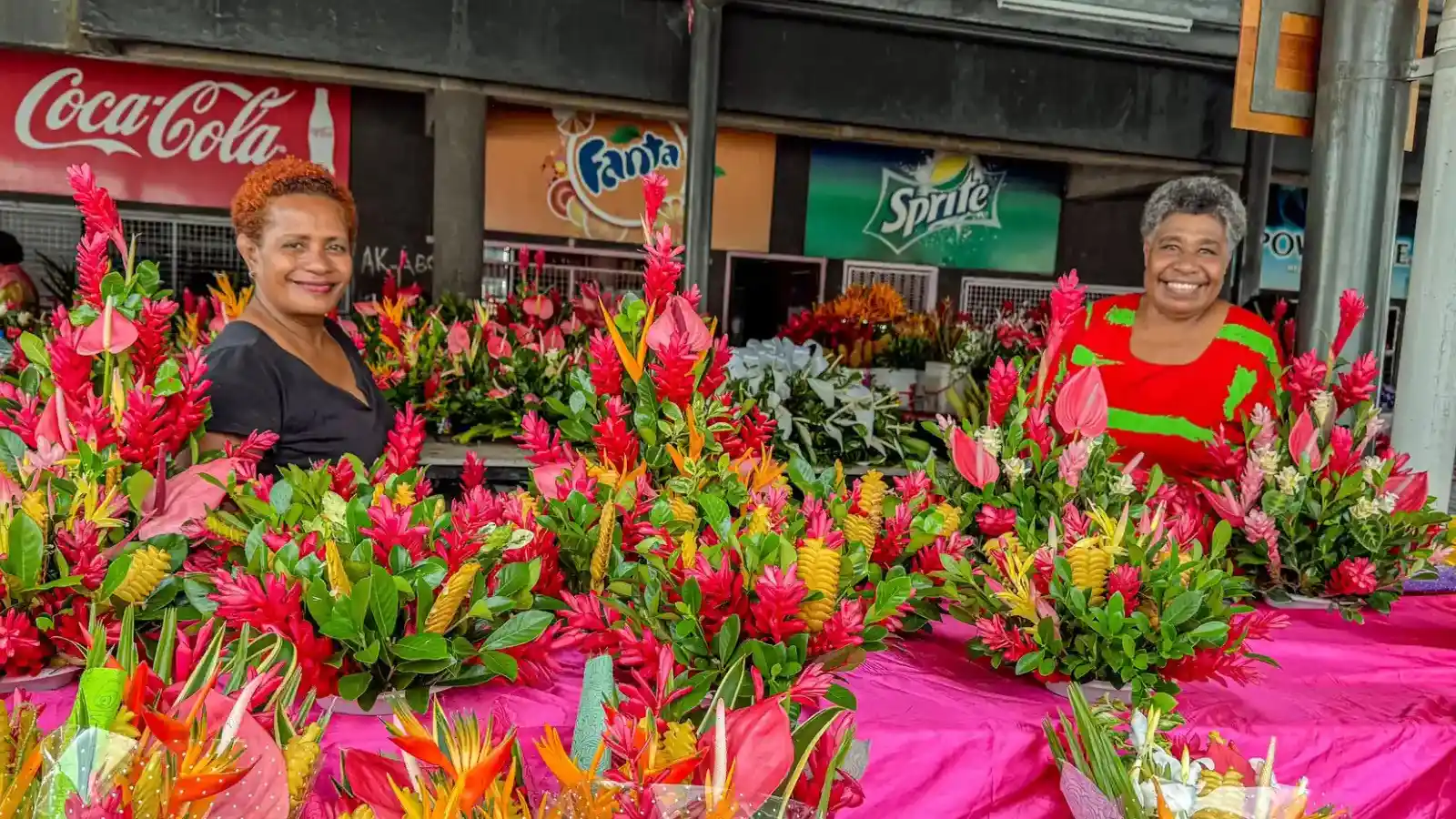
| Quick fact | What travelers should know |
|---|---|
| Best for | Travelers interested in city life, history, food and public culture |
| Useful time | About 3 to 4 hours for the route in this guide; a full day allows more museum and meal time |
| Best starting point | Suva Municipal Market beside the main bus station |
| Best timing | A weekday morning, when the market and museum can fit into one plan |
| Cost | Walking and public street observation are free; allow extra for the museum, food and transport |
| Main limitation | Daily life is not a performance; access to worship, ceremonies and private spaces is never automatic |
What multicultural Suva means for a visitor
Suva is Fiji's administrative and commercial capital, not a resort town built around visitors. Its cultural value comes from seeing how people with iTaukei, Indo-Fijian and other Pacific, Asian and European family histories share the same working city. That mix appears in food, languages, schools, places of worship, shops, public holidays and everyday routines.
A traveler should be careful with labels. A person's appearance, surname, workplace or neighbourhood does not tell you everything about their identity, religion or language. The most useful approach is to observe public life, learn the historical context and ask open questions only when conversation develops naturally.
This is why the route below focuses on a working market, public streets, a museum and gardens. These places provide context without treating residents, worshippers or private communities as attractions.
A short history that helps explain the city
Fiji's story begins long before the modern capital. The Fiji Museum holds archaeological material dating back about 3,700 years and objects connected both to Fiji's indigenous inhabitants and to communities that settled in the islands later. For a first-time visitor, the museum is a better foundation than trying to understand the country through present-day percentages alone.
British colonial rule began in 1874. From 1879 to 1916, approximately 60,553 indentured workers were brought from India to Fiji under the system remembered as Girmit. Many remained after their contracts, and their descendants became central to Fiji's agriculture, education, business, public life, food and religious traditions. The history includes hardship and unequal power, so it should not be reduced to a colourful festival paragraph.
Suva later grew as a capital, port, education centre and regional workplace. People from elsewhere in Fiji and the Pacific, as well as later migrant communities, added further layers to the city. The result is not a set of fixed ethnic districts. It is a changing urban community whose histories often meet in the same markets, offices, schools, sports grounds and shopping streets.
Where travelers can experience Suva's cultural life
1. Suva Municipal Market
Start with the market because it is part of the city's normal food system, not a recreated cultural village. Look for dalo, cassava, seasonal fruit, leafy vegetables, spices, seafood and yaqona. Notice how products are bundled and priced, and keep the working aisles clear. The separate Suva Municipal Market guide covers current visiting times, payment, shopping and transport, so those details are not repeated here.
2. The central business district
Walk through the city centre rather than searching for an "ethnic neighbourhood." Around the streets between the market, Cumming Street and Victoria Parade, the useful experience is the mix of everyday businesses, bakeries, clothing shops, cafés and public buildings. Browse at a normal pace, use pedestrian crossings and treat shopfronts and street activity as working city life rather than a photo set.
If architecture interests you, continue with FijiEco's Suva colonial architecture guide. That page handles individual buildings and their history, while this guide stays focused on the city's cultural mix.
3. Fiji Museum and Thurston Gardens
The Fiji Museum gives the route its historical anchor. Its collections include archaeological material, masi, art and an Indo-Fijian gallery, helping visitors connect present-day Suva with much longer histories. The museum currently publishes opening hours of 9:00am to 4:30pm, seven days a week, with closure on Christmas Day, New Year's Day, Easter Sunday and Diwali. Check the official site again on the day because gallery access and holiday arrangements can change.
Use the Fiji Museum visitor guide for practical details. The adjoining Thurston Gardens guide is useful if you want a quiet outdoor break after the exhibits.
4. Public religious architecture
Churches, Hindu temples, mosques and a Sikh gurdwara are part of Suva's urban landscape, but active places of worship are not automatically open for sightseeing. Viewing a building from a public street is different from entering a service. If you want to go inside, contact the venue or ask on arrival whether visitors are welcome. Follow local instructions about shoes, clothing, seating and photography.
For one building with its own FijiEco page, see the Sacred Heart Cathedral guide. Do not plan a multi-faith "tour" by walking into services without prior permission.
A practical half-day cultural route
| Stage | Allow | What to do | Practical point |
|---|---|---|---|
| Municipal Market | 45 to 60 minutes | Walk the produce areas, identify unfamiliar ingredients and buy only what you can carry or store | Keep small Fijian-dollar notes accessible and carry purchases in a reusable bag |
| Central streets | 30 to 45 minutes | Walk through the CBD and observe the mix of shops, food businesses and public architecture | Stay on public streets; do not photograph people at close range without permission |
| Fiji Museum | 60 to 90 minutes | Use the galleries to connect indigenous, Girmit and later community histories | Check current admission, gallery access and holiday opening before leaving |
| Gardens or lunch | 30 to 60 minutes | Rest in Thurston Gardens or choose lunch in central Suva | A taxi is the simplest fallback if heavy rain interrupts the walking route |
This sequence works best when you begin in the morning and reach the museum well before its published closing time. It is a planning framework, not a guided tour. If you use buses or taxis, the separate Suva local transport guide explains those options without duplicating them here.
Food, language and faith in everyday Suva
Food: choose a meal, not an ethnic checklist
Suva's menus reflect overlapping histories. You may find iTaukei dishes built around fish, coconut, leafy greens and root crops; Indo-Fijian curries, dhal, roti and savoury snacks; Chinese-influenced noodle and stir-fry dishes; and meals that no longer fit neatly into one category. Rather than trying to "complete" every cuisine in one day, choose one meal and ask practical questions about ingredients, chilli level and allergens.
Restaurant names, menus and opening hours change, so this page does not duplicate individual venue listings. Use FijiEco's traditional Fijian food guide to understand dishes, then check the current details of a specific place before travelling across town.
Language: English is the practical bridge
English is widely used in shops, transport and visitor services. You will also hear iTaukei and Fiji Hindi, among other languages. A simple bula for hello and vinaka for thank you are useful, but do not assume someone's preferred language from their appearance. Start in English and follow the other person's lead.
Faith: distinguish public events from private worship
Public holidays help visitors understand Fiji's religious diversity, but the holiday date does not guarantee a public festival in central Suva. Fiji Day falls on 10 October 2026 and Diwali on 9 November 2026. Check the current government calendar and a named organiser for actual event programmes, road closures or public access. Private family celebrations require an invitation.
Respectful visitor etiquette
- Photograph places freely only where permitted. Ask before photographing an identifiable person, vendor, worshipper or private ceremony.
- Do not enter active worship as entertainment. Check access, dress requirements and photography rules with the venue.
- Avoid identity questions as an opening line. Ask about a product, dish, building or event first and let personal conversation develop naturally.
- Do not describe residents as "exotic" or turn ordinary work into a performance. Markets, shops and streets exist primarily for local life.
- Use the correct guide for village visits. Urban sightseeing does not teach every village protocol. Read FijiEco's local customs guide before visiting a village or ceremonial setting.
- Accept a refusal immediately. No explanation is owed when someone declines a photo, conversation or visitor request.
If you attend a formally organised performance, the FijiEco meke guide explains the tradition and how to distinguish a scheduled performance from a private community occasion.
Who this Suva experience is best for
Choose it if
- You want city life and history rather than a resort-only visit
- You enjoy markets, museums, architecture and local food
- You are comfortable exploring independently and respectfully
- You have at least half a day in central Suva
Look elsewhere if
- You mainly want beaches, snorkelling or a quiet island atmosphere
- You expect a packaged cultural show with guaranteed performances
- You have no flexibility for rain, traffic or changing venue access
- You want to enter private religious or community events without an invitation
Frequently asked questions
How much time do I need to experience multicultural Suva?
Allow 3 to 4 hours for the market, central streets and Fiji Museum. A full day is better if you want a relaxed lunch, Thurston Gardens or a separate architecture walk.
Can I explore the route without a guide?
Yes. The market, CBD streets, museum and gardens can be combined independently. A knowledgeable guide is useful for deeper history, but only book one who identifies the exact itinerary and obtains permission for any non-public visit.
Can tourists visit temples, mosques, churches or a gurdwara?
Sometimes, but access varies by venue and service. Contact the place of worship or ask locally before entering, dress modestly and follow instructions about shoes, seating and photography. Never assume a religious service is open as a tourist attraction.
What language should I use in Suva?
English is the easiest starting language for most visitor interactions. Bula and vinaka are useful iTaukei words, but follow the other person's lead rather than assuming which language they speak.
What is Suva's current ethnic population breakdown?
The Fiji Bureau of Statistics says 2017 is the latest full population census. Published figures may refer to Suva city, its urban area or the wider Suva-Nausori corridor, so they are not directly interchangeable. This page does not present an estimated 2026 ethnic percentage. Use the Bureau's census tables for demographic research.
Sources and verification
Historical dates, public-holiday dates and museum information were checked against the following sources on 8 September 2026. Individual opening arrangements and event programmes can change.
- Fiji Bureau of Statistics, Census of Population and Housing: the latest full population census is the 2017 census. This guide does not convert older national data into unsupported current percentages for Suva.
- Fiji Government, 145th Girmit commemorative address: the arrival of the first Girmitiyas in 1879 and approximately 60,553 indentured workers brought from India between 1879 and 1916.
- Fiji Museum, About and visitor information: the scope of the collections, published opening hours and listed holiday closures.
- Fiji Government, Public Holidays: the official 2026 dates for Fiji Day and Diwali. A holiday listing is not treated as confirmation of a specific parade or public programme.
Found something outdated? Send FijiEco a correction.