Thurston Gardens in Suva: History, What to See and Visitor Guide
Thurston Gardens is Suva's historic botanical garden and the setting of the Fiji Museum. It is a compact central-city stop rather than a full-day attraction. Visit for mature tropical planting, shaded paths, the 1918 clock tower and bandstand, and a deeper history that reaches back beyond the colonial garden to the original iTaukei settlement of Suva.
Most travelers need about 30 to 45 minutes for the garden. Allow two to three hours if you also visit the museum and continue around Albert Park and the surrounding heritage district. Current official sources do not publish dependable opening hours for the garden itself, so plan a daylight visit. The Fiji Museum publishes its own hours, admission arrangements and holiday closures separately.
Historic Garden • Fiji Museum • Clock Tower • Central Suva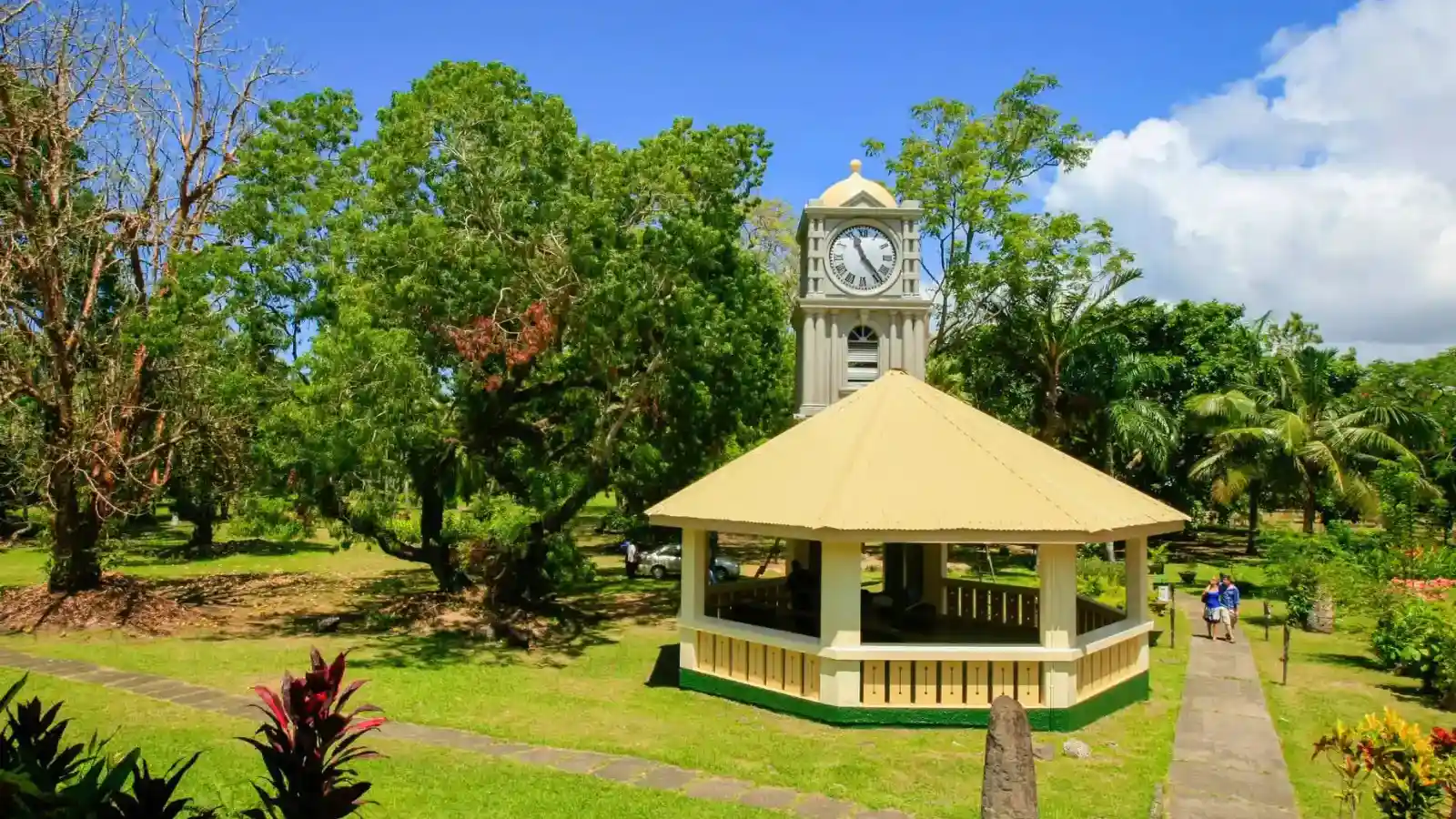
| Quick fact | What travelers should know |
|---|---|
| Location | Cakobau Road, central Suva, on the same grounds as the Fiji Museum |
| Best for | A short garden walk, local history, photography and a museum visit |
| Time needed | About 30 to 45 minutes for the garden, or two to three hours with the museum and nearby landmarks |
| Garden hours | No dependable current official schedule was available when checked; visit during daylight and confirm locally if access is essential |
| Garden admission | No separate garden ticket was advertised when checked; Fiji Museum admission is separate |
| Museum hours | 9:00 am to 4:30 pm, Monday to Sunday, with specified public-holiday closures |
| Weather | Suva receives rain throughout the year; carry light rain protection and expect damp or slippery surfaces after showers |
Is Thurston Gardens worth visiting?
Thurston Gardens is worth visiting if you are already exploring central Suva, especially when the Fiji Museum is part of your plan. The garden gives the museum a physical setting and turns a single indoor attraction into a more complete look at the capital's history. It is also a useful pause between the government district, Albert Park and the waterfront.
Do not travel across Viti Levu only for a large botanical collection or a highly curated garden experience. The value here is the combination of place, history and location. A short walk lets you see mature tropical planting, historic civic features and the grounds where the national museum opened in 1955.
Set the right expectation
Treat Thurston Gardens as a 30 to 45 minute heritage and garden walk. Pair it with the museum or a central Suva route. Visitors seeking a longer nature walk should consider Colo-i-Suva Forest Park on a separate trip.
The history of Thurston Gardens
The garden's story does not begin in 1913. The current grounds occupy the site of the original iTaukei settlement of Suva. The Fijian History project records that the settlement existed before 1820, was destroyed during conflict in 1843, and that its inhabitants were later moved to Suvavou as colonial Suva developed into the capital. This older history is essential context and should not be reduced to a footnote beneath the colonial garden story.
Suva's first botanical garden was created near Waimanu Road in 1881 at the request of Sir John Bates Thurston, who later served as Fiji's fifth British colonial governor. In 1913 the botanical garden moved to its present site and became known as the Suva Botanical Garden. Historical records describe underground drainage work and new avenues of royal palms and tree ferns as part of that move.
| Date | What changed |
|---|---|
| Before 1820 | The original settlement of Suva occupied the area of the present gardens |
| 1843 | The original Suva settlement was sacked and burned during conflict |
| 1881 | A botanical garden was established near Waimanu Road |
| 1882 | The indigenous inhabitants of Suva were moved to Suvavou as the colonial capital developed |
| 1913 | The garden moved to the current site and was named Suva Botanical Garden |
| 1918 | The clock tower and bandstand were constructed in memory of G.J. Marks, Suva's first mayor |
| 1955 | The current Fiji Museum opened on the grounds |
| 1976 | Suva Botanical Garden was renamed Thurston Gardens |
The name therefore reflects one period of the site's history, not its entire identity. When walking through the garden, keep both layers in mind: the older iTaukei place and the later botanical and civic landscape built around Suva's growth as a capital.
What to see in Thurston Gardens
Tropical planting and shaded paths
Historical documentation identifies palms, gingers, water lilies and other local flora in the grounds. The experience is less about checking rare species from a list and more about noticing how the planting frames the museum and older civic structures. Walk slowly, look across the lawns and water features, and allow time for the mature canopy rather than expecting a formal guided botanical collection.
Plant labels, access and maintenance can change. For that reason, this guide does not promise a particular orchid display, flowering season or individual specimen. If a specific plant collection is the main reason for your visit, contact the Fiji Museum before making a special journey.
The clock tower and bandstand
The clock tower and bandstand are the garden's clearest historic landmarks. They were constructed in 1918 by Henry Marks & Company Ltd in memory of G.J. Marks, the first mayor of Suva. Look for the memorial details and consider how the structure once formed part of Suva's civic and ceremonial life.
The Fiji Museum setting
The museum is not merely a nearby attraction. It sits within the garden and explains why this area matters nationally. Its official collection description covers archaeological material dating back 3,700 years and cultural objects representing iTaukei history as well as communities that have made Fiji home during the past two centuries.
A simple 30 to 45 minute walking plan
- Begin near the Fiji Museum. Orient yourself around the museum building and identify the main garden paths. If the museum is part of your day, confirm its closing time before walking farther.
- Follow the shaded paths. Notice the palms, gingers, water features and mature planting. After rain, slow down on damp surfaces and avoid stepping into planted areas.
- Stop at the clock tower and bandstand. Read any visible memorial information and photograph the structure without blocking paths or organized activity.
- Return through the wider grounds. Use a different path where access is open, then decide whether to enter the museum or continue toward Albert Park and the government district.
This is intentionally a flexible route. Path conditions and access can change, and the garden does not require a rigid circuit. A shorter visit is enough if rain begins or you are mainly coming for the museum.
Combining Thurston Gardens with the Fiji Museum
The strongest visit combines the garden with the Fiji Museum. The museum currently publishes hours of 9:00 am to 4:30 pm from Monday through Sunday. It lists closures on Christmas Day, New Year's Day, Easter Sunday and Diwali. Admission is separate from access to the garden, and prices or exhibition access can change, so check the official museum website before your visit.
Contact the museum when access matters
- Phone: +679 331 5944
- Email: [email protected]
- Address: Thurston Gardens, Cakobau Road, Suva, Fiji
Contact the museum if you need current admission prices, step-free access information, group arrangements or confirmation before a public holiday.
Practical information for visitors
How to get there
Thurston Gardens is on Cakobau Road in central Suva, beside the Fiji Museum and near Albert Park. From much of the central business district it can be reached on foot, but the most convenient choice depends on your starting point, the weather and mobility needs. For a taxi, ask for "Fiji Museum in Thurston Gardens" and confirm the fare before departure if the vehicle is not using a meter.
When to go
Visit during daylight. Morning is usually the easiest time to combine a garden walk with the museum, while a later visit can work if you first confirm the museum's 4:30 pm closing time. Suva can receive rain in any month. Check the forecast, carry a compact umbrella or light rain jacket, and use shoes with grip when paths are wet. For detailed monthly planning, see the FijiEco guide to Suva weather by month.
What to bring
- Water, especially if the garden is one stop on a longer city walk
- Light rain protection, even outside the wetter part of the year
- Comfortable shoes with grip for damp paths
- Sun protection for exposed sections and the walk between nearby sights
- Insect repellent if you are sensitive to bites
Accessibility and families
A level-looking path in a photograph does not guarantee continuous step-free access. Rain, maintenance and route changes may affect conditions. Travelers using a wheelchair or those who need a specific accessible entrance should contact the Fiji Museum before visiting. Families can keep the garden portion short and focus on the clock tower, open views and museum, but adults should supervise children near roads, water features and uneven surfaces.
Respectful photography and safety
Photograph plants and landmarks without entering beds, climbing structures or disturbing other visitors. Ask before taking recognizable photographs of people. Keep valuables close and use normal city awareness. This guide recommends a daylight visit rather than treating the garden as an evening attraction. If you will remain in the city after dark, read the separate FijiEco guide to staying safe in Suva at night.
How to build a half-day central Suva itinerary
Begin at Thurston Gardens and the Fiji Museum, then continue around Albert Park and the nearby government district. FijiEco's Suva heritage and architecture walk provides a broader route and historical context. Keep in mind that the district's story includes both colonial buildings and the older iTaukei history of the land.
If weather and daylight allow, extend the route toward the Suva Seawall. For food, produce and a busier view of everyday city life, continue separately to Suva Municipal Market. The market is not next door to the garden, so allow additional walking or use a taxi when it is raining.
| Available time | Suggested plan |
|---|---|
| 30 to 45 minutes | Garden paths, clock tower and a look at the museum exterior |
| Two to three hours | Garden walk plus Fiji Museum |
| Half day | Garden, museum, Albert Park and selected stops on the heritage route |
Frequently asked questions
Is Thurston Gardens the same as Suva Botanical Garden?
Yes. The botanical garden moved to the present site in 1913 and was known as Suva Botanical Garden. It was renamed Thurston Gardens in 1976.
Is Thurston Gardens free?
No separate ticket for walking through the public garden was advertised when this guide was checked. The Fiji Museum charges separate admission. Confirm locally if you are visiting for an organized event or during maintenance.
What are the opening hours?
FijiEco could not verify dependable current official hours for the garden itself, so visit during daylight. The Fiji Museum publishes hours of 9:00 am to 4:30 pm, Monday to Sunday, with closures on Christmas Day, New Year's Day, Easter Sunday and Diwali.
How long do you need?
Allow about 30 to 45 minutes for a relaxed garden walk. Set aside two to three hours if you also want to visit the Fiji Museum and pause at the main historic features.
Is the Fiji Museum inside Thurston Gardens?
Yes. The museum is located within the garden grounds on Cakobau Road. Combining the two gives the most complete visit.
Can wheelchair users visit the garden?
Conditions may vary by entrance, path, weather and maintenance. Contact the Fiji Museum before visiting if you need confirmed step-free access or assistance.
Sources and verification
- Fijian History, Thurston Gardens, University of the South Pacific collaborative history project. Used for the settlement history, garden timeline, clock tower, bandstand, museum opening and 1976 renaming.
- Fiji Museum, About. Used for the museum's location, institutional history and 3,700-year collection description.
- Fiji Museum, Contact. Used for current hours, holiday closures, address, telephone number and email.
- Fiji Meteorological Service, Climate Services. Used as the official starting point for current Fiji climate information and weather planning.