Bligh Water Passage: Fiji's Ultimate Pelagic Adventure
Bligh Water Passage, the deep channel separating Viti Levu and Vanua Levu, stands as one of the Pacific's premier pelagic diving destinations. Named after Captain William Bligh's historic passage through these waters in 1789, this marine highway attracts massive schools of fish, sharks, and seasonal migrations of whales, creating an underwater spectacle that rivals the protected marine biodiversity of Namena Marine Reserve.
World-Class Pelagic Diving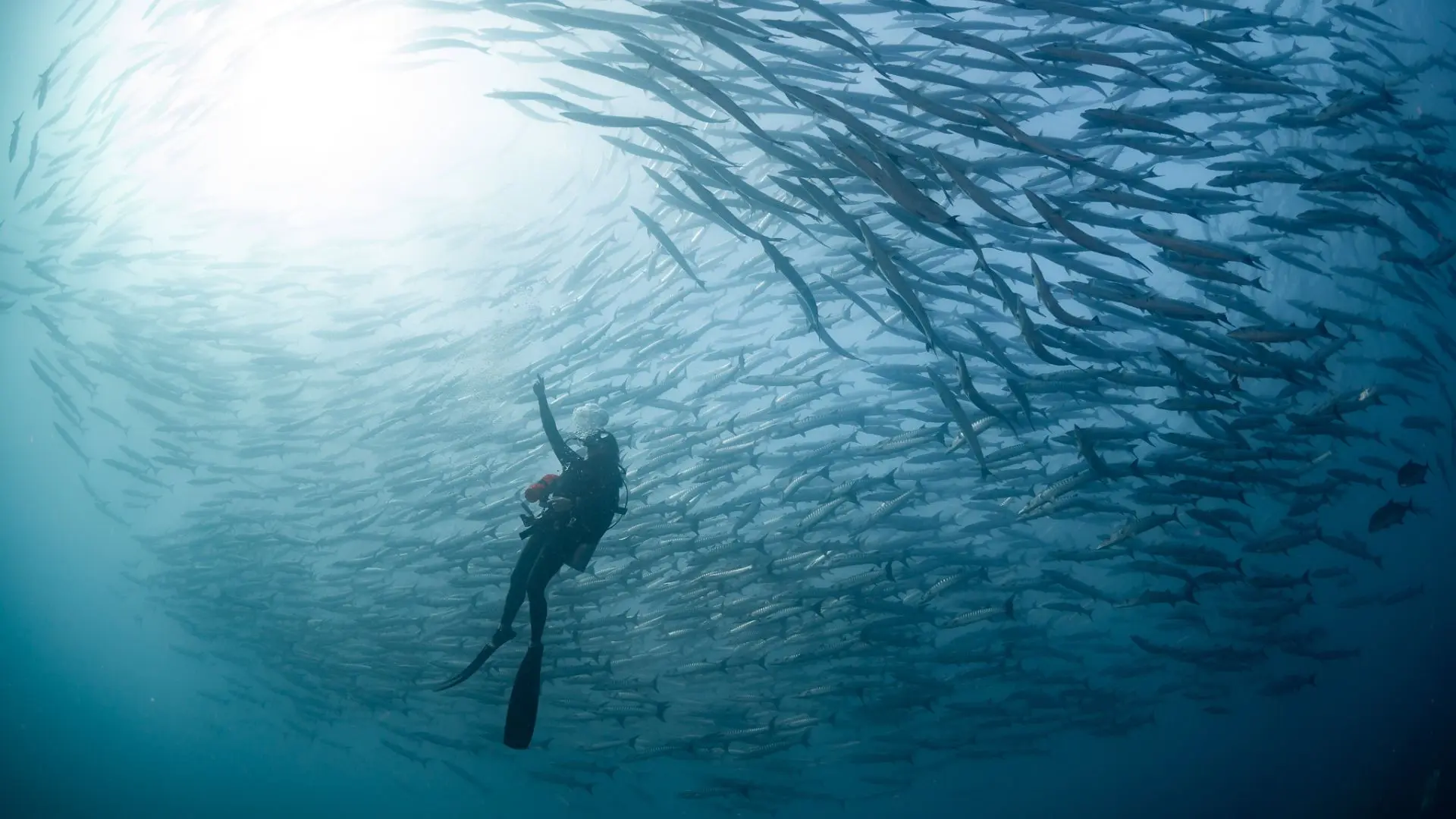
The Pacific's Marine Highway
Bligh Water Passage serves as a natural corridor for marine life migration between the Coral Sea and Pacific Ocean. The passage's unique geography creates upwelling currents that bring nutrient-rich deep water to the surface, supporting one of the Pacific's most productive marine ecosystems and attracting massive aggregations of pelagic species.
The channel reaches depths exceeding 1,000 meters, with underwater seamounts and pinnacles rising from the abyss to within 20 meters of the surface. Water temperatures remain consistently warm at 26-29°C (79-84°F), while visibility often exceeds 40 meters, providing crystal-clear views of the spectacular marine life that congregates in these productive waters.
Oceanic Convergence Zone
Bligh Water Passage functions as a marine superhighway where warm tropical currents meet cooler deep-ocean waters, creating a unique ecosystem that supports both reef and pelagic species in extraordinary numbers. This convergence zone attracts over 15 species of sharks and numerous whale species during migration seasons.
Legendary Fish Aggregations
The passage is world-renowned for its massive fish schools, particularly the famous barracuda tornadoes that can contain thousands of individuals swirling in perfect synchronization. These aggregations, along with schools of jacks, trevally, and tuna, create some of the most spectacular underwater scenes in the diving world. While different in nature from Beqa Lagoon's controlled shark feeding experiences, the passage offers wild, unbaited encounters with massive fish schools and their predators.
Barracuda Tornadoes
Massive cylindrical schools of chevron barracuda creating mesmerizing underwater cyclones, best observed at Vatu-i-Ra passage.
Giant Trevally Schools
Hunting packs of large GT patrolling seamount edges and channel entrances, particularly active during dawn and dusk.
Yellowfin Tuna
Fast-moving schools of yellowfin tuna racing through blue water, often followed by silky sharks and pilot whales.
Dogtooth Tuna
Solitary apex predators patrolling deep drop-offs and seamount peaks, prized by underwater photographers.
Premier Dive Sites
Bligh Water Passage features numerous world-class dive sites scattered across its 90-kilometer length. From shallow coral pinnacles perfect for intermediate divers to deep-water seamounts challenging advanced divers, the passage offers diverse underwater topographies that attract different marine communities throughout the tidal cycles.
Vatu-i-Ra Passage
The epicenter of barracuda activity, featuring a narrow channel between reefs where massive schools congregate predictably.
Mellow Yellow
A colorful seamount rising from deep water, covered in soft corals and frequented by grey reef sharks and eagle rays.
Alacrity Rocks
Twin pinnacles offering drift diving opportunities with consistent shark encounters and massive trevally schools.
Nigali Passage
A deep channel cutting through Gau Island's reef system, famous for bull shark encounters and large pelagic fish.
Shark Diversity and Encounters
Bligh Water Passage hosts an impressive diversity of shark species, from common reef sharks to rare oceanic species. The passage's position along major migration routes and its abundant fish populations create ideal conditions for shark encounters, with different species utilizing various habitats throughout the water column. While offering natural encounters in wild conditions, divers seeking more predictable shark experiences might also consider Paradise Beach's Beqa Island shark diving operations for guaranteed close-up encounters.
The area's shark populations remain healthy due to traditional Fijian fishing practices and modern conservation efforts. Many dive sites offer reliable shark encounters, with experienced guides able to predict optimal viewing conditions based on tidal cycles, time of day, and seasonal patterns.
Bull Sharks
Resident populations in Nigali Passage, with organized feeding dives offering close encounters.
Grey Reef Sharks
Abundant throughout the passage, often encountered in large groups patrolling reef edges.
Silky Sharks
Open-water species following tuna schools and occasionally approaching diving vessels.
Advanced Diving Experiences
Bligh Water Passage caters primarily to advanced divers due to its deep sites, strong currents, and open-ocean conditions. Most dive sites require Advanced Open Water certification or higher, with many operators offering specialized technical diving opportunities for those seeking extreme underwater adventures. For those seeking current-assisted diving in more accessible conditions, Mamanuca Islands drift diving provides excellent training grounds before attempting Bligh Water's more challenging sites.
Drift Diving
High-speed drift dives (20-40m) through channels and passages, requiring advanced buoyancy control.
Deep Seamounts
Technical dives (30-50m) on isolated pinnacles rising from abyssal depths, offering rare species encounters.
Blue Water Diving
Open-ocean dives targeting pelagic species, including seasonal whale and dolphin encounters.
Seasonal Marine Migrations
The passage serves as a crucial migration corridor for numerous marine species, with different seasons bringing distinct wildlife spectacles. Humpback whales transit through the area from June to October, while manta rays aggregate during plankton blooms, and various shark species follow seasonal food sources.
Experienced local guides track these migration patterns, timing dive trips to coincide with peak activity periods. The passage's predictable seasonal patterns make it possible to plan specialized trips targeting specific species or natural phenomena, from whale song recordings to manta ray feeding aggregations. For land-based whale watching opportunities during migration season, Savusavu Bay's elevated vantage points provide excellent spotting opportunities for humpback whales passing through the passage.
Seasonal Highlights
- June-October: Humpback whale migrations and mother-calf encounters
- November-February: Manta ray aggregations during plankton blooms
- March-May: Peak barracuda tornado formations and tuna schools
- Year-round: Bull shark encounters at established feeding sites
- Seasonal: Whale shark sightings during warm-water periods
- Variable: Pilot whale pods and dolphin super-pods
Liveaboard and Day Trip Options
Due to the passage's remote location and scattered dive sites, most diving is conducted via liveaboard vessels or extended day trips from major ports. Lautoka Port serves as the primary departure point for many Bligh Water expeditions, offering excellent ferry connections and marine facilities. Liveaboard options range from budget-friendly to luxury vessels, all equipped with advanced navigation systems and safety equipment necessary for open-ocean diving.
Day trip operators based in Suva, Rakiraki, and other coastal towns offer access to the passage's more accessible sites. These operators typically focus on the most reliable dive sites and provide comprehensive briefings about the challenging conditions divers may encounter in this dynamic marine environment.
Photography Opportunities
Bligh Water Passage ranks among the world's top destinations for wide-angle underwater photography. The massive fish schools, clear blue water, and dramatic lighting conditions provide unlimited opportunities for award-winning images. Many professional photographers return annually to capture the passage's ever-changing underwater scenes.
The area's challenging conditions require advanced photography skills and specialized equipment. Strong currents, deep sites, and fast-moving subjects demand high-performance cameras and strobes. Many liveaboard operators offer dedicated photography guides and charging stations for professional equipment.
Photography Essentials
- Wide-angle lenses essential for capturing massive fish schools and marine megafauna
- High-powered strobes necessary for illuminating subjects in deep, clear water
- Fast autofocus systems critical for tracking moving pelagic species
- Backup equipment mandatory due to challenging conditions and remote location
- Underwater flash triggers recommended for synchronized lighting setups
- Professional dive computers with decompression planning for deep photography dives
Safety and Requirements
Diving in Bligh Water Passage requires advanced certification and significant experience due to the challenging conditions. Strong currents, deep sites, and remote locations demand excellent buoyancy control, advanced navigation skills, and the ability to handle emergency situations in open-ocean environments.
All dive operators require comprehensive insurance coverage and recent diving experience. Many sites have minimum certification requirements, and some technical dives require specialized training in decompression diving or trimix operations for accessing the deeper seamounts and pinnacles.
Diving Prerequisites
- Advanced Open Water certification minimum; Deep Diver specialty recommended
- Minimum 50 logged dives with recent experience in current and deep-water conditions
- Drift diving experience essential for most sites in the passage
- Comprehensive dive insurance including evacuation coverage required
- Current medical clearance for diving, especially for deep and technical dives
- Emergency signaling devices (safety sausage, whistle) mandatory equipment
Best Diving Conditions
Bligh Water Passage offers excellent diving year-round, with optimal conditions typically occurring during the dry season (May to October). During this period, calmer seas allow access to more exposed sites, while consistent southeast trade winds create predictable current patterns that concentrate marine life.
The wet season (November to April) brings warmer water temperatures and increased plankton productivity, attracting larger pelagic species and seasonal migrants. While weather conditions can be more variable, experienced operators can still access quality dive sites and often encounter enhanced marine life activity during this period.
Conservation and Research
Bligh Water Passage serves as an important research area for studying pelagic fish behavior, migration patterns, and the effects of climate change on oceanic ecosystems. Several international research organizations collaborate with Fijian institutions to monitor fish populations, water quality, and the health of seamount ecosystems. Similar marine research efforts are conducted at smaller scales at destinations like Caqalai Island Beach, where community-based monitoring contributes to broader understanding of Fiji's marine environments.
Conservation efforts focus on protecting critical habitat areas and managing fishing pressure on key species. The passage's importance as a migration corridor has led to proposals for expanded marine protected areas and international cooperation on managing highly migratory species that traverse multiple national boundaries.
For those interested in combining their diving adventures with coastal relaxation, nearby destinations like Volivoli Beach offer beautiful surface intervals and opportunities to spot some of the same marine life from shore during their coastal migrations.
Experience the Ultimate Pelagic Adventure
Bligh Water Passage represents the pinnacle of pelagic diving in the Pacific, offering encounters with marine life aggregations that exist nowhere else on Earth. The passage's unique position as an oceanic highway creates opportunities to witness natural phenomena that few divers ever experience. By choosing to explore these waters, advanced divers contribute to the understanding and protection of one of the world's most important marine migration corridors, while experiencing the raw power and beauty of the open ocean in its most pristine form.