Rainbow Reef - Taveuni: Diving Fiji’s Famous Soft Coral Reef
Rainbow Reef is one of Fiji’s best-known diving areas, located in the Somosomo Strait between Taveuni and Vanua Levu. The reef is famous for colorful soft corals, drift dives, wall dives, reef fish, and the legendary Great White Wall. It is a rewarding dive destination, but currents matter here, so choosing the right operator and timing is important. For travelers comparing Fiji’s best underwater areas, the reefs of Namena Marine Reserve are another strong option for serious divers.
Famous Soft Coral Diving in Taveuni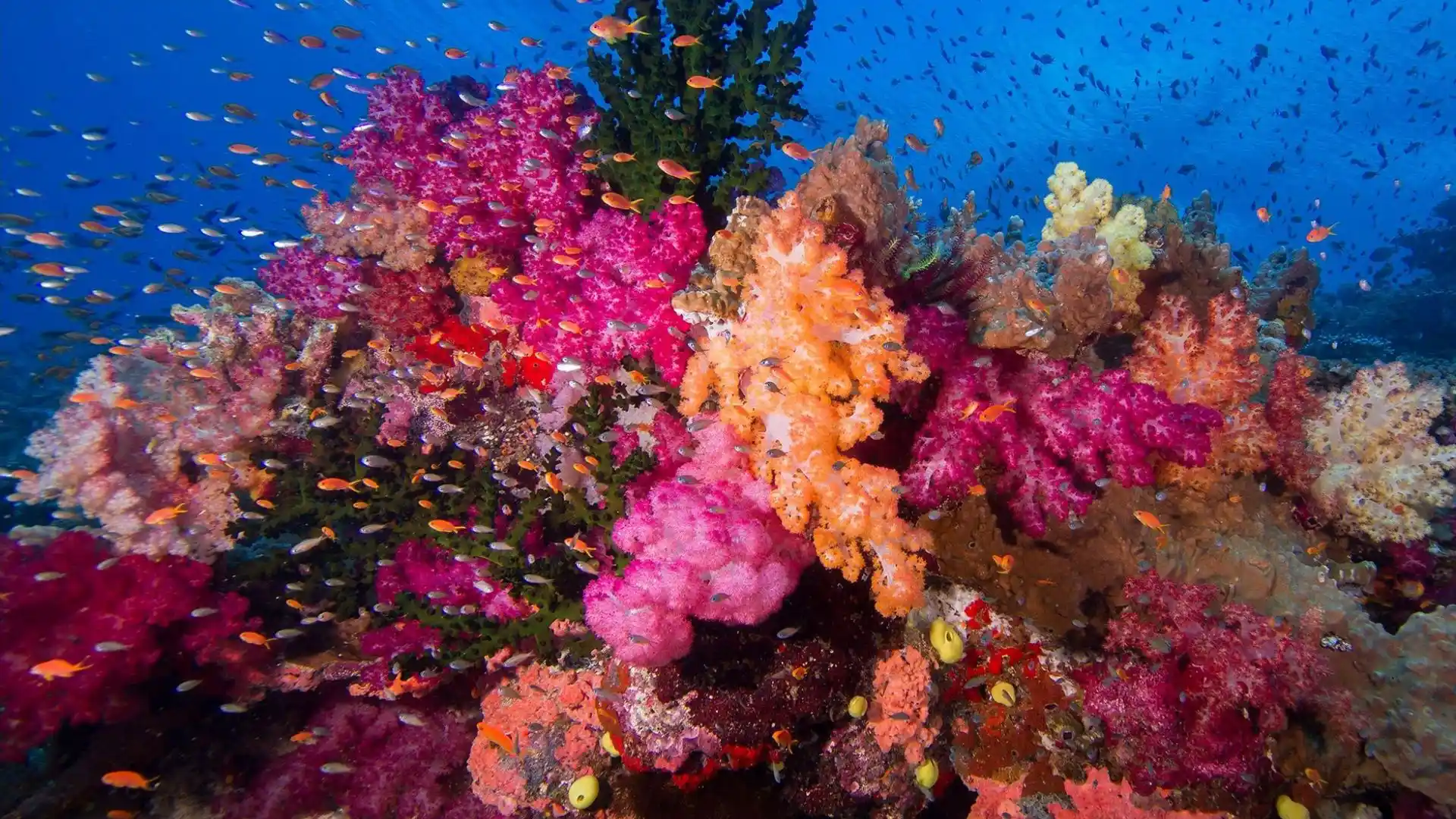
Why Rainbow Reef Is Special
Rainbow Reef’s character comes from its location in the Somosomo Strait. Water moves through the channel between the islands, bringing nutrients across the reef and helping support bright soft corals, reef fish, and active marine life. The same currents that feed the reef can also make conditions more challenging, so timing and local guidance are important.
This is why Rainbow Reef is best explored with an experienced local dive operator. Some sites can be suitable for newer certified divers, especially in calmer conditions, while deeper walls and stronger-current dives are better for confident or advanced divers. If you want a more dramatic wall dive, the nearby Great White Wall is the signature site to ask about, but it should be planned carefully.
Good to Know Before You Dive
Rainbow Reef is not only about clear water and colorful corals. Tides, current strength, weather, visibility, and the moon cycle can all affect where operators choose to dive on a given day. If there is one specific site you want to see, especially the Great White Wall, check the timing with your dive operator before finalizing your dates.
Great White Wall
The Great White Wall is the most famous dive site on Rainbow Reef. Divers usually descend through a swim-through or tunnel before reaching a dramatic wall covered with pale soft corals. Under the right light and current conditions, the wall can look white or lavender, which is where the name comes from.
This is not a site to treat casually. The Great White Wall depends heavily on tide and current timing, and many operators only dive it on selected days each month. It is generally better for experienced or advanced divers because of depth, current, and the need for good buoyancy control. If this dive is the main reason for your Taveuni trip, ask your resort or dive center for the best dates before you book.
Popular Rainbow Reef Dive Sites
Rainbow Reef has many dive sites, and each one feels different. Some are known for walls and current, others for coral gardens, fish life, or easier conditions. You may not visit every site in one trip, because the final choice usually depends on tides, weather, diver experience, and the operator’s daily plan.
Great White Wall
Rainbow Reef’s signature wall dive, famous for pale soft corals. Best planned around the right tide and current conditions, and more suitable for experienced divers.
Cabbage Patch
Known for large cabbage-shaped coral formations. It is often described as one of the more approachable sites and may be used for easier dives or check dives when conditions allow.
Purple Wall
A colorful wall dive where soft corals, reef fish, and current-fed marine life are the main attraction.
The Zoo
A lively site where divers may see schooling fish, reef sharks, barracuda, and other active marine life depending on the day.
Fish Factory
Often mentioned for fish activity and reef life. It can also be a good option for snorkelers or divers when conditions are suitable.
Nuku Reef
A recommended Rainbow Reef site for travelers who want a mix of coral scenery, reef fish, and a gentler underwater experience when the sea is calm.
Marine Life You May See
Marine life changes from dive to dive, so it is better not to expect a fixed checklist. Divers commonly look for butterflyfish, angelfish, anthias, fusiliers, parrotfish, triggerfish, wrasses, clownfish, nudibranchs, and other reef species. On some sites, you may also see reef sharks, barracuda, sea snakes, rays, or larger schooling fish.
Night dives can show a completely different side of the reef. If your operator offers them and you are comfortable diving after dark, consider doing at least one night dive. Small nocturnal animals, hunting crustaceans, and reef life that hides during the day can become much easier to notice in torchlight.
Eco Note: Protect the Reef While You Dive
The soft corals that make Rainbow Reef famous are fragile. Keep good buoyancy, avoid standing on coral, never chase marine life, and do not collect shells or animals from the reef. If you see unusual marine life such as a triton shell, enjoy the moment without touching or disturbing it.
Diving Experience Levels
Rainbow Reef can work for different levels of certified divers, but not every site is right for every person. A newer Open Water diver may be more comfortable on calmer reef sites, while advanced divers may prefer deeper walls and drift dives. The key is choosing the right site for the day’s conditions.
Newer Certified Divers
Ask for calmer sites and tell the operator if you have limited current experience. Cabbage Patch or similar reef sites may be better than deeper wall dives.
Drift Divers
Many Rainbow Reef dives involve current. With the right guide and timing, drift diving can be smooth and rewarding.
Advanced Divers
Sites such as the Great White Wall are better suited to divers with deeper dive experience, good buoyancy, and comfort in current.
How Many Dives Should You Plan?
Many Taveuni dive resorts and operators build a typical dive day around two boat dives. If you want three or four dives in a day, ask before you arrive, because extra dives may depend on weather, staffing, boat schedules, surface intervals, and the number of other divers.
If you are traveling a long way mainly for Rainbow Reef, one or two dives may feel too short. A stay of several days gives you a better chance of seeing different sites and waiting for the right conditions for the Great White Wall.
Photography and Visibility
Rainbow Reef can be excellent for underwater photography because of its soft corals, fish life, walls, and macro subjects. Wide-angle photos work well on colorful coral walls, while macro photographers can look for nudibranchs, small crustaceans, juvenile fish, and details hidden in the reef.
Visibility can be very good, but it is not something to promise every day. Weather, tide, swell, rain, and current can all affect underwater clarity. If photography is a priority, ask your operator which sites and times are most suitable for calmer conditions and better light.
Photography Tips
- Ask your guide which sites are best for wide-angle coral scenes and which are better for macro subjects.
- Use good buoyancy control before focusing on photography, especially near soft corals.
- Use lights, strobes, or filters responsibly and avoid disturbing marine life.
- Do not touch the reef to stabilize yourself for a photo.
- Bring backup batteries and memory cards, because Taveuni is remote and camera supplies may be limited.
Safety and Dive Planning
The most important safety factor at Rainbow Reef is current. Currents help feed the corals, but they can also make some sites unsuitable at certain times. A good local operator will choose sites based on the day’s tide, current, weather, and diver experience.
Diving Safety & Requirements
- Open Water certification may be enough for some easier sites, but Advanced Open Water is recommended for deeper wall dives.
- Recent dive experience is helpful because Rainbow Reef often involves current.
- Ask whether the Great White Wall is suitable for your certification and comfort level.
- Use dive insurance and follow your operator’s safety rules.
- Do not plan high-elevation hikes or mountain trips soon after diving because of decompression risk.
- After multiple dives, leave a proper surface interval before flying or doing high-altitude travel.
Getting to Rainbow Reef
Most travelers reach Rainbow Reef from Taveuni, often staying near Matei, Somosomo, Viani Bay, or resorts with access to the Somosomo Strait. Boat time depends on your launch point, the operator, and sea conditions, but many dive sites are commonly reached by small dive boats in around 20–30 minutes from well-positioned bases.
Taveuni can be reached by domestic flight from Nadi or Suva, usually arriving at Matei Airport. Ferry travel is also possible, but it takes much longer and is more schedule-dependent. If you are visiting mainly for diving, flying is usually the simpler option.
Where to Stay for Rainbow Reef
Taveuni has a mix of dive resorts, eco-resorts, guesthouses, and small stays. If diving is your priority, choose accommodation that works closely with a reliable dive operator or has its own dive center. This makes it easier to plan early departures, equipment, surface intervals, and weather changes.
For travelers looking for a more comfortable resort stay, Taveuni Island Resort & Spa is one option to compare. Budget travelers should also check transport distances carefully, because staying far from your dive operator can make daily logistics more complicated.
Best Time to Dive Rainbow Reef
Rainbow Reef can be dived year-round, but conditions vary. Many travelers prefer Fiji’s drier months from May to October, when sea and weather conditions are often more comfortable. However, the best site choice on any given day still depends on tides, currents, swell, and local operator judgment.
If you specifically want the Great White Wall, do not rely only on the season. Ask about tide and moon-cycle timing, because this site is not always dived every day. Booking several dive days gives you a better chance of seeing it in good conditions.
Snorkeling at Rainbow Reef
Rainbow Reef is mostly known as a scuba diving destination, but some sites can also work for snorkeling when the water is calm and the operator considers conditions safe. Sites such as Cabbage Patch, Fish Factory, and Nuku Reef are often mentioned as better options for snorkeling than deeper wall dives.
Snorkelers should still treat the area with respect. Currents can be present even near the surface, so go with a local boat operator, wear proper flotation if needed, and avoid drifting away from the group.
Eco-Conscious Diving Around Fiji
Rainbow Reef is part of a wider Fiji diving story. Other island groups, including the Yasawa Islands Marine Reserve, also attract travelers looking for clear water, reef life, and lower-impact marine experiences. If your trip includes Nadi before or after Taveuni, a coral restoration workshop in Nadi can be a useful way to learn more about reef protection before seeing Fiji’s underwater ecosystems in person.
Wherever you dive in Fiji, the same basic rule applies: choose responsible operators, avoid touching coral, control your buoyancy, and follow local guidance. Healthy reefs depend on everyday choices made by visitors, guides, resorts, and local communities.
What to Do on Taveuni After Diving
Taveuni is worth visiting even beyond Rainbow Reef. Known as Fiji’s Garden Island, it has rainforest, waterfalls, coastal walks, village life, and quiet rural scenery. Popular non-diving experiences include the International Date Line marker, Waitavala Natural Waterslide, Bouma National Heritage Park, Lavena Coastal Walk, and waterfall swims near places such as Taveuni Lavena Beach.
Just remember that hiking and diving need to be planned carefully. Do not go to higher elevations too soon after diving. If you want to combine Rainbow Reef with hikes, waterfalls, or rural food experiences such as a traditional coconut farm experience, leave enough time between activities and ask your dive operator for advice.
Practical Taveuni Tips
Taveuni is more remote than Nadi, Denarau, or Suva, so bring enough Fijian dollars in cash for taxis, small shops, village visits, tips, and activities outside resorts. Cards may work at hotels, but cash is still useful once you leave the resort area.
Dive Into Rainbow Reef with Care
Rainbow Reef is worth visiting if you are a certified diver who wants colorful soft corals, current-fed reef life, and a more nature-focused Fiji trip. It is especially rewarding for travelers who can spend several days on Taveuni instead of rushing one or two dives. By choosing responsible local operators, respecting currents, avoiding contact with coral, and supporting reef-conscious travel, visitors help protect the same underwater world they came to experience. For FijiEco, Rainbow Reef is not just a beautiful dive site - it is a reminder that Fiji’s best travel experiences should support both nature and local communities.