Wakaya Island Snorkeling: Access, Prices and Reef Guide
Written and researched by Yevhen Derkach
Last updated and fact-checked: .
Wakaya Island snorkeling is best planned as part of a stay at Wakaya Island Resort & Spa, a private-island resort in Fiji’s Lomaiviti group. Guests can explore from shore or arrange an outing through the marina. Start with the room booking and return island transfer, then choose reef sessions that match your swimming confidence. The resort lists snorkeling as complimentary and self-guided.
Where is Wakaya, and who can visit?
Wakaya is a privately held island in Fiji’s Lomaiviti group. The resort appears under both Wakaya Island Resort & Spa and its earlier name, The Wakaya Club & Spa, so use the current reservations contact below.
The published guest route is a resort stay with an arranged air transfer. For a proposed day visit or arrival on your own boat, obtain written agreement for shore access, resort facilities and the activities you want before organizing transport.
How to get to Wakaya and return to Nadi
From Nadi International Airport
The resort arranges a 35-minute flight from Nadi to Wakaya aboard its private Cessna Caravan. Send reservations your international flight number and arrival time so they can arrange the connection. This is an arranged charter transfer with your stay.
Before choosing an international arrival, get the island flight’s departure window, meeting instructions and baggage limit. Tell reservations about bulky equipment and the size of your group. If an overnight stop in Nadi is part of the plan, FijiEco’s Nadi Airport transfer guide covers the road journey to your hotel.
Starting in Suva, Denarau or another Fiji island
Give reservations your starting accommodation or airport and ask them to quote the complete route. The published transfer information describes Nadi. Agree on any alternative pickup before buying a separate flight or boat charter.
Returning to an international flight
Reserve the return island transfer at the same time as your stay and provide your onward flight’s check-in deadline. Allow for the island flight, airport transfer and possible weather delays. An overnight in Nadi is a practical buffer before a long-haul departure. If you add scuba diving, give the dive team the time of this first flight so they can schedule your dives and pre-flight interval.
What does Wakaya snorkeling cost?
Snorkeling is listed as complimentary for resort guests. The main expenses are accommodation and the island transfer. The resort’s accommodations page publishes the following room prices in US dollars. Its FAQ states that room rates are charged per room and that meals and snacks are included, while alcohol costs extra.
| Item | Published price | Basis | What to budget |
|---|---|---|---|
| Snorkeling | Complimentary | Resort guest activity | Agree on equipment, boat arrangements and any requested guide. |
| Garden View Bure | US$2,500 | Per room, per night | Listed capacity: 2 adults and 1 child. |
| Ocean View Bure | US$2,800 | Per room, per night | Listed capacity: 2 adults and 1 child. |
| Vale Levu | US$5,300 | Per suite, per night | Two bedrooms; listed capacity: 4 adults and 2 children. |
| Island transfer | Request a quote | Your confirmed arrival and departure | Include both directions and any mainland connection. |
| Scuba diving | Additional fee | Separate resort activity | Book and price any diving separately from snorkeling. |
Published reference prices checked on October 9, 2026. Request a dated, itemized quote showing room charges, taxes, return flights, activity inclusions and cancellation terms. No standalone snorkeling ticket price is listed on the resort’s snorkeling page.
How to arrange your stay and snorkeling
Use [email protected] for booking inquiries. The resort’s current contact page gives +679 892 6901 as its telephone. Include your dates, number of adults and children, flight details and whether snorkeling is the main reason for the stay.
- Equipment: ask what mask, snorkel, fin sizes and flotation aids are available, and whether any hire charge applies.
- Support: explain your swimming ability and request a guided introduction if you need one. Establish availability and cost before paying.
- Boat outings: ask about the reef, departure time, time in the water, supervision and getting back aboard.
- Booking terms: obtain the deposit, cancellation conditions and arrangements for disrupted transfers.
Where can you snorkel on Wakaya?
From the shore
The official snorkeling page says guests can enter from shore. The resort also describes shallow sheltered coral habitat at Homestead Beach in its sustainability material. Use Guest Service to choose the entry point, route and exit for the day’s tide and wind.
Start where you can fit and test your mask without standing on coral. Follow the route given by staff, keep clear of boat traffic and stay with your buddy. A sheltered beach still needs a local briefing, especially when the tide changes.
Trips from the marina
The same activity page lists marina departures and recommends a 10 am start with about 1.5 hours for a session. Arrange it at Guest Service. Treat that timing as a planning suggestion and use the departure agreed for your outing.
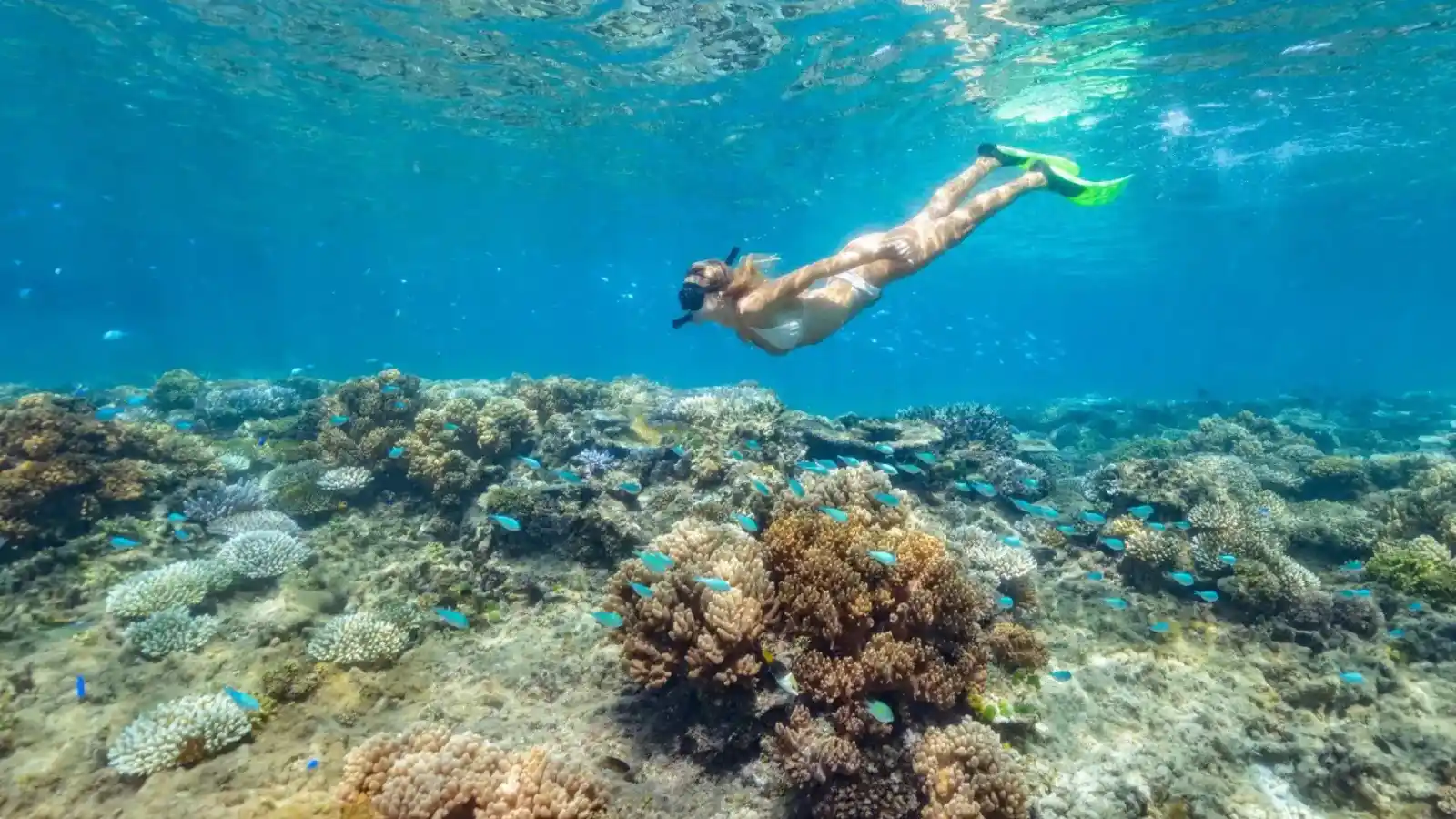
Wakaya has coral reefs and tropical fish, and the resort describes manta-ray habitat around its reef system. For a manta-focused outing, tell staff what you hope to see and ask whether a suitable snorkeling trip is available during your stay. Wildlife encounters depend on the animals and conditions; choose a reef experience you will enjoy even without a manta sighting.
Is Wakaya snorkeling suitable for beginners and children?
The resort’s current FAQ welcomes families and guests of all ages. That accommodation policy does not make every reef suitable for every swimmer. Its snorkeling page labels the activity self-guided, so agree on any instruction or supervision you need.
For a first session, ask staff to recommend a calm, shallow area. Practice using the equipment and keep the outing short. Use appropriate flotation and keep children under close adult supervision. Avoid offshore snorkeling until the activity, conditions and support suit your ability.
When is the best time to snorkel on Wakaya?
Fiji’s general drier season runs from May to October; November to April is warmer and wetter. Those seasons help with holiday planning, but wind, swell, rain and tide determine the best reef for a particular session. A morning recommendation does not guarantee calm water.
Leave several possible reef sessions in your stay so you can use the better conditions. Follow local advice and the Fiji Meteorological Service marine forecast. If a sea warning or local instruction rules out entering the water, use the time ashore instead.
What should you pack?
- A well-fitting mask and snorkel if you prefer your own, with fins that fit comfortably.
- Swimwear, a UPF rash guard, sun protection, a hat and sunglasses for time out of the water.
- A towel, drinking water, dry clothes and a small dry bag for a boat outing.
- Your booking confirmation, transfer details and insurance contacts stored offline.
Travel within the baggage allowance agreed for the island flight. On a boat outing, secure your camera and loose straps so they cannot trail across coral. Set up equipment before entering the water and keep your hands free for swimming.
Food, accommodation and time between reef sessions
Stay at the island resort in a bure or villa, with the room size matched to your group. Its dining page names The Palm Grove and Baravi Lai Lai, with additional beach and private dining arrangements. Send dietary requirements with your reservation and arrange meal times around your reef outing.
For a simple day, start with breakfast and a briefing, take the agreed shore or marina session, then return for lunch and a relaxed afternoon on land. Keeping your first session short leaves time to adjust equipment or arrange another outing.
If the Wakaya accommodation and charter budget does not fit, compare Leleuvia Island as another Lomaiviti option. For a reef excursion based from Savusavu, read the separate Namena Marine Reserve guide. Each has its own access and trip arrangements.
How to protect the reef and give mantas space
Float above the reef, keep your fins and camera clear of coral, and leave shells and marine life where they are. If the water is too shallow to pass without contact, turn back along the approved route.
For a manta encounter, enter quietly at least 10 m (33 ft) from the animal, avoid splashing and keep at least 3 m (10 ft) away as you approach. Let it choose whether to come closer, leave its route clear and never chase or touch it. Follow the Manta Trust snorkeling code and any additional instructions for the site.
Wakaya’s website describes manta conservation and a coral nursery. If you want to learn more, ask reception which projects or activities are running during your stay.
Frequently asked questions
Can I book a snorkeling day trip to Wakaya from Nadi?
The published route is a resort stay with an arranged charter transfer. For a day visit, ask reservations to confirm island access, a round-trip transfer and activity inclusions in writing before committing to transport.
Do I need scuba certification to snorkel?
Snorkeling uses a mask and snorkel at the surface, so scuba certification is not the relevant requirement. Your swimming ability, the chosen site and available supervision are what matter. Book scuba diving separately if you also want to dive.
Can I combine shore snorkeling and a boat outing?
Both options appear on the resort’s snorkeling page. Choose the shore route with staff, then arrange a marina outing through Guest Service around local conditions and your experience.
Will I see manta rays while snorkeling?
Wakaya’s reef system supports mantas, but a sighting is not part of a guaranteed itinerary. Request a suitable manta-focused outing and follow the crew’s wildlife guidance.
Sources
Official pages reviewed on October 9, 2026. Resort information supplies the access, activity and accommodation details; tourism, weather and conservation sources supply the wider planning guidance.
- Wakaya Island Resort & Spa: snorkeling. Shore and marina access, complimentary status, self-guided format and suggested timing.
- Wakaya Island Resort & Spa: FAQ. Nadi charter flight, room-based pricing, meal inclusions and family policy.
- Wakaya Island Resort & Spa: accommodations. Published US-dollar room rates and room capacities.
- Wakaya Island Resort & Spa: contact. Current reservations email and resort telephone.
- Wakaya Island Resort & Spa: sustainability. Homestead Beach reef habitat and manta conservation.
- Wakaya Island Resort & Spa: dining. Palm Grove, Baravi Lai Lai and dietary arrangements.
- Wakaya Island Resort & Spa: scuba diving. Diving as an activity with an additional fee.
- Tourism Fiji: The Wakaya Club & Spa. Private-island setting and Lau & Lomaiviti region.
- Tourism Fiji: water safety. Swimming ability, local conditions, flotation and offshore guidance.
- Tourism Fiji: weather in Fiji. General dry and wet seasons, rather than a Wakaya visibility forecast.
- Fiji Meteorological Service: marine weather. Official current marine forecasts and warnings.
- Manta Trust: How to Swim with Manta Rays. Quiet entry, distance from mantas and behavior around wildlife.
- NOAA Ocean Service: Underwater Adventure. Avoiding contact with coral and leaving underwater wildlife undisturbed.
Found an outdated detail or an access change? Send FijiEco a correction.