Best Diving in Fiji: Choose the Right Region for Your Trip
Last fact-checked:
The best diving in Fiji depends on the trip you want. Choose Taveuni and Rainbow Reef for current-fed soft coral, Pacific Harbour for the best-known shark dive, Rakiraki for Bligh Water, Savusavu for access to Namena and the Koro Sea, or Kadavu for a remote reef-focused stay. The Mamanuca Islands and Coral Coast are usually easier choices for beginners or travelers who want diving to fit around a broader Fiji holiday.
This guide compares regions rather than pretending that one dive site suits everyone. It explains the experience level, access, trip length, wildlife expectations and total costs to check before you book. Conditions change with weather, tide and current, so the final site choice must always be made with a qualified local operator on the day.
7 Diving Regions • Beginner to Advanced • Resort and Liveaboard Planning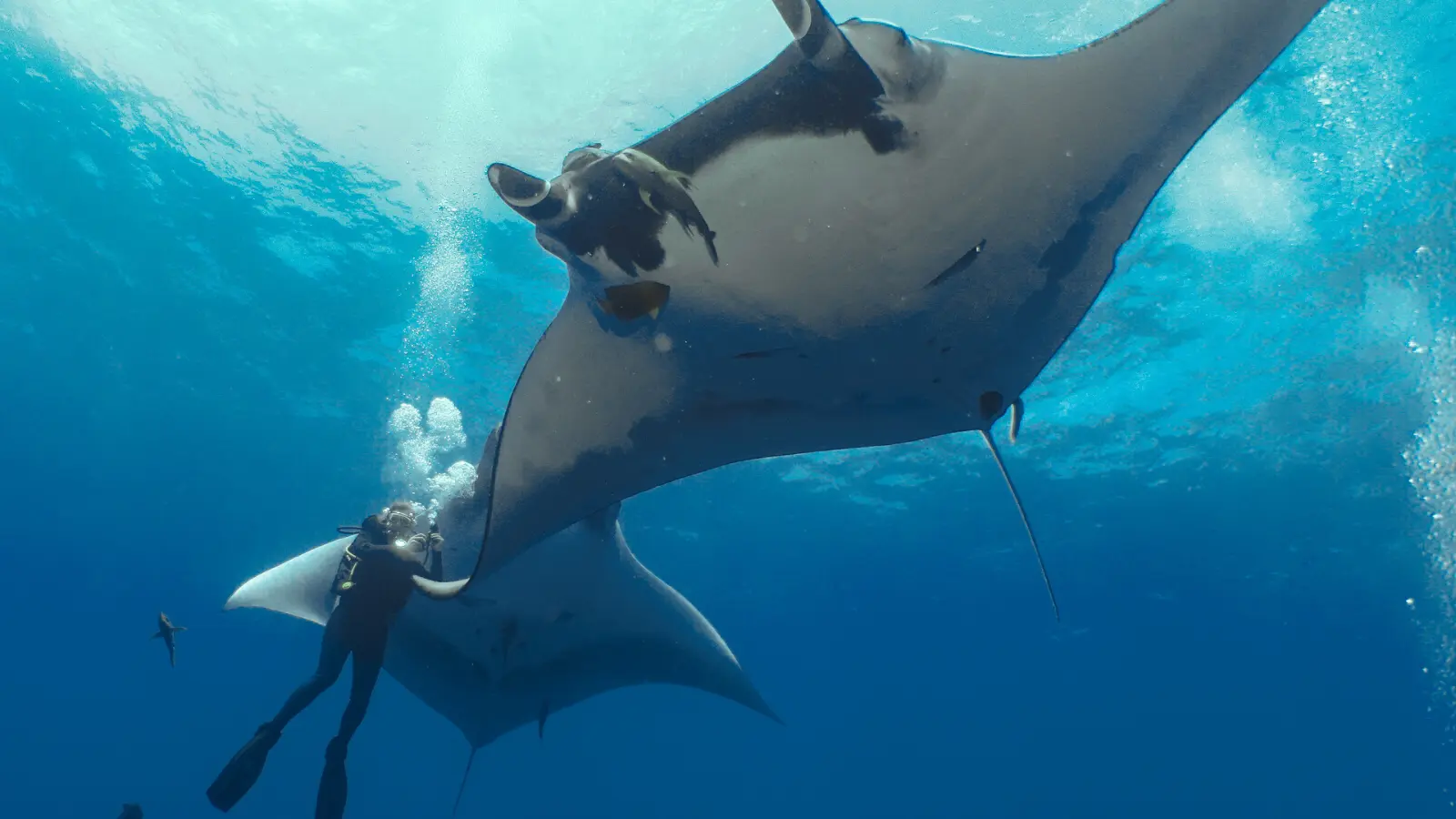
| Quick question | Short answer |
|---|---|
| Best all-round reef trip | Taveuni and Rainbow Reef for divers comfortable with drift diving |
| Best for sharks | Pacific Harbour and Shark Reef Marine Reserve |
| Best for beginners | A sheltered site selected by an operator in the Mamanucas, Coral Coast or Beqa Lagoon |
| Best remote reef stay | Kadavu, or Savusavu with planned Namena and Koro Sea diving |
| Can you dive year-round? | Yes, but visibility, rain, wind, currents and boat access vary by region and day |
| Minimum useful stay | Three nights for a diving add-on; five to seven nights for a dedicated regional dive trip |
Which Fiji diving region should you choose?
Start with the experience you want, then choose the island and accommodation. Reversing that order can leave a serious diver at a resort far from the reefs they expected, or place a beginner beside sites that are only comfortable in demanding current. Fiji is an island country, so changing dive regions often costs a full transfer day.
| Region | Choose it for | Best fit | Main planning issue | Practical base |
|---|---|---|---|---|
| Taveuni and Somosomo Strait | Rainbow Reef, soft coral and drift dives | Confident certified divers and photographers | Current changes with tide and moon phase; Great White Wall is schedule-sensitive | Taveuni or Viani Bay |
| Pacific Harbour and Beqa Lagoon | Shark Reef plus coral, pinnacles and wreck dives | Shark-focused trips and short Viti Levu itineraries | Shark dives run on operator schedules and add reserve, fuel and gear costs | Pacific Harbour |
| Rakiraki and Bligh Water | Current-fed reefs, pinnacles and soft coral | Divers prioritizing several serious reef days | Some sites are exposed or current-affected; stay near the dive operation | Rakiraki or Volivoli area |
| Savusavu, Namena and the Koro Sea | Reef variety, smaller-town base and remote day trips | Divers combining underwater time with Vanua Levu | Namena access is operator, weather and schedule dependent | Savusavu or a dive resort east of town |
| Kadavu and Great Astrolabe Reef | Remote reef systems, passages, walls and manta possibilities | Travelers willing to plan around a remote resort | Protected bays can be easy, while outer passages can have swift current and swell | A resort chosen for its exact dive access |
| Mamanuca and Yasawa Islands | Island holiday, courses, mixed-level groups and occasional diving | Beginners, families and non-diving partners | Dive quality and boat range depend heavily on the island and operator | An island resort with an on-site dive center |
| Coral Coast | Courses, accessible reef dives and a broader south-coast holiday | First-time divers already staying on Viti Levu | It is a convenience-led choice, not the only base for a dedicated Fiji dive trip | A Coral Coast resort near a dive center |
Do not count Great White Wall as a separate region
Great White Wall is a specific site within the Rainbow Reef and Somosomo Strait diving area. A Taveuni trip gives access to a wider menu of sites. The wall itself is tide-sensitive, and some operators require or recommend Advanced Open Water because of its depth, swim-through and possible current.
The seven main Fiji diving regions compared
1. Taveuni and Rainbow Reef
Taveuni is the strongest first choice for a dedicated soft-coral trip. Operators cross the Somosomo Strait to sites on Rainbow Reef, where tidal flow feeds the coral and commonly creates drift-diving conditions. Current is not equally strong on every site or every day. A good operator matches the site and entry time to the group rather than treating the reef as one fixed experience.
Read FijiEco's Rainbow Reef diving guide for the regional overview and the separate Great White Wall guide for that site's depth, current and timing. If the wall is a priority, ask an operator for suitable dates before buying domestic flights. Keep several dive days available because weather and tide can change the plan.
2. Pacific Harbour and Beqa Lagoon
Pacific Harbour is the clearest choice for a traveler whose main goal is a managed shark dive. It is on Viti Levu, so it can be added to a Nadi or Suva itinerary without another island flight. Beqa Lagoon also has coral bommies, pinnacles and wrecks, which makes it possible to combine the headline shark experience with ordinary reef diving.
Do not assume that every Beqa dive has the same requirements. Beqa Adventure Divers currently lists full Open Water certification or equivalent as its minimum for dive excursions, not Advanced Open Water, and checks each diver's certification and history. Another operator may set different rules, and the guide can change a site or refuse participation based on current ability or conditions. See FijiEco's Beqa Lagoon shark dive guide before deciding whether the format suits you.
3. Rakiraki and Bligh Water
The north coast of Viti Levu gives land-based access to Bligh Water and the Vatu-i-Ra area. This is a good choice when soft coral, pinnacles and current-fed reef life matter more than nightlife or a multi-island resort holiday. Stay close to the operator because the value comes from several dive days, not from one long day trip across the island. Some sites can be exposed or current-affected, so ask how the operator separates newer divers from groups seeking faster drift dives. FijiEco's Bligh Water diving guide covers the named-site intent in more detail.
4. Savusavu, Namena and the Koro Sea
Savusavu works well for travelers who want a quieter town base, Vanua Levu activities and several days underwater. Local reefs provide useful alternatives when a longer offshore trip is not running. Namena Marine Reserve is a separate destination south of Vanua Levu, and access depends on the operator, boat, minimum numbers, weather and the day's schedule. Do not book a Savusavu hotel and assume that Namena is automatically included. Ask which days are planned, the expected boat time and the cancellation rule. See the dedicated Namena Marine Reserve guide for site-specific planning.
5. Kadavu and Great Astrolabe Reef
Kadavu rewards travelers who accept more logistics in exchange for a remote reef-based stay. PADI notes that many protected-bay sites can be easy, while passages and outer reefs may have swift current and surface swell. That difference is why a single label such as beginner or advanced is not useful for the whole island.
Choose the resort and dive operation together. Boat range and location determine which part of the reef you will actually visit, and changing accommodation on Kadavu can be less simple than moving between hotels on Viti Levu. Compare FijiEco's Kadavu diving guide with the Great Astrolabe Reef guide. Treat manta encounters as a possibility, not a booking guarantee.
6. Mamanuca and Yasawa Islands
The western island groups make the most sense when diving must work for a mixed group. Mamanuca operators offer courses, sheltered coral gardens and more demanding drift, wreck or shark sites, often from island resorts. The Yasawas require more transfer time, so an on-site or nearby dive center is important. In both regions, ask for the actual daily site range rather than assuming every resort reaches every reef.
Use the Mamanuca diving guide and Yasawa marine guide for their individual attractions. Sawa-i-Lau Caves are a swimming and snorkeling experience, not a reason to rank the Yasawas as a scuba region. Seasonal manta activity can add value to a western-island stay, but the animals choose whether they appear.
7. Coral Coast
The Coral Coast is a practical option for a first course, refresher or a few reef dives during a south Viti Levu holiday. It avoids an extra island transfer and gives non-divers many alternatives. The trade-off is that a convenience-led resort stay is not the same as choosing Taveuni, Bligh Water, Kadavu or Savusavu for a dedicated multi-day dive itinerary. Ask whether dives depart from shore or boat, which fees are included and how sea conditions affect the launch point. Non-divers can also use FijiEco's Coral Coast snorkeling guide.
Choose by diving goal and experience
| Your priority | Start with | Why | Question to ask before booking |
|---|---|---|---|
| First course or Discover Scuba | Mamanucas or Coral Coast | Easy access to training and sheltered sites | Where are the confined-water skills completed, and what happens if sea conditions change? |
| Soft coral and drift diving | Rainbow Reef or Bligh Water | Current-fed reefs are the core attraction | How do you match sites and groups to today's current? |
| Shark-focused trip | Pacific Harbour | Direct access to organized Shark Reef excursions | What certification, recent experience, fees and safety procedures apply to my date? |
| Manta possibility | Kadavu or selected Yasawa locations | Known manta areas can be part of the local site menu | What is the backup dive if mantas are absent or the site is not accessible? |
| Remote resort diving | Kadavu or Savusavu | Several reef days can be combined with a quieter island stay | Which reefs are within the normal boat range, and what transfer is included? |
| Maximum diving in one trip | A liveaboard or one dedicated land base | Less time is lost to packing and island transfers | How many dives are planned, and what experience or equipment is required? |
Best time to dive in Fiji
Fiji has year-round dive operations, but there is no month that guarantees the best conditions in every region. Water, wind and visibility differ between the wetter windward areas, the drier west, sheltered lagoons and exposed passages. Recent rain can affect one coastal site while an offshore reef remains clear.
- May to October: generally cooler and drier. PADI reports that visibility in some Viti Levu and Kadavu areas can be strongest during the Southern Hemisphere winter, but this is not a daily guarantee.
- November to April: generally warmer and wetter. Rain, wind and tropical weather can interrupt boats, while many operators continue diving when local conditions are suitable.
- Tide and moon phase: especially important in current-driven areas. Taveuni operators plan Great White Wall visits around suitable tidal windows, and schedules can still change for weather or safety.
If you are choosing dates primarily for diving, compare the regional notes above with FijiEco's Fiji weather and seasons guide. Ask the operator two separate questions: what conditions are typical for those dates, and what they are seeing now. The second answer is more useful close to departure.
Is Fiji suitable for beginner divers?
Yes, if the operator chooses the site for the diver. Fiji has sheltered lagoons, shallow coral gardens and training locations, but the same region can also contain strong current, deep walls or exposed passages. A destination being suitable for beginners does not make every named site in that destination suitable.
Never certified
Book a recognized Discover Scuba program or full Open Water course. Confirm pool or confined-water training, maximum depth, instructor ratio, medical paperwork and what happens if the ocean session is cancelled.
Newly certified
Share your real dive count and date of last dive. Ask for a sheltered first day or refresher before current, deep walls or overhead-style swim-throughs. Do not book from certification level alone.
Experienced diver
Ask about current, negative entries, depth, surface conditions, DSMB policy and group separation. Local site knowledge remains more important than a high certification card.
Access, base and how many days to allow
For most travelers, one region per week produces a better dive trip than collecting islands. Domestic flights, road transfers, ferries, weather buffers and no-fly time consume more of the itinerary than the map suggests. Use FijiEco's Fiji transport guide and island-hopping guide before paying for separate hotels.
| Trip style | Suggested time | What it realistically allows |
|---|---|---|
| Resort add-on | 3 to 4 nights | One or two dive days plus a weather or rest buffer |
| Dedicated land-based region | 5 to 7 nights | Three or four dive days, site variety and a final no-fly day |
| Two-region dive trip | 10 to 14 nights | Useful diving in each base without turning every second day into a transfer |
| Liveaboard | The full sailing plus buffer nights | High dive volume with fewer daily road or resort logistics |
What does diving in Fiji cost?
There is no honest nationwide price per dive. Operators quote different currencies and package different items. A low headline can exclude tax, marine-reserve fees, fuel, boat transfers, equipment, dive computer, nitrox or a required hotel transfer. Compare the final amount for the same number of tanks and the same equipment.
| Current official example | Published price checked 2 September 2026 | Important extras or inclusions |
|---|---|---|
| Beqa Adventure Divers, two-tank Fiji Shark Dive | FJ$500 | Page separately lists FJ$25 reserve levy, FJ$20 fuel surcharge and FJ$50 full gear package per day |
| Taveuni Ocean Sports, two-tank certified-diver trip | US$120 plus local taxes | Tanks and weights included; published full gear package is US$20 plus local taxes |
| NAI'A liveaboard, Fiji itinerary | US$4,926 for 7 days or US$7,036 for 10 days | Tax, scheduled Nadi transfers, meals, cabin, tanks, weights and air included; fuel surcharge, nitrox, rentals, alcohol and gratuities extra |
These are dated examples, not Fiji-wide averages or affiliate offers. Rates and surcharges can change. Open the official price pages in the sources section and request a written total for your dates.
Questions to ask a Fiji dive operator before paying
- Site access: Which reefs are in the normal daily boat range, and which require minimum numbers or a special trip?
- Your experience: Is your certification, recent dive history and comfort with current suitable for the requested sites?
- Total price: Are tax, reserve or village fees, fuel, tanks, weights, gear, computer, nitrox and hotel transfer included?
- Daily plan: How many tanks, what departure time, how long on the boat and is there a toilet or shade?
- Safety: Is emergency oxygen on the boat, how are groups separated and what is the lost-diver procedure?
- Equipment: Which sizes and exposure protection are available, and can required rental gear be reserved in advance?
- Cancellation: What happens if weather, minimum numbers, a domestic flight or the operator cancels the trip?
- Wildlife: What is the backup site if sharks, mantas or another target species are absent?
- Medical paperwork: Request the current diver medical questionnaire early enough to obtain physician clearance if required.
- No-fly time: Confirm that the final dive leaves enough surface interval before any domestic or international flight.
Best booking order
Choose the region, contact the dive operator, confirm suitable dates and site access, then book the room and transport around that plan. For a dive-first trip, do not choose a resort solely from a beach photograph. Use FijiEco's Fiji island comparison to check what the same base offers non-divers and on rest days.
Liveaboard or land-based diving?
Choose land-based diving when
- You are a beginner, taking a course or returning after a long break.
- A partner or family member does not dive.
- You want village visits, hiking, restaurants or beach time between dive days.
- You prefer a flexible number of dive days and a normal hotel room.
Choose a liveaboard when
- Diving is the main purpose of the trip and you want a high number of dives.
- You are comfortable with repetitive diving, boat living and a fixed itinerary.
- You understand the operator's experience, equipment and medical requirements.
- The full package compares well after meals, transfers and land-based dive costs are added.
Dive safety, insurance and flying after diving
Carry your certification card and photo identification, disclose your recent dive history honestly and follow the local briefing even if you have dived elsewhere in strong current. Appropriate travel or dive-accident insurance should cover scuba at your planned depth, treatment and evacuation from the islands you will visit. A policy that merely says adventure activities may not provide the same cover.
Divers Alert Network recommends at least 12 hours before flying after one no-decompression dive and at least 18 hours after multiple dives in a day or several days of diving. It advises a substantially longer interval after dives requiring decompression stops. These are minimum general guidelines, not a guarantee. Follow the more conservative instruction from your computer, training agency, operator, physician or insurer.
Put the no-fly day into the itinerary before booking domestic connections. Use it for a market, village, garden or coastal activity from FijiEco's eco-friendly activities guide, rather than trying to squeeze in a final morning dive.
Responsible diving in Fiji
- Maintain neutral buoyancy and keep fins, gauges and cameras away from coral.
- Do not touch, chase, feed or block the path of wildlife unless feeding is part of a regulated operator-led experience you deliberately chose.
- Use moorings where available and ask how marine-reserve or community fees are collected.
- Choose a group size and guide ratio appropriate to your ability, not only the lowest price.
- Do not take coral, shells or marine life, and report damaged gear before entering the water.
FijiEco's responsible Fiji travel guide explains how visitor choices can support local communities and reduce reef impact beyond the dive boat.
Four sensible Fiji dive trip plans
Easy 4-night diving add-on
Stay in the Mamanucas or on the Coral Coast. Use day one for arrival, fit and briefing, dive on two days, then keep the final day free before flying. This works best for beginners, couples with one non-diver and travelers adding scuba to a wider Fiji holiday.
6-night Rainbow Reef trip
Base on Taveuni or near Viani Bay, plan three or four dive days and leave room for a tide-dependent site change. Confirm Great White Wall dates before flights if it is important, but judge the trip by the full Rainbow Reef menu.
5-night shark and reef trip
Base in Pacific Harbour, schedule the shark dive directly with the operator and add a separate coral or wreck day. Keep a surface interval before onward travel and do not build the entire trip around seeing a particular shark species.
10 to 14-night two-region trip
Combine one accessible Viti Levu base with one remote region, such as Pacific Harbour plus Taveuni, or Rakiraki plus Kadavu. Put the domestic flight or long road transfer between the two dive blocks and finish with a no-fly day. Two remote islands in a short itinerary create more transport risk than useful underwater time.
Frequently Asked Questions
Where is the best diving in Fiji?
Taveuni and Rainbow Reef are the strongest all-round choice for soft coral and drift diving. Pacific Harbour is the clearest choice for a shark-focused trip, Rakiraki for Bligh Water, and Kadavu or Savusavu for a more remote reef-based stay. The best region depends on your experience and itinerary.
Is Fiji good for beginner scuba divers?
Yes. The Mamanuca Islands, Coral Coast and sheltered parts of Beqa Lagoon offer training and easier sites. Strong current, deep walls and outer passages also exist in Fiji, so beginners need an operator to choose the specific site for their ability and the day's conditions.
Are Rainbow Reef and Great White Wall the same place?
Great White Wall is one named dive site within the wider Rainbow Reef and Somosomo Strait area. It is tide-sensitive and may involve depth, current and a swim-through. Book a Rainbow Reef trip for the range of sites, then ask whether the wall suits your certification and dates.
Do I need Advanced Open Water for the Beqa shark dive?
Not with every operator. Beqa Adventure Divers currently lists full Open Water certification or equivalent as its minimum for dive excursions and reviews each diver's history at check-in. Other operators can set different requirements, and participation still depends on current ability and conditions.
What is the best month for diving in Fiji?
Fiji can be dived year-round. May to October is generally cooler and drier, while November to April is warmer and wetter. Visibility and boat access vary by region and day, and tide can matter more than month at current-driven sites. Choose the region first, then ask an operator about your dates.
How much should I budget for diving in Fiji?
Compare a written total, not a nationwide average. On 2 September 2026, official pages showed a Taveuni two-tank trip at US$120 plus local taxes and a Beqa two-tank shark dive at FJ$500 before separately listed reserve, fuel and rental-gear costs. Prices change, and remote trips or liveaboards cost substantially more.
Can a dive operator guarantee sharks or manta rays?
No. Operators can choose known locations and suitable seasons, but wildlife, visibility and sea conditions are not guaranteed. Ask what alternative site or experience is offered if the target animal is absent or the planned site cannot be reached.
How long should I wait before flying after diving?
DAN recommends at least 12 hours after one no-decompression dive and at least 18 hours after multiple dives in one day or over several days. A substantially longer interval is prudent after decompression dives. Follow the most conservative guidance from your computer, operator, training agency, doctor or insurer.
Is a liveaboard better than a Fiji dive resort?
A liveaboard is better when diving is the main purpose and you want a fixed, high-volume schedule. A land-based operator is better for beginners, non-diving partners, flexible days and activities ashore. Compare the total package, required experience, cancellations and no-fly schedule before deciding.
Sources and verification
Official tourism, training, safety and operator pages support the regional, certification, timing and price information in this guide.
- Tourism Fiji, Discover Fiji's Best Dive Regions: regional overview and beginner context.
- PADI, Diving in Fiji, Viti Levu, Vanua Levu and Kadavu: regional conditions, access and diver-level context.
- Taveuni Ocean Sports, Dive Tours: Somosomo Strait current, two-tank format and published price.
- Taveuni Dive Resort, Great White Wall Schedule: tide-dependent planning and provisional visit dates.
- Beqa Adventure Divers, Safety and Requirements: minimum certification, check-in, dive rules and accident-insurance recommendation.
- Beqa Adventure Divers, Daily Dive Rates: current shark-dive, reserve, fuel, nitrox and equipment charges.
- Subsurface Fiji, Mamanuca Dive Sites: local site range and options for novice and experienced divers.
- Mantaray Island Resort, Diving in Fiji: Yasawa dive-center and mixed-experience context.
- NAI'A, 2026 Rates: liveaboard prices, inclusions and exclusions.
- Divers Alert Network, Flying After Diving: minimum preflight surface-interval guidance.
Weather, currents, wildlife, schedules, requirements and prices can change. Confirm time-sensitive details with the operator before payment and again shortly before departure. Found something outdated? Send FijiEco a correction.