Is Fiji Becoming a Pacific Tech Hub? A Fact-Checked 2026 Guide
Fiji has stronger digital foundations than many travellers may expect: expanding international connectivity, widespread mobile coverage, online government services and a growing financial-technology ecosystem. However, describing the country as an established global tech hub would go beyond the available evidence. Fiji's own National Digital Strategy 2025–2030 presents that status as a goal to work toward, supported by measurable targets and projects that are still being implemented. [1]
Fact-checked: 20 July 2026. FijiEco reviewed current government strategies, live service directories, Reserve Bank of Fiji releases, United Nations data and telecommunications sources. Planned targets are identified as targets rather than reported as completed achievements.
Digital Progress, Verified Facts & Remaining Gaps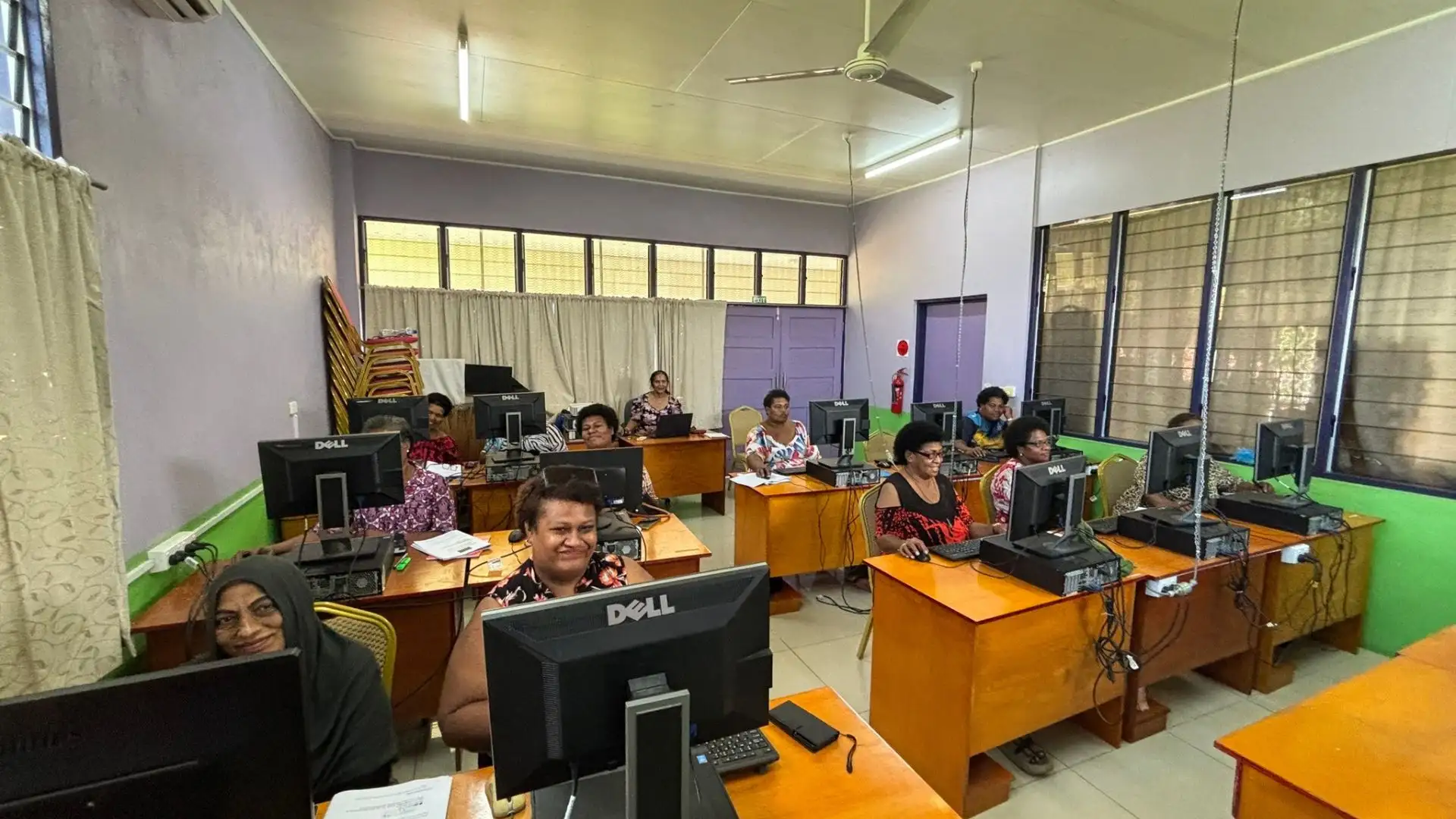
The Short Answer
Fiji is a credible emerging digital centre for the Pacific, but it is not yet a mature technology hub on the scale of established international centres. The country already has meaningful infrastructure, government-led digital programmes, fintech initiatives and university-level computing education. At the same time, official documents acknowledge uneven rural and maritime connectivity, a developing regulatory environment and an e-commerce market that remains at an early stage. [1] [2]
Fiji's Digital Economy at a Glance
- Fiji's National Digital Strategy reports internet access for 85.2% of people, with 3G coverage above 96% and 4G coverage above 92%. [1]
- A May 2026 country guide from the U.S. International Trade Administration records six active international subsea cables serving Fiji. [2]
- 5G is being tested under non-commercial arrangements; travellers and businesses should not assume broad commercial 5G coverage. [1] [2]
- Fiji ranked 93rd of 193 countries in the 2024 UN E-Government Development Index, with a score of 0.6754. [4]
- The digitalFIJI programme began in 2017 and now supports services including birth-certificate applications and company-related services. [1] [6]
- Fiji has had a FinTech Regulatory Sandbox since 2019 and launched the Fiji Innovation Hub in July 2025. [7] [8]
Connectivity: A Real Foundation, Not Universal Coverage
International connectivity is one of Fiji's strongest digital assets. Southern Cross NEXT entered service on 7 July 2022 and links Australia, New Zealand and the United States while connecting Fiji, Tokelau and Kiribati into the wider network. The operator described the system as reinforcing Fiji's role in Pacific connectivity. Fiji's national strategy also identifies additional cable, fibre and satellite projects as part of the effort to improve resilience and reach underserved communities. [3] [1]
Strong national percentages do not mean identical service everywhere. The May 2026 trade guide says rural and maritime digital development continues to lag behind urban areas and estimates that about 2% of the population remains outside 2G, 3G or 4G coverage. That distinction matters when planning work or travel beyond the main centres, including visits to more remote parts of Vanua Levu such as the Savusavu Hot Springs. [2]
The same caution applies to 5G. Fiji's strategy states that operators are testing 5G under non-commercial licences and that a national roadmap is being developed. Its milestone of 50% population coverage by 2030 is a forward-looking target, not a description of current availability. [1]
Digital Government: Useful Services, with More Work Ahead
Fiji's digital-government programme is established rather than hypothetical. The National Digital Strategy says digitalFIJI was launched in 2017 under the Digital Government Transformation Office. It lists projects covering company registration, births, deaths and marriages, data exchange and other public systems. The current MyFiji@Gov directory visibly provides access to birth-certificate and Registrar of Companies services. [1] [6]
Progress should still be described accurately. UN data places Fiji 93rd globally in the 2024 E-Government Development Index, not first in the world or among all comparison groups. Fiji's strategy sets a future milestone for interoperability across 80% of government agencies, which means this figure should not be presented as an already completed level of service digitisation. [4] [1]
E-Commerce and Online Business
Fiji adopted a National E-Commerce Strategy for 2025–2029. It focuses on policy and regulation, digital payments, logistics, skills, business adoption and stronger digital infrastructure. The strategy treats these areas as a programme of work because gaps in regulation, delivery systems, finance and business capability continue to limit participation. [5]
Adoption is growing from a modest base. Citing a 2023 UNCDF survey, the May 2026 trade guide reports that only 16% of Fijian adults had made an online purchase during the preceding three months. The same guide describes the e-commerce ecosystem as early-stage and identifies logistics coverage, digital literacy, payment adoption and regulatory gaps as continuing constraints. [2]
Entrepreneurs can use businessNOW Fiji as a starting point for registration and compliance information, and the portal directs eligible registration applications to digitalFIJI. This is an online government service, but it should not be confused with Estonia-style e-residency. FijiEco found no current programme advertised as “Fiji e-Residency” in the official digital strategy, e-commerce strategy, digitalFIJI directory or businessNOW pages reviewed for this update. [1] [5] [6] [10]
Fintech and the Startup Ecosystem
Financial technology is one of Fiji's clearest areas of organised experimentation. The Reserve Bank of Fiji launched its FinTech Regulatory Sandbox guidelines on 31 December 2019. The sandbox provides a controlled environment in which selected financial products and services can be tested before commercial deployment, with risk-management and consumer-protection requirements. [7]
The Reserve Bank and its partners launched the Fiji Innovation Hub on 17 July 2025. The multi-year programme is designed to support locally relevant financial solutions and initially included an accelerator and a national hackathon for early-stage founders. A July 2026 Reserve Bank update reported foundational workshops, a hackathon, an activator programme and a dedicated workspace; it also said a draft National FinTech Strategy had been prepared for consultation and validation. [8] [9]
Targets Are Not Current Results
Fiji's National Digital Strategy lists milestones that include preparing for ICT to contribute 10% of real GDP, creating more than 40,000 jobs across sectors and attracting more than US$100 million in investment. These are strategic milestones for the programme period, not verified descriptions of the sector's present size. Any future update should check reported outcomes before converting a target into a statistic. [1]
Skills and Technology Education
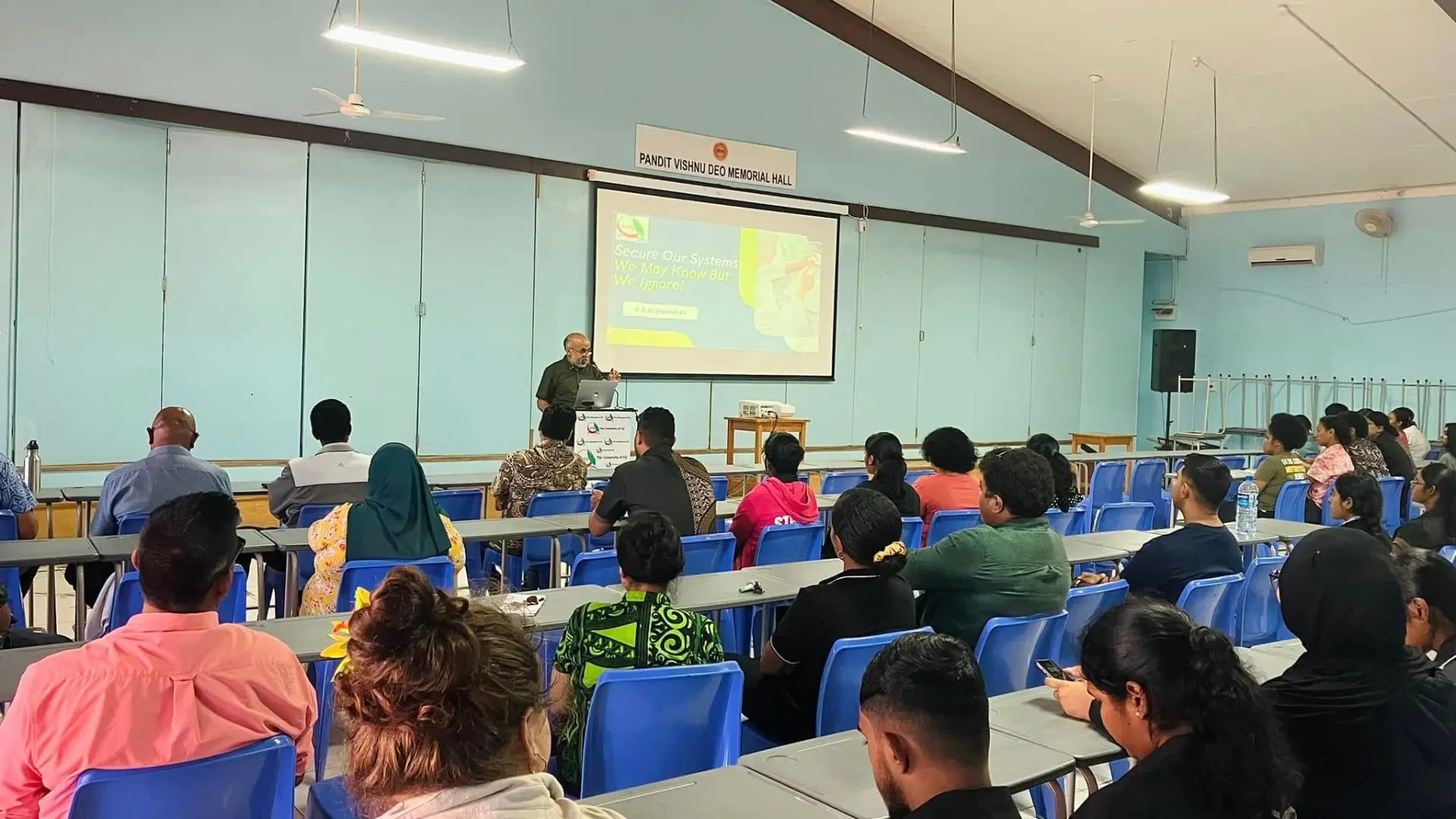
Fiji has genuine higher-education pathways in computing. The University of the South Pacific lists programmes in computing, information systems, networks and security, software engineering, artificial intelligence and cybersecurity. Fiji National University also lists a School of Mathematical and Computing Science and computing programmes within its engineering and technical education structure. [11] [12]
The existence of degree programmes does not by itself prove the number of job-ready graduates or available tech workers. FijiEco therefore does not publish a national graduate total without a current dataset. The National Digital Strategy instead sets future digital-literacy and inclusion milestones, including large-scale training and accessibility goals through 2030. [1]
What This Means for Travellers and Remote Workers
- Expect the most dependable choice of connections in larger urban and tourism centres, but confirm Wi-Fi speed and reliability directly with your accommodation.
- Do not book on the assumption that commercial 5G is widely available; current official material describes testing and a roadmap under development. [1]
- Keep a mobile-data backup when work is time-sensitive, and download essential travel documents before trips to rural or maritime areas where coverage can be less consistent. [2]
- For a working stay outside Nadi or Suva, verify the property rather than assuming city-wide performance. For example, FijiEco's guide to Tanoa Waterfront Hotel in Lautoka covers the accommodation, while the hotel should confirm current connection details.
Verdict: Stronger Foundations, Still an Emerging Hub
Fiji has a defensible case for being called an emerging Pacific digital centre. Its advantages include multiple international cable connections, broad mobile coverage, established digital-government work, formal fintech experimentation and active education programmes. Its own strategy explicitly aims to position the country as a Pacific digital hub. [1] [2]
The honest conclusion is equally important: the hub is being built, not already completed. 5G deployment, regulatory development, rural connectivity, e-commerce adoption, digital skills and measurable private-sector growth remain areas to watch. That evidence-based description is more useful than presenting policy goals as achievements or inventing companies, quotations and statistics. [1] [2] [5]
Explore Fiji Beyond the Digital Economy
Digital infrastructure matters because it supports real communities, visitor services and small businesses. These FijiEco guides add local context without serving as evidence for the technology statistics above:
- City and culture: discover Suva's multicultural life.
- Local enterprise: visit Sigatoka Valley Market and explore a local handicraft workshop in Nadi.
- Climate and ecosystems: learn about a mangrove nursery tour.
- Time away from screens: try sunset paddleboarding at Wailoaloa or swim in natural waterfalls near Suva.
Frequently Asked Questions
Is Fiji already a Pacific tech hub?
Fiji is better described as an emerging Pacific digital centre. Its National Digital Strategy aims to establish the country as a regional hub, but many connectivity, skills, regulatory and investment milestones are scheduled for implementation through 2030. [1]
Does Fiji have 5G?
Operators have been permitted to test 5G under non-commercial arrangements, and a national roadmap is being developed. Visitors should not assume that broad commercial 5G service is available. [1] [2]
Does Fiji offer e-residency?
FijiEco found no Estonia-style Fiji e-residency programme in the official digital strategy, e-commerce strategy, digitalFIJI directory or businessNOW resources reviewed on 20 July 2026. Online business registration should not be described as e-residency. [1] [5] [6] [10]
Can a business registration be started online?
Yes. businessNOW provides starting-a-business guidance and directs eligible online registration applications to digitalFIJI. Requirements depend on the applicant and type of entity. [10]
Sources and Methodology
FijiEco prioritised primary government, regulator, university and United Nations material. The U.S. International Trade Administration country guide was used where it provided a current consolidated market assessment. No anonymous quotations, invented companies or unsourced performance totals were retained.
- Fiji National Digital Strategy 2025–2030, Digital Government Transformation Office.
- Fiji Digital Economy, U.S. International Trade Administration, updated 15 May 2026.
- Southern Cross NEXT Launches, Southern Cross Cables and Ciena, 7 July 2022.
- Fiji country data: 2024 E-Government Development Index, United Nations.
- Fiji National E-Commerce Strategy 2025–2029, Ministry of Trade, Co-operatives, Micro, Small and Medium Enterprises and Communications.
- MyFiji@Gov e-Services Directory, Fiji Government Digital Transformation Programme.
- Reserve Bank launches FinTech Regulatory Sandbox, Reserve Bank of Fiji, 31 December 2019.
- Fiji launches Innovation Hub, Reserve Bank of Fiji, 17 July 2025.
- National Financial Inclusion Taskforce 2026 update, Reserve Bank of Fiji, 6 July 2026.
- Starting a business: registration, businessNOW Fiji.
- Computer Science and Information Systems programmes, The University of the South Pacific.
- College of Engineering and Technical Vocational Education and Training, Fiji National University.