Freediving in Savusavu: Courses and Coral Reefs
Written and researched by Yevhen Derkach
Last updated and fact-checked: .
Savusavu is a practical base for learning to freedive on Vanua Levu. You can take a local course, travel to Viani Bay for a Rainbow Reef session, or choose guided snorkeling at the Coral Gardens along Hibiscus Road. The right booking depends on whether you want instruction, a recreational freedive or a surface swim over the reef.
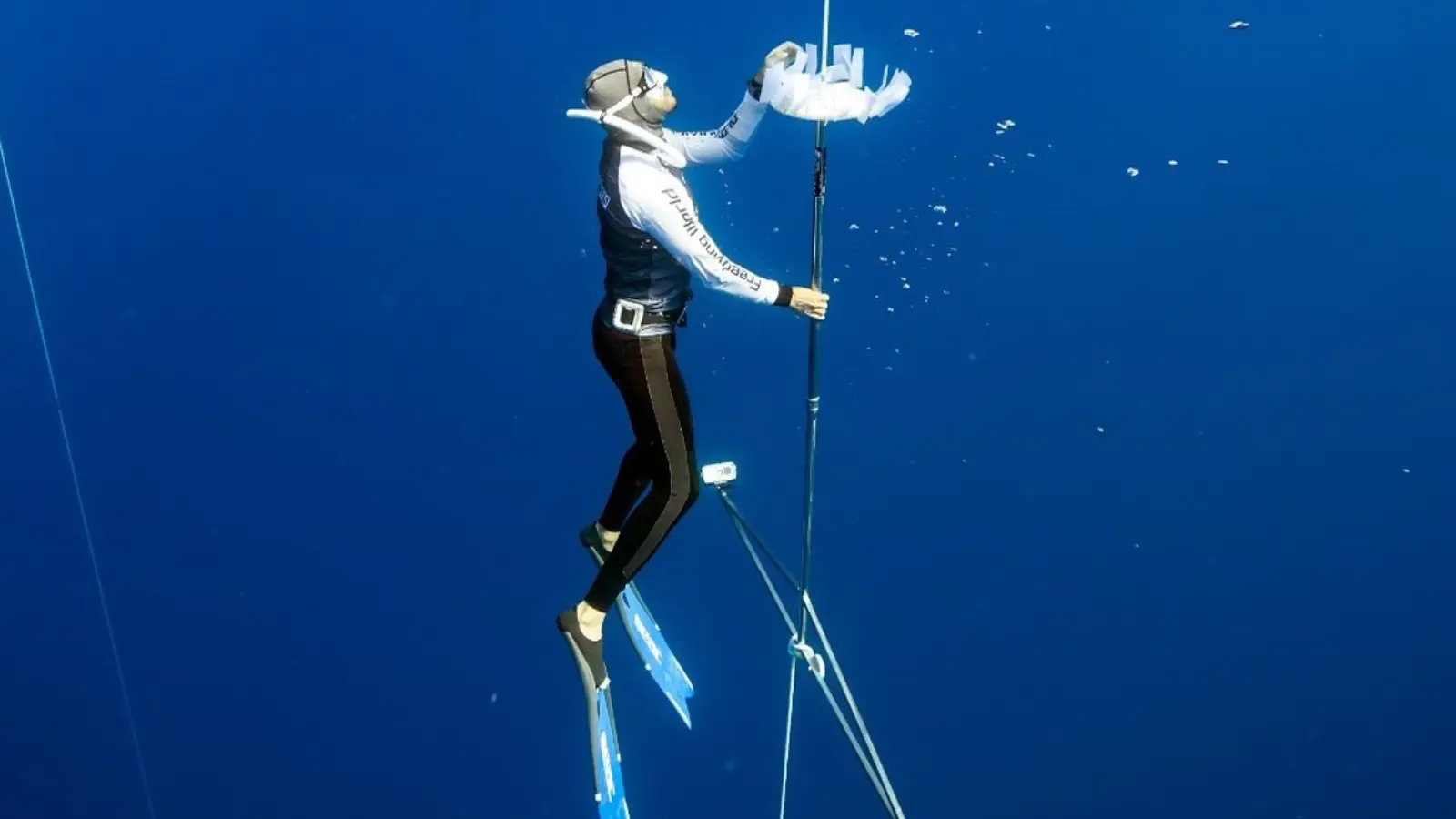
Choose your reef session
Snorkeling is the best fit if your aim is to watch coral and fish from the surface. Freediving involves descending on a held breath and needs specific training and supervision. A scuba qualification does not replace that training.
- New to freediving: choose an introduction or beginner course with an instructor. Learn the buddy and rescue skills alongside the diving skills.
- Already trained: send the operator your certification and recent experience when arranging a recreational session.
- Traveling with non-divers: ask for a guided snorkeling option and agree how each person will be supervised.
Koro Sun offers a guided Coral Garden Snorkeling excursion along Hibiscus Road. Arrange the meeting point and equipment with the resort at [email protected]. For a wider comparison, see our Fiji snorkeling guide.
Freediving schools and bookings
Liquidstate Freediving Fiji, Savusavu
Liquidstate Freediving Fiji is based in Savusavu and offers introductions and AIDA, Molchanovs and PADI training. Its Discover session has no certification; AIDA 1 is a foundation course. This is the local option to consider if you want to learn while staying in town or a nearby resort.
Contact the school at [email protected] or WhatsApp +679 925 8764. Send your dates, accommodation and experience level.
Dive Academy Fiji, Viani Bay and Rainbow Reef
Dive Academy Fiji is based in Viani Bay and offers freediving on Rainbow Reef. It accepts day visitors, so staying at the resort is optional. A visit from Savusavu needs both a road transfer and a boat transfer; allow a full day for a recreational outing.
Arrange your course or excursion, transfers and any lunch through Dive Academy’s booking page or [email protected]. The published course duration is usually two days, with a minimum of two participants. Certification depends on completing the course requirements.
Courses and excursion prices
The following are published operator prices in Fijian dollars. Course and excursion charges are per person; Viani Bay arrival transfers are listed separately below.
| Activity | Published price | Time and inclusions |
|---|---|---|
| Liquidstate Discover Freediving | FJ$250 per person | Usually half a day. Gear included; no certification. |
| Liquidstate AIDA 1 | FJ$475 per person | Usually one day. Certification fee included; arrange any equipment rental with the school. |
| Dive Academy PADI Freediver | FJ$650 per person | Usually two days; minimum two participants. Equipment, PADI eLearning and certification fee included. Arrival transfers are additional. |
| Dive Academy recreational freediving | FJ$150 per person | Two-hour guided Rainbow Reef session; minimum two participants. Arrival transfers are additional. |
| Koro Sun Coral Garden Snorkeling | FJ$80 per person | Guided snorkeling. Agree the meeting point and gear arrangements with the resort. |
Before paying, get one itemized quotation covering the activity, equipment rental, road and boat transfers, meals and any applicable charges. This is especially useful for Rainbow Reef, where reaching the operator adds substantially to the activity price.
How to reach your session
Arriving from Nadi or elsewhere in Fiji
For town-based sessions, plan your arrival through Savusavu Airport (SVU). The Nadi connection brings you to Vanua Levu; arriving at Labasa Airport (LBS) adds an overland journey to Savusavu. Our guide to getting to Savusavu covers the flight and ferry options. Give the freediving operator your actual arrival point and book your training after you have reached your accommodation.
Local pickup, taxis and buses
Liquidstate lists Savusavu-area transport as free of charge. Arrange the pickup location and time with the school. For a separate taxi, the town rank is between the bus stand and market; give the driver the operator’s agreed meeting point.
For any public-bus leg, use a loaded eTransport card or QR payment through a funded eTransport app wallet. Prepare your payment method before boarding and keep your ticket or receipt. Our Savusavu local transport guide covers using buses and arranging taxis.
Savusavu to Dive Academy in Viani Bay
Dive Academy’s published transfer route uses Waikava, at the end of the road, as the boat pickup point. Have the operator send the pickup pin to your driver and coordinate the road and boat legs as one booking.
| Leg | Published travel time | Published transfer price |
|---|---|---|
| Savusavu Airport to Waikava Taxi or arranged road transfer to the boat pickup. | About 1 hour 10 minutes. | FJ$120 per taxi, one way. This is the operator’s published transfer quote. |
| Waikava to Viani Bay Dive Academy’s arranged boat transfer. | About 40 minutes each way. | FJ$380 return for the boat, carrying up to four passengers. |
Those travel times cover the journey to the operator, before the reef session. A two-hour freediving booking therefore needs much more than two hours in your itinerary. Course guests staying in Viani Bay can avoid repeating the road and arrival boat transfers on each training day.
What to arrange before booking
- Your course or session: send your certification, recent diving experience and the type of activity you want. For children and teens, specify age so the school can offer the appropriate program.
- Swimming and medical requirements: complete the course’s medical questionnaire before travel. A flagged medical answer can require a physician’s clearance. Liquidstate lists AIDA 1 entry requirements as age 18, or 16 with guardian consent, and the ability to swim 100 meters.
- Equipment: agree which mask, fins, exposure protection and other gear are supplied. Tell the school your sizes; have the instructor select and fit the equipment for the session.
- Supervision: establish who provides the dedicated freediving safety cover, including for recreational reef outings.
- Booking terms: read the deposit, cancellation and weather rescheduling conditions before payment. Include a return transfer and any lunch or drinking water you need in the booking.
- Insurance: choose cover that explicitly includes your planned freediving activity and any medical evacuation costs.
An introduction and a certification course serve different purposes. If you want a qualification for future trips, book the named course and allow its full duration rather than assuming a short reef outing will provide certification.
Weather, currents and reef choice
Choose your travel dates around the time available for instruction and transfers. For the actual water session, use the Fiji Meteorological Service marine forecast and your operator’s site assessment. Wind, swell, visibility and tidal current influence where the group can enter and exit.
A shallow reef still needs a suitable entry, exit and safety plan. Let the instructor choose the site for your experience and the day’s conditions. A named reef on an excursion list is a possible destination; the operator can move the session to another site when conditions require it.
For a short Savusavu stay, a local introduction is easier to fit around other plans than the longer Viani Bay transfer. For a two-day Rainbow Reef course, discuss staying at the operator’s base. If you are considering the Hibiscus Road area, our Koro Sun Resort guide explains that accommodation option.
Freediving safety
Book proper instruction before attempting breath-hold dives. Divers Alert Network’s March 2026 guidance emphasizes rescue-trained buddies and one-up, one-down supervision: while one person dives, the other provides the safety cover taught in training.
- Never freedive alone, including in a pool. Your buddy must be able to recognize a problem and perform a freediving rescue.
- Do not hyperventilate before a dive. It can delay the urge to breathe while oxygen falls, increasing blackout risk.
- Follow the instructor’s limits and recovery instructions. Avoid setting a holiday target for depth or breath-hold time.
- Stop if your ears will not equalize comfortably. Tell the instructor about congestion, discomfort, illness and relevant medical conditions.
- Keep supervision dedicated. A buddy taking photos or diving at the same time cannot provide the required safety cover.
Feeling calm underwater does not show that your oxygen level is adequate. Training, capable supervision and a planned response to an emergency matter on every dive. Before entering the water, know the exit point and the operator’s emergency arrangements.
What to pack and how to protect the reef
- Swimwear, a towel and a change of clothes for the road trip home.
- A rash guard, hat and sun protection for the boat and surface intervals.
- Drinking water and any meal or snack agreed for the excursion.
- A dry bag for your phone, travel documents and clothes.
- Your certification details, completed medical paperwork and insurance information.
- Your own fitted equipment if you are bringing it, with the operator’s agreement.
If you are flying with long fins or other bulky equipment, arrange their carriage with your airline before travel. See our Savusavu packing guide for the rest of your island stay.
Around coral and marine life
Keep fins and equipment clear of the reef. Never stand on coral, hold it for a photograph, feed fish or pursue an animal for a closer view. Follow the guide’s route and local access rules, and take all packaging back with you.
For other ways to support the places you visit, see our guide to sustainable travel in Fiji.
Returning to town, your flight or ship
For Viani Bay, coordinate the return boat to Waikava with a waiting taxi for Savusavu or your accommodation. Set the final drop-off when booking so your road transfer continues from the boat landing. For a local session, agree the school’s return arrangement and destination.
Cruise visitors should give the operator their tender meeting point and required return time before choosing an outing. The Viani Bay road and boat transfers use a substantial part of the day; compare the complete itinerary with your ship’s all-aboard time.
Keep deep freediving sessions away from your departure day. PADI notes that evidence on flying after freediving is limited and says it is generally recommended to avoid flying for 18–24 hours after deep freedives. Give your instructor your flight time and any recent or planned scuba dives when scheduling the activity. Arrange the final airport transfer around your airline’s check-in requirements.
Frequently asked questions
Does scuba experience count as freediving training?
Scuba experience can help with comfort in the water, but freediving uses different breath-hold, buddy and rescue skills. Give the school your background and take the freediving training appropriate to your experience.
Can I visit the Coral Gardens without freediving?
Yes. Koro Sun offers a guided Coral Garden Snorkeling excursion. You can view the reef from the surface; book the snorkeling session and its meeting arrangements directly with the resort.
Can I bring an underwater camera?
Discuss it with the instructor first. Use it only when it fits the session and reef rules. The person providing safety cover must keep their attention on the freediver.
Sources and verification
Operator information, published prices, transfers and safety guidance were checked against the sources below on 6 October 2026.
- Liquidstate Freediving Fiji: courses and excursions: Savusavu courses, published prices, equipment inclusions, local transfers and contact details.
- Dive Academy Fiji: freediving and Rainbow Reef transfers: Recreational sessions, course duration, minimum group size and the route through Waikava.
- Dive Academy Fiji: Course Price List 2026 (PDF): Freediver course price, equipment, eLearning, certification and separate arrival transfers.
- Dive Academy Fiji: booking information: Day visits, activity bookings, transfers and individual quotations.
- PADI: Dive Academy Fiji: Viani Bay location, freediving activities and operator contact details.
- Savusavu Tourism Association: destination information: Savusavu on Vanua Levu and arrival options through Nadi and Labasa.
- Savusavu Tourism Association: getting around: Town buses and the taxi rank between the bus stand and market.
- Vodafone Fiji: eTransport app FAQ: Bus payment by funded app wallet and onboard QR payment terminals.
- Fiji Meteorological Service: marine weather: Current marine forecasts and warnings.
- Divers Alert Network: The Culture of Freediving Safety, March 2026: Rescue-trained buddies and one-up, one-down supervision.
- Divers Alert Network: Freediving Safety Awareness: Formal training, dedicated supervision and the risks of hyperventilation.
- PADI: freediving FAQ: Course structure, medical screening and the difference from snorkeling.
- PADI: Things You Should Never Do After Freediving: Flying after deep freedives and planning around scuba diving.
- Green Fins: pre-dive briefings: Avoiding coral contact, wildlife disturbance and fish feeding.
Found an outdated detail or an access change? Send FijiEco a correction.