Fiji Museum in Suva: Hours, Entry Fees and Visitor Guide
Fiji Museum is inside Thurston Gardens in Suva and is the city's main stop for travelers who want context before visiting archaeological sites, villages and historic places elsewhere in Fiji. Its collection includes archaeological material dating back about 3,700 years, alongside objects and stories connected with iTaukei communities and the other communities that have made Fiji home.
The practical details are straightforward: the museum currently opens every day from 9:00 am to 4:30 pm, and standard adult admission is FJ$10 for local visitors or FJ$20 for overseas visitors. Guided visits cost more. Exhibitions can change, so use this guide to plan the visit and check the museum's own website if seeing a particular gallery or object is essential to your trip.
Current Hours • Admission Prices • Guided Tours • Thurston Gardens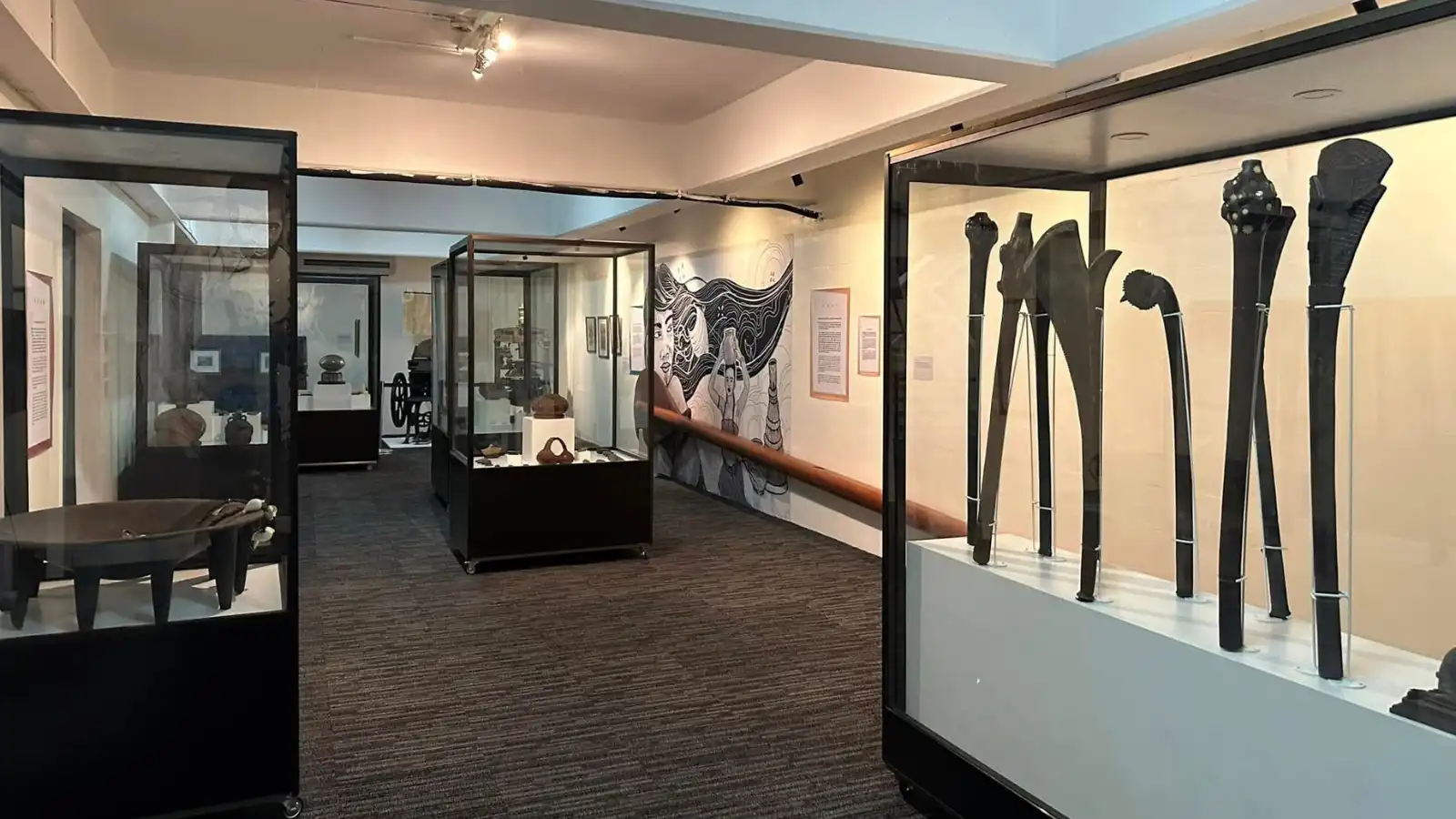
| Quick fact | What travelers should know |
|---|---|
| Location | Thurston Gardens, Cakobau Road, Suva |
| Opening hours | Monday to Sunday, 9:00 am to 4:30 pm |
| Standard adult admission | FJ$10 local, FJ$20 overseas |
| Standard child admission | Ages 2 to 15: FJ$5 local, FJ$10 overseas |
| Guided visit | Priced separately from normal admission; see the full table below |
| Suggested time | Allow 60 to 90 minutes, or longer for a guided visit and detailed reading |
| Best combination | Museum plus a walk through Thurston Gardens |
| Official contact | +679 331 5944 and [email protected] |
FijiEco research note
Hours, admission prices, guided-tour prices, holiday closures, address and contact details were checked against Fiji Museum's official website and published price sheet on 20 September 2026. Exhibition availability and visitor policies can change. Information given by museum staff and signs at the entrance takes priority on the day of your visit.
Why Visit the Fiji Museum?
Fiji is often introduced through beaches and resorts, but the museum helps explain the much longer story behind the destination. The official collection description covers archaeological material dating back about 3,700 years and cultural objects representing Fiji's indigenous inhabitants as well as communities that arrived during the past two centuries. That makes the museum useful at the beginning of a Fiji trip, when names, places and traditions are still unfamiliar.
The institution also has a history of its own. The idea of a museum was discussed in 1904, when William Allardyce presented a collection to the Suva Town Board. The Fijian Society followed in 1908, and the Fiji Museum Ordinance formally established the museum as a government statutory body in 1929. The present museum opened in 1955.
What Can You See at the Fiji Museum?
The official museum description refers to archaeology, history, masi, art, Indo-Fijian history and temporary exhibition space. Displays can move, close for conservation or change between visits, so a historical list should not be treated as a promise that every gallery will be open on a particular day.
Archaeology and early settlement
The collection includes archaeological material dating back around 3,700 years. This provides context for the early settlement of Fiji and the wider movement of people through the Pacific. The museum also offers a virtual Lapita exhibition online, which can be useful before or after an in-person visit.
Voyages: Stories of an Ocean People
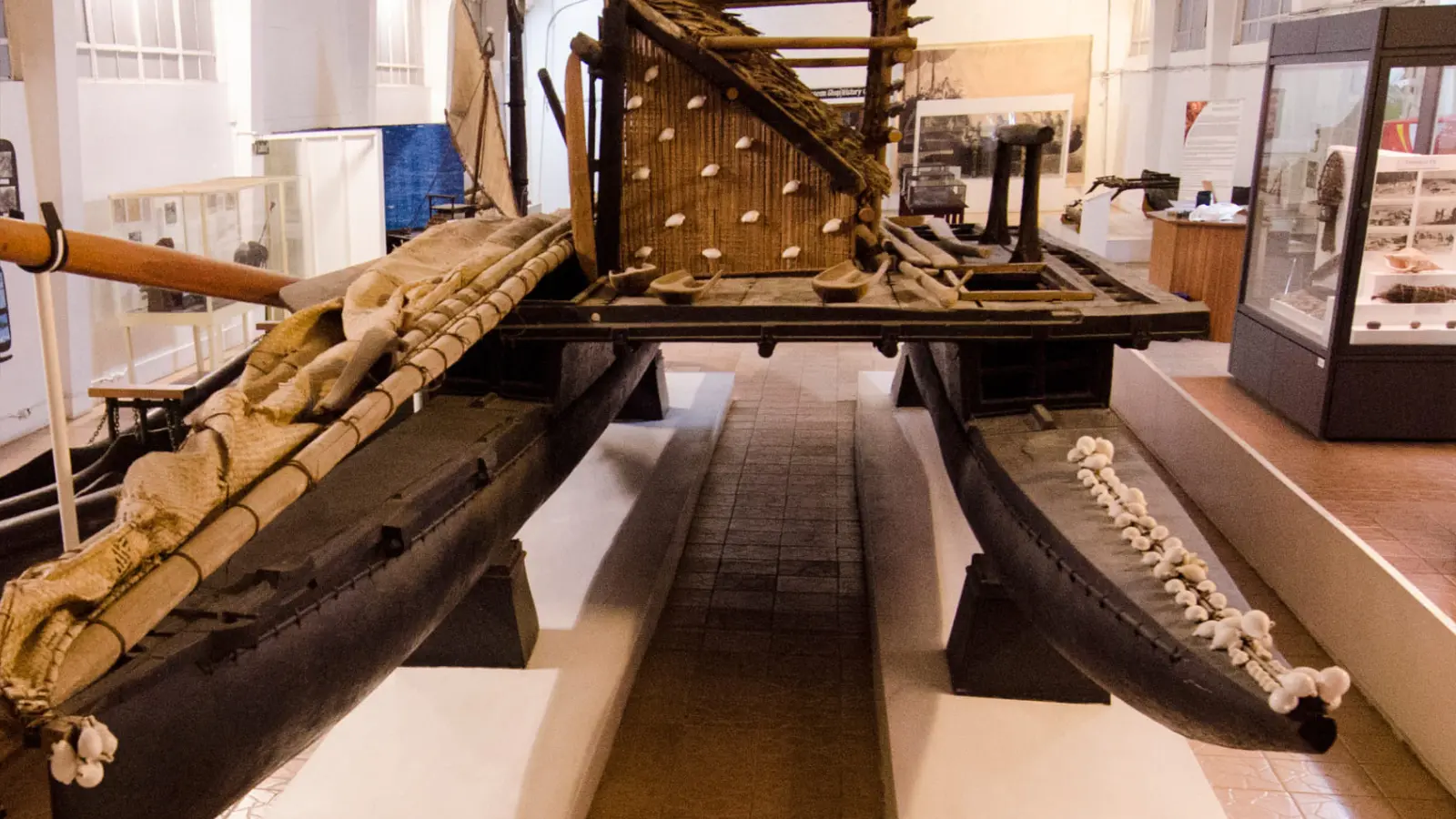
The museum's current exhibition information highlights Voyages: Stories of an Ocean People. It connects early Lapita arrivals, iTaukei maritime knowledge, ocean-going drua, later migration and Fiji's continuing relationship with the sea. The conserved drua Ratu Finau has a prominent place in this story. This is a stronger way to understand the canoe than relying on unsupported claims about an exact passenger capacity or voyage distance.
Fiji's many communities
This wider framing matters because the museum presents Fiji's heritage as including both iTaukei history and the histories of communities that have made Fiji home over the past two centuries.
If one exhibit matters to you
Contact the museum before travelling specifically for one gallery, object or temporary exhibition. Conservation, installation work and special events can change what is available, even when the museum itself remains open.
Fiji Museum Entry Fees and Guided-Tour Prices
Fiji Museum publishes separate local and overseas prices. The table below reproduces the official categories in Fiji dollars. If you are unsure which category applies to you, ask the museum rather than assuming from nationality or visa status.
| Ticket type | Local price | Overseas price | Who it covers |
|---|---|---|---|
| Normal admission, adult | FJ$10 | FJ$20 | Age 16 and over |
| Normal admission, child | FJ$5 | FJ$10 | Ages 2 to 15 |
| Entry and guided tour, adult | FJ$15 | FJ$30 | Adult admission plus guided visit |
| Entry and guided tour, child | FJ$7.50 | FJ$15 | Child admission plus guided visit |
| Concession | FJ$5 | FJ$10 | Published for ages 55+, tertiary students with valid ID, visitors with accessibility concerns and Tokani members with ID |
| Family group | FJ$20 | FJ$40 | Two adults and up to three children |
The official sheet also lists local school visits at FJ$2.50 per student and FJ$6 per accompanying adult, with advance booking required. Tour-operator groups are listed at FJ$25 per person and receive a guided welcome or tour. Contact the museum directly for group arrangements and current availability.
Should you choose a guided tour?
A guided visit can be worthwhile if this is your first introduction to Fiji's history or if you want help connecting objects with migration, maritime knowledge and living traditions. If the guided component is important, call or email before arriving. The published price confirms that guided tours are a paid option, but it does not promise that an individual guide will be available without advance notice at every hour.
Opening Hours and Public Holidays
The current published opening hours are 9:00 am to 4:30 pm, Monday through Sunday. The museum also publishes the same hours for most public holidays.
It is closed on Christmas Day, New Year's Day, Easter Sunday and Diwali. Management may close on additional public holidays with advance notice. Check the museum's official channels when planning around a holiday, severe weather, a special event or a long journey into Suva.
How Much Time Should You Allow?
Fiji Museum does not publish a standard visit duration. For planning purposes, FijiEco suggests 60 to 90 minutes for a normal self-guided visit. Allow closer to two hours if you book a guided visit, read displays carefully or want time for a separate walk through the gardens.
About 45 minutes
Choose the current main exhibition and a few priority displays. This is a selective visit, not a full tour.
60 to 90 minutes
A practical first visit with time to read, pause and explore the available galleries without rushing.
Two hours or more
Better for a guided visit, detailed study or travelers with a strong interest in Pacific history.
Where Is the Fiji Museum and How Do You Get There?
The museum is in Thurston Gardens on Cakobau Road, near Albert Park and Suva's government precinct. It is reachable on foot from central Suva for many visitors when the weather is comfortable. Suva can become hot and very wet, so a licensed metered taxi is a sensible alternative in heavy rain, with children or for anyone who needs door-to-door access.
Plan the journey
- Open Fiji Museum in Google Maps.
- Read the FijiEco guide to taxis, buses and walking in Suva.
- If arriving by taxi, use “Fiji Museum, Thurston Gardens” as the destination rather than relying only on a street name.
What Should You Confirm Before Visiting?
The museum's current public pages do not provide a complete, detailed policy for every practical need. Contact staff in advance when any of the following could determine whether the visit works for you.
- Card payment: carry Fiji-dollar cash or ask whether your preferred card is currently accepted.
- Step-free access: explain the exact mobility requirement and ask about entrances, galleries and toilets.
- Photography: check signs and ask staff before photographing displays; rules may differ by exhibition.
- Guided tours: confirm the date, language, start time, group size and whether advance booking is needed.
- Specific exhibits: ask whether the gallery or object you want to see is currently on display.
- Young children: the published table starts at age two, so ask the museum about admission for a child under two.
Official contact: +679 331 5944 or [email protected].
What Can You Combine with the Museum?
Thurston Gardens
The easiest combination is the museum and Thurston Gardens because they share the same precinct. Allow another 30 to 60 minutes for a relaxed garden walk. Check the garden guide separately because the public grounds and museum do not necessarily follow identical access arrangements.
Central Suva and the market
For a fuller daytime introduction to the city, continue to central Suva or Suva Municipal Market. Treat the market as a separate working-city stop and use a taxi if rain or walking conditions make the route uncomfortable. The main Suva guide can help you connect these places into a realistic itinerary.
Visiting Cultural Collections Respectfully
A museum display may contain objects with ceremonial, ancestral or community significance. Follow gallery signs, do not touch objects or cases, keep children close and ask before photographing. The wider Fijian culture and etiquette guide explains respectful defaults for photography, community visits and cultural spaces.
Frequently Asked Questions
What are the Fiji Museum opening hours?
The published hours are 9:00 am to 4:30 pm every day. The museum is closed on Christmas Day, New Year's Day, Easter Sunday and Diwali, and it may announce other public-holiday closures.
How much is entry to the Fiji Museum?
Normal admission is FJ$10 for a local adult or FJ$20 for an overseas adult. For children aged 2 to 15, it is FJ$5 local or FJ$10 overseas. Concession, family, guided-tour and group prices are listed above.
Does the Fiji Museum offer guided tours?
Yes. The official combined entry and guided-tour price is FJ$15 for a local adult and FJ$30 for an overseas adult, with lower child prices. Contact the museum to confirm timing and availability.
How long do you need at the Fiji Museum?
FijiEco suggests 60 to 90 minutes for a normal first visit. Allow longer for a guided visit, detailed reading or a separate walk through Thurston Gardens.
Where is the Fiji Museum?
It is inside Thurston Gardens on Cakobau Road in Suva, near Albert Park and the government precinct.
Can you take photographs inside?
Do not assume one rule applies to every gallery. Check the signs and ask museum staff before photographing objects or temporary exhibitions.
Is the Fiji Museum wheelchair accessible?
The published price sheet includes a concession category for visitors with accessibility concerns, but it does not describe every physical access feature. Contact the museum with your exact requirements before visiting.
Is Fiji Museum the same as Fiji Museum Cultural Center?
The institution's official name is Fiji Museum. Some travel pages use longer descriptions, but visitors should search for Fiji Museum in Thurston Gardens.
Sources and Verification
This guide separates current official facts from FijiEco planning suggestions. Prices, hours, galleries and policies may change after publication.
- Fiji Museum official website: current hours, normal admission, guided-tour prices, contact details and collection overview.
- Fiji Museum admission and hours sheet: child, concession, family, school and tour-operator prices, plus holiday information.
- Fiji Museum: About: institutional history, collection scope and gallery descriptions.
- Fiji Museum: Exhibitions: Voyages: Stories of an Ocean People and the conserved drua Ratu Finau.
Found something that has changed?
Send the page link, date and supporting source to [email protected]. FijiEco reviews corrections before updating visitor guidance.